

Key areas of research and development
- virtual machine/plant for improving energy efficiency
- Predictive maintenance – detection of wear processes
- Fuzzy logic methods for fault detection and for application in control engineering
Services & Project Partnerships
- Vibration analysis
- Virtual machine tool for improving energy efficiency
- Virtual welding system for improving energy efficiency
- Energy consumption measurements to improve energy efficiency
- Determination of surface roughness parameters using the probing method (DIN 4768/new DIN EN ISO 4288)
- Analysis of measurement data
- Coordinate measurement using the KEYENCE IM-8020 digital measuring projector
- Digital microscopy using the KEYENCE VHX-7000
- Solar cell measurement using the SINUS 70 solar simulator
Completed supervised PhD theses
- Smart vibration diagnosis on tram drive components for condition monitoring | Dr.-Ing. Maik Wolf, 2025
- Use of optical pickup units for condition monitoring in the context of a longitudinal turning process | Dr.-Ing. Raphael al Diban, 2022
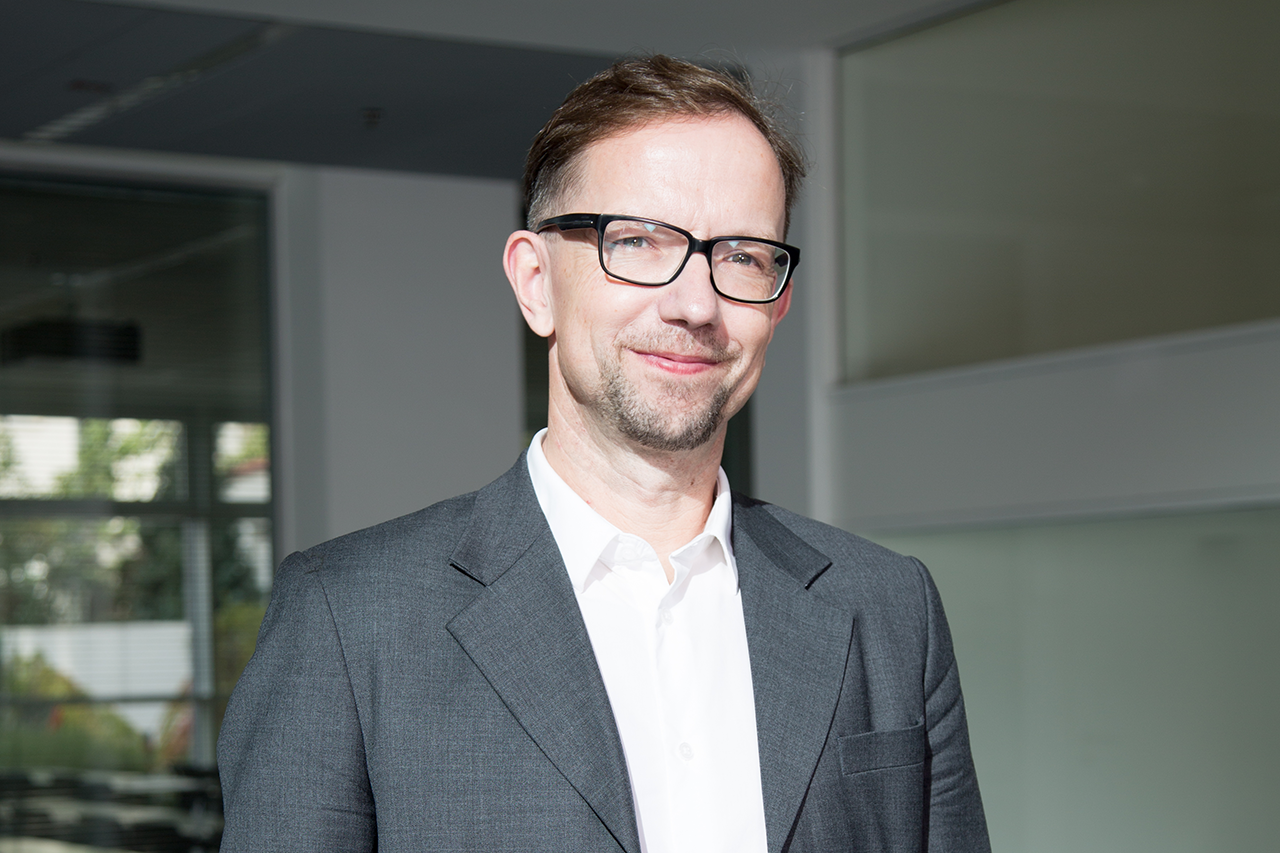
Prof. Dr.-Ing. Mathias Rudolph
Chair of Industrial Metrology
Institute
TPMB | Institute for Technology and Production in Mechanical Engineering
Research Profile
Smart Energy & Environment
Telephone: +49 (0)341 3076 4150
Email: mathias(dot)rudolph(at)htwk-leipzig.de
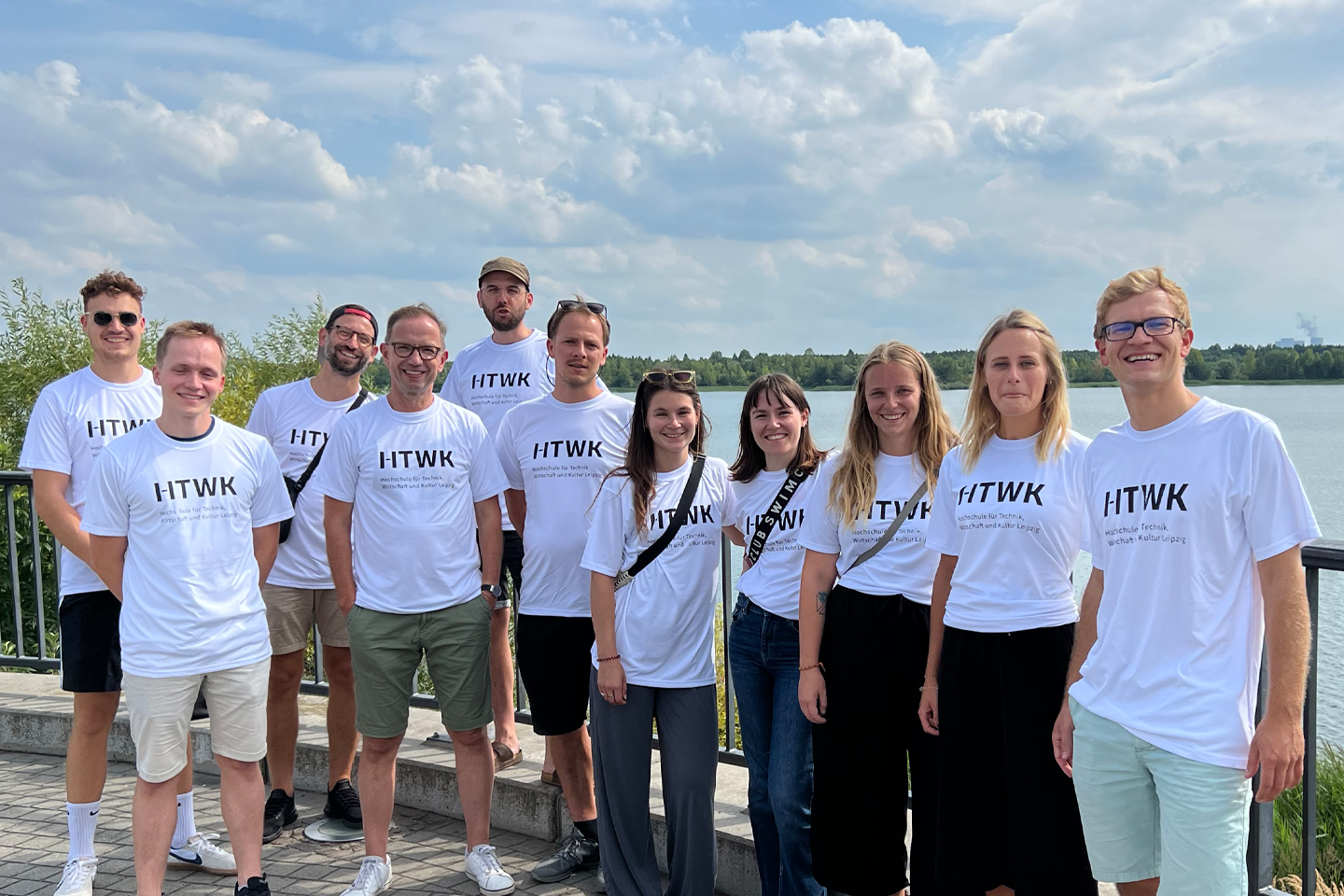
Team
- M.Eng. Andreas Blum
- M.Eng. Finn Bosholm
- M.Eng. Leonhard Gehlauf
- M.Eng. Elias Grunenberg
- Erik Hertwig (student assistant)
- M.Sc. Silvio Hund
- Marie Kieslich (student assistant)
- Leif Kreutzheide (student assistant)
- Philip Lorenz (student research assistant)
- M.Eng. Ludwig Ostertag
- M.Eng. Stefanie Penzel
- B.Eng. Lion Ratayczak
- M.Eng. Sophia Reker
- M.Sc. Elena Richter
- B.Eng. Bruno Schneider
- M.Eng. Thomas Wendt
- Dr.-Ing. Maik Wolf
- Fabian Zischka (student assistant)
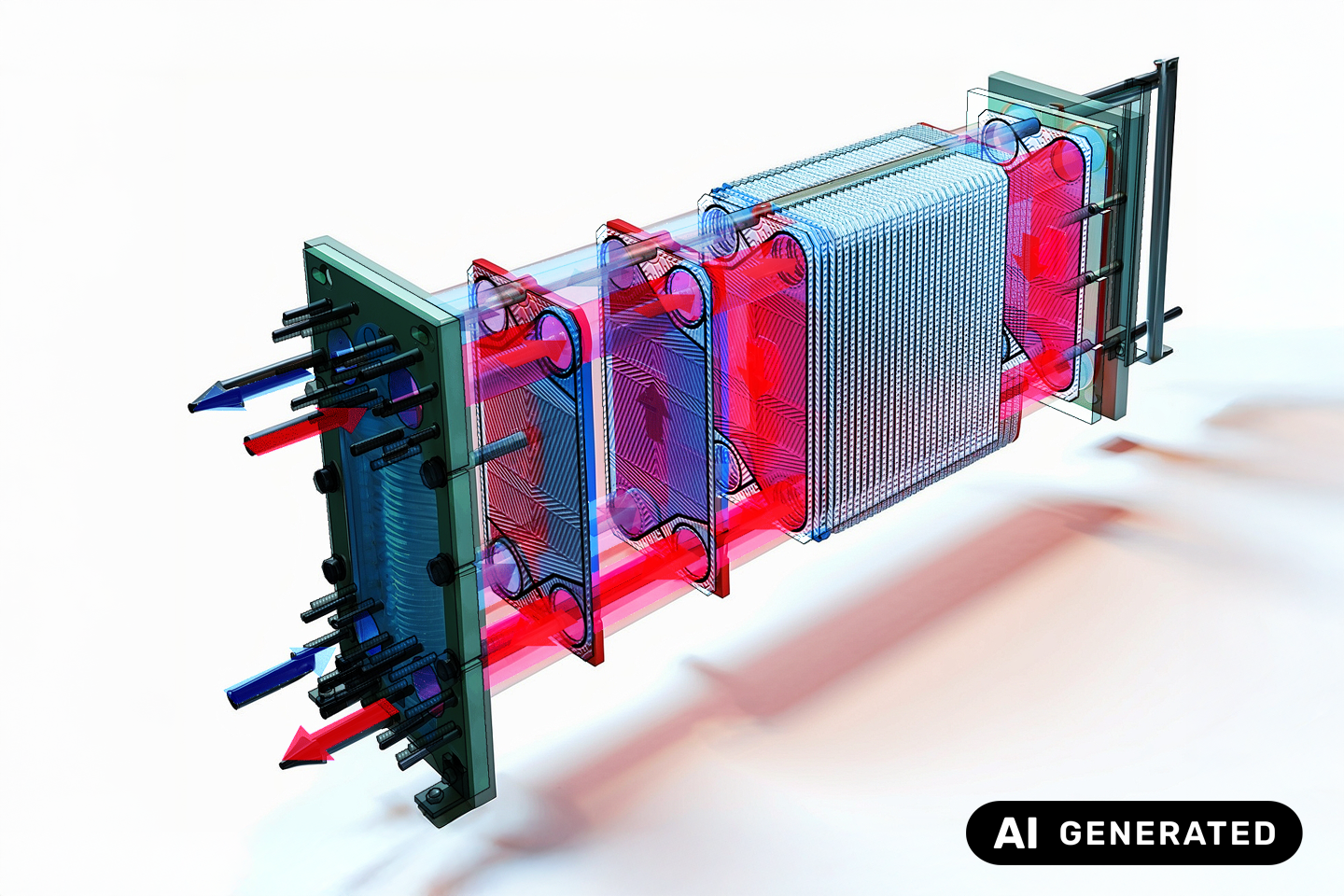
SWAI
System diagnostics for heat exchanger installations to derive a condition-based maintenance strategy with automated recommendations for action
The SWAI project will develop a stationary sensor system for the long-term recording of state-descriptive parameters, including automated decision-making, in order to take proactive action in the event of any damage that may occur, to ensure that heat exchangers operate as continuously and fault-free as possible, and to optimise maintenance costs.
Funding: Sächsische Aufbaubank – Förderbank (SAB), co-funded by the European Union
. Collaboration partner: bau msr GmbH
. Contact persons: Prof. Mathias Rudolph, M.Sc. Silvio Hund, Lion Ratayczak
Project duration: 06/2025 – 05/2027

Pop-up PV
Flexible additive PV structures for façades and urban spaces
As part of the ‘Pop-up PV’ project, the Leipzig Institute of Architecture (FAS) and the Industrial Measurement Technology Project Group (FING) at HTWK Leipzig are developing a lightweight, cost-effective and easy-to-install photovoltaic module system.
Funding: Saxon State Ministry for Energy, Climate Protection, Environment and Agriculture
Project partner/project management: ai:L Leipzig Institute of Architecture (FAS)
Contact: Prof. Mathias Rudolph, M.Eng. Finn Bosholm, M.Eng. Ludwig Ostertag
Project duration: 07/2025 – 12/2027
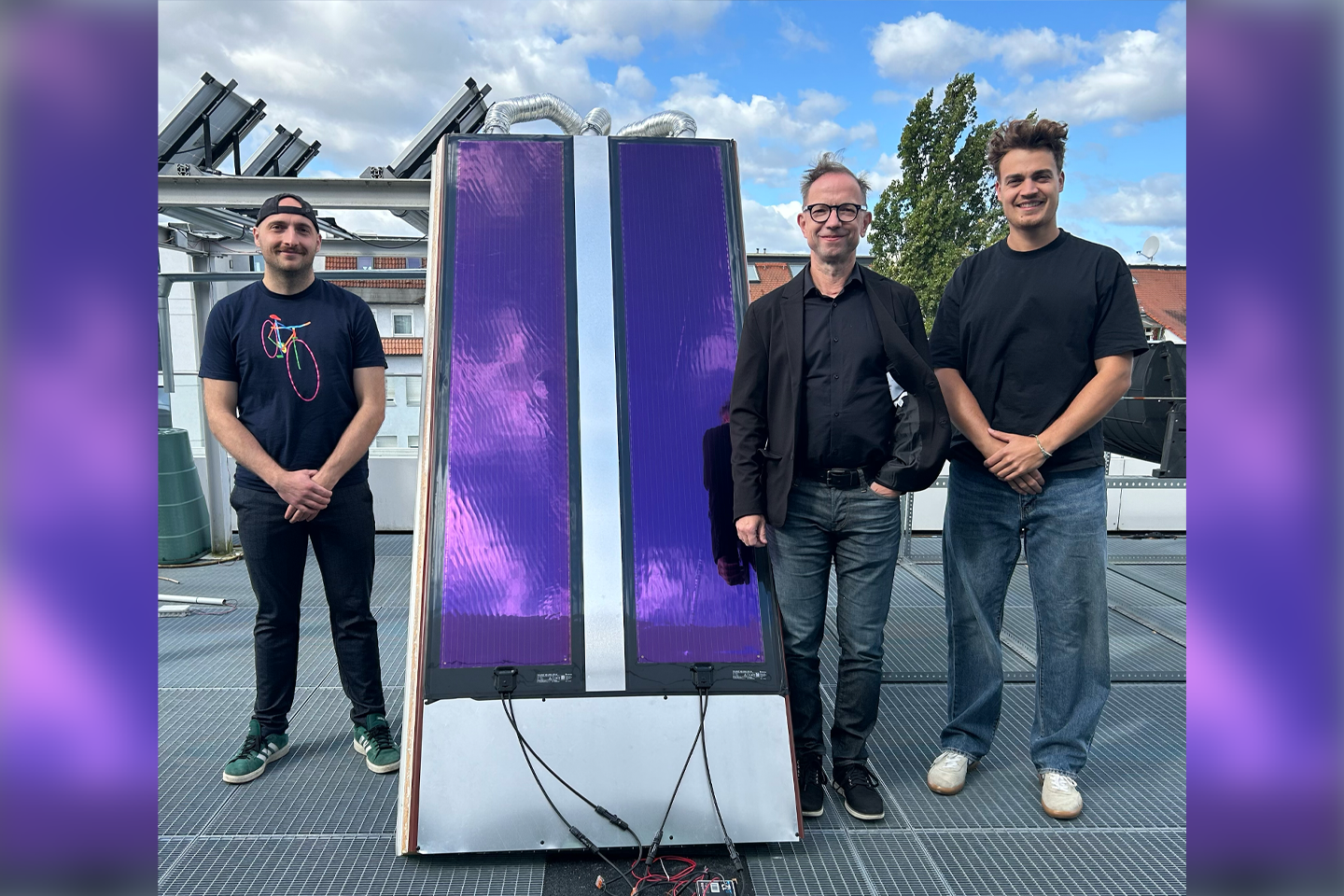
FiPVT | Facade-integrated photovoltaic-thermal system
Design and construction of a laboratory test rig for the integration of (PVT) modules for industrial applications
The ‘Facade-Integrated Photovoltaic-Thermal Modules for Industrial Applications’ (FiPVT) project is developing a prototype specifically designed for retrofitting into trapezoidal metal facades, such as those found in many industrial buildings. The aim is to develop a cost-effective, easy-to-install and efficient solution for the energy retrofitting of industrial buildings.
Funding: ELSTATIK Foundation
Contact: Prof. Mathias Rudolph
Project duration: 04/2025 – 03/2026
ZUKOWO
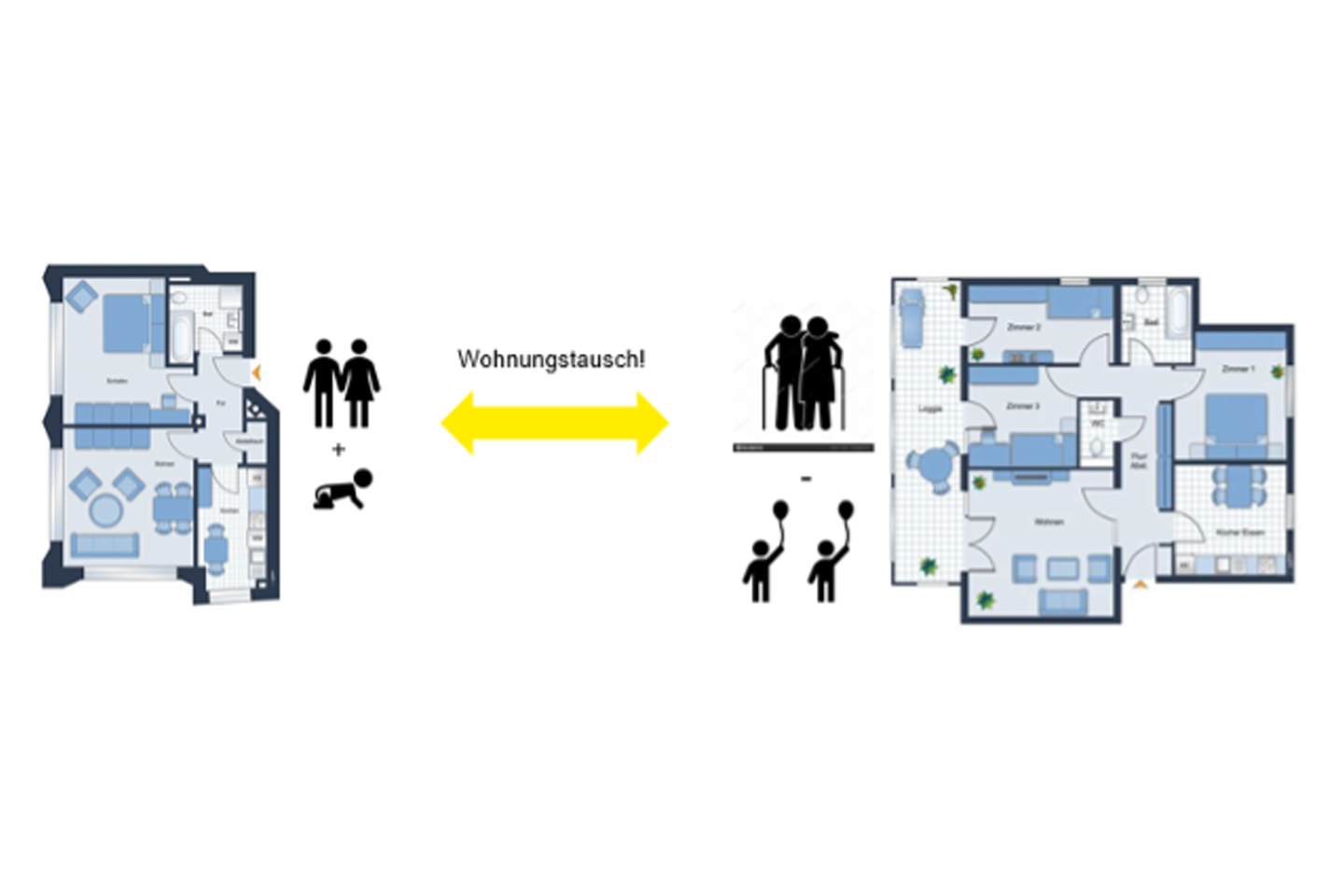
Forward-looking approaches to mobilising urban housing stock
The ZUKOWO project is investigating how the concept of housing mobilisation in urban areas can contribute to affordable and sustainable housing. The aim is to reduce housing shortages and CO₂ emissions through the optimised use of existing housing stock, whilst at the same time ensuring housing security for people facing changes in their household circumstances.
Funding: Federal Ministry of Research, Technology and Space
Co-operating partners: Chair of Sociology, Chemnitz University of Technology; Office for Statistics and Elections, City of Leipzig
Contact: Prof. Mathias Rudolph, M.Sc. Elena Richter
Project duration: 04/2025 – 03/2030
FaGULab
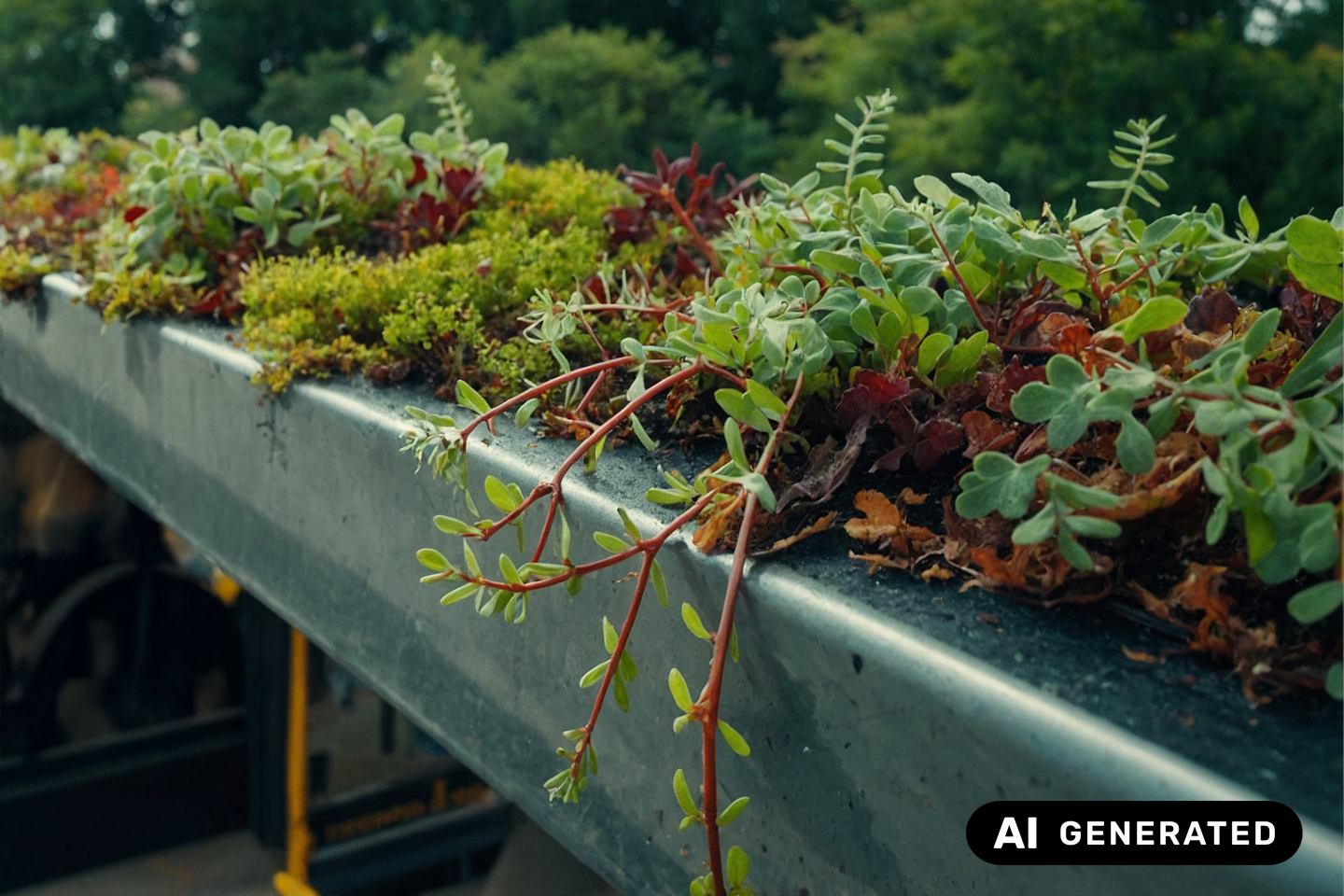
Investigation into the impact of green roofs on passenger shelters in Leipzig on the microclimate and biodiversity, and the development of greening strategies in a real-world laboratory – Leipzig Passenger Shelters Real-World Laboratory
The project is investigating the impact of green roofs on passenger shelters used by Leipzig’s public transport system on biodiversity and, based on this, is developing site-specific greening strategies. Through the active involvement of school pupils and apprentices from various types of schools, environmental and biodiversity data are first collected in two phases, followed by the development of practical solutions in a real-world laboratory, thereby promoting transformative education for sustainable development.
Funding: Funded by the German Federal Environmental Foundation as part of the funding initiative: “Transformative Education for Sustainable Development – Shaping Change”
Contact: Prof. Mathias Rudolph, M.Eng. Stefanie Penzel
Project duration: 03/2025 – 02/2029
RenewableSkills
Promoting technical skills for sustainable solutions
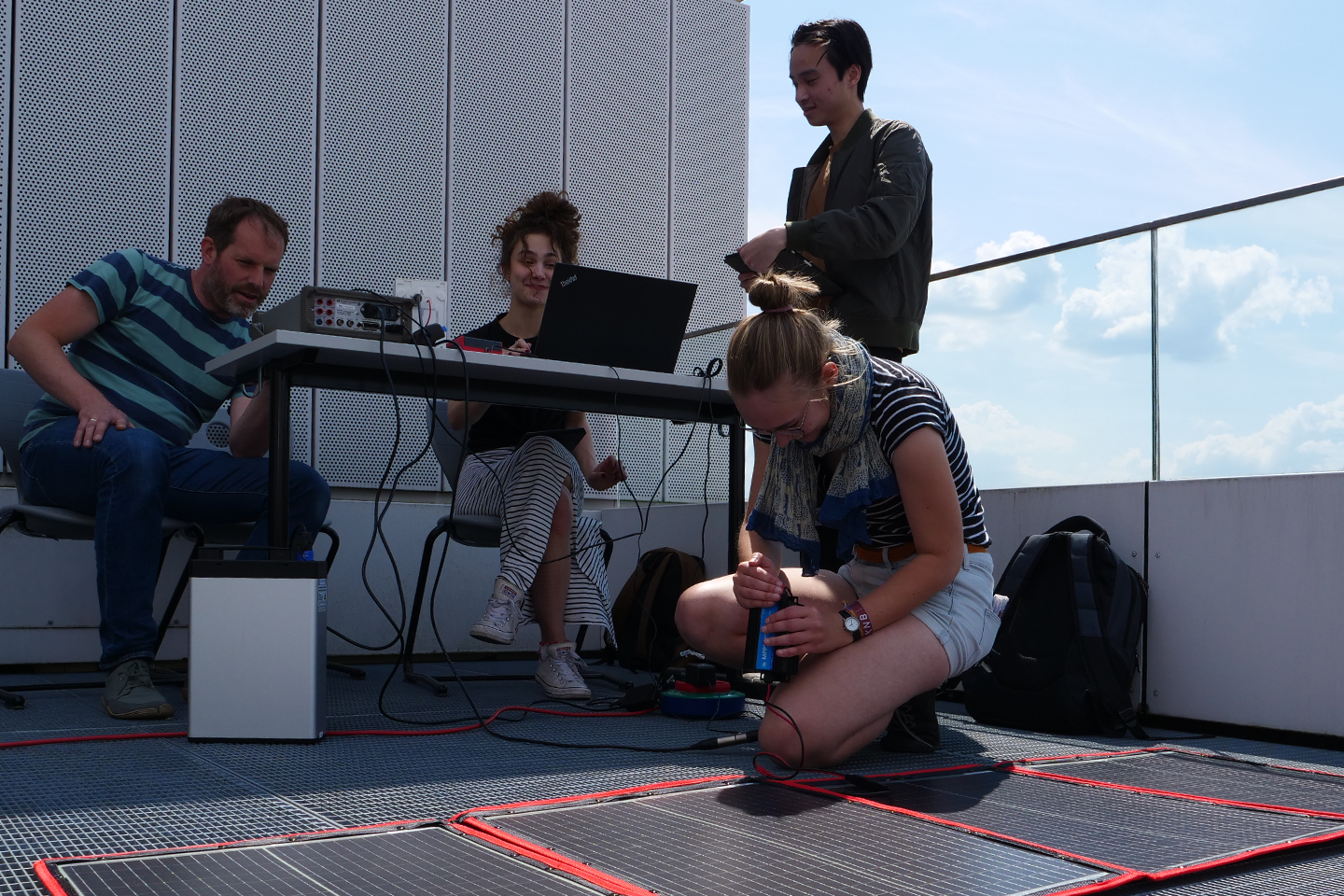
The aim of the project is to develop an innovative learning format (or formats) which, on the one hand, ensures that qualifications are tailored to the labour market and, on the other hand, improves employment prospects. Qualifications tailored to the labour market are achieved by incorporating current industry practice.
Funding: City of Leipzig
Contact persons: Prof. Mathias Rudolph; B.Eng. Elena Richter, B.Eng. Laura Ruminger, M.Eng. Ludwig Ostertag
Project duration: 08/2024 – 07/2028
AMC-PV
Advanced Measurement and Characterisation of PV modules
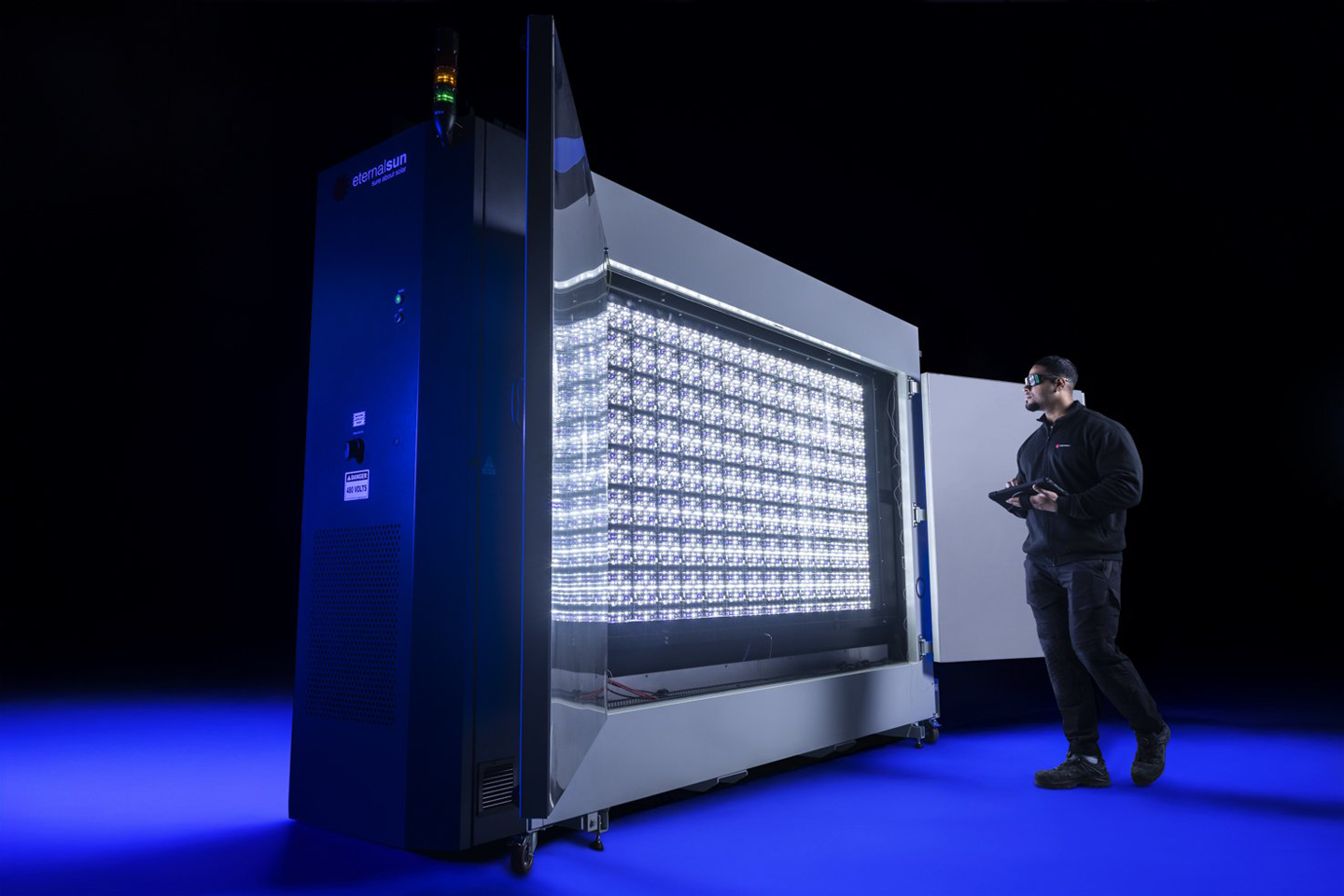
In the first phase of the project, a solar module tester with a continuous lighting function and a climate chamber will be procured; in the second phase, it will be commissioned and extensively tested. Once the project period has ended, a minimum five-year operational period will commence, during which the equipment is to be utilised for scientific and commercial purposes.
Funding: SAB/EU
Contact: Prof. Mathias Rudolph; M.Eng. Thomas Wendt
Project duration: 07/2024 – 12/2026

Smart Energy Technology Laboratory
Promoting independent learning and digital skills in the foundational and measurement engineering training of future engineers through the smart energy technology laboratory and direct feedback via learning platforms
The research focuses on the link between theoretical training and practical application through the development of a smart energy technology laboratory, with the aim of providing students with effective access to digital experiments in the field of energy technology.
Funding: SMWK | Saxony Education Portal – Saxony University Didactics (HDS) and the E-Learning Working Group of the Saxony State Council of Higher Education (AK E-Learning)
Contact: Prof. Mathias Rudolph, M.Eng. Stefanie Penzel, M.Eng. Ludwig Ostertag
Project duration: 04/2024 – 12/2024

AirWaterHarvest
Laying the foundations for estimating the water yield from energy-autonomous water extraction from the ambient air via condensation near the building envelope
This research project is dedicated to analysing the conditions under which it becomes possible to harvest water self-sufficiently from the ambient air, for example for green facades and green roofs
Funding: Zukunft Bau
Contact: Prof. Mathias Rudolph, Dr.-Ing. Maik Wolf
Project duration: 01/2024 – 03/2026
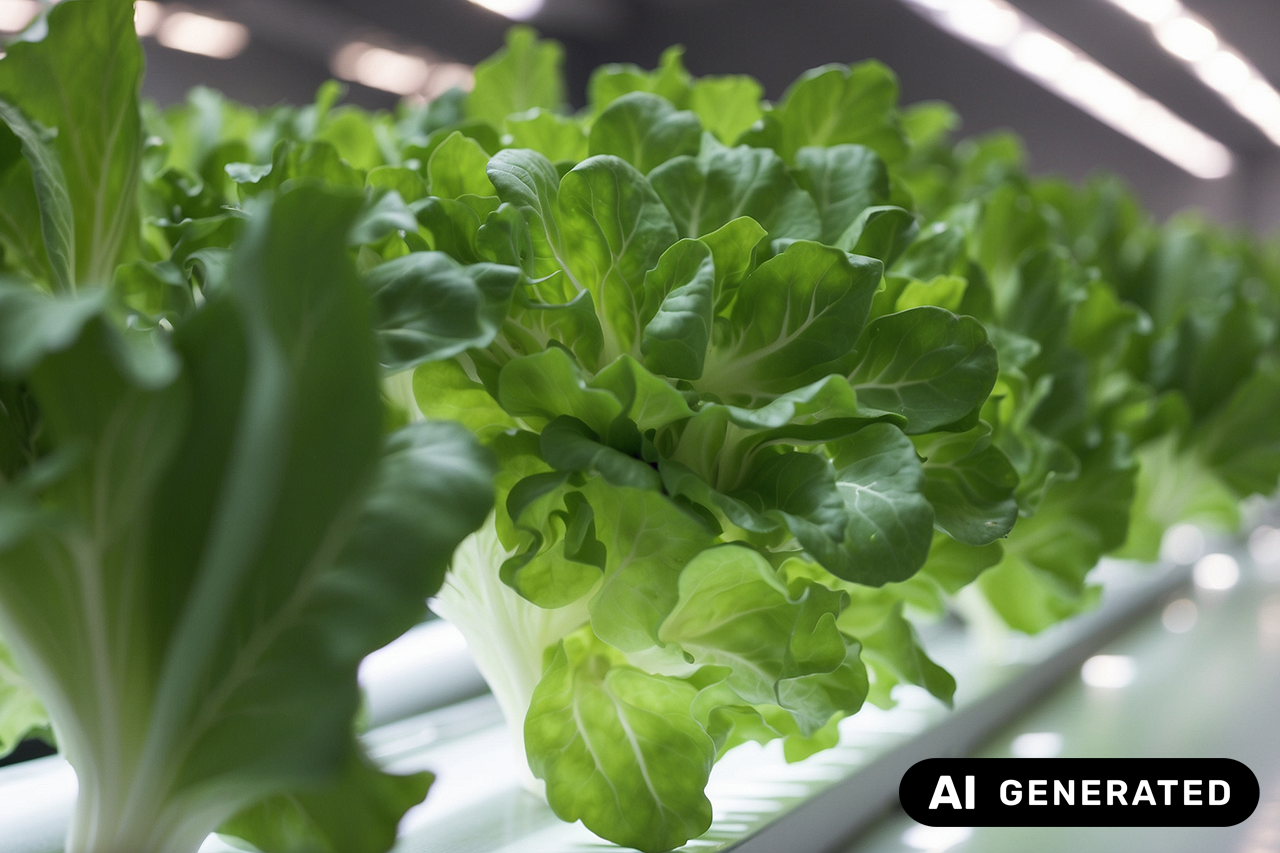
Hydroponics | Urban food supply
An educational project involving collaborative project groups
The aim of the project is to familiarise people from various educational institutions, such as schools and training centres, with the set-up and operation of hydroponic systems. The focus is on the measurement and automation systems used to support sustainable plant cultivation.
Funding: including the eku Future Prize 2023
Contact: Prof. Mathias Rudolph
Project duration: 02/2024 – 01/2025
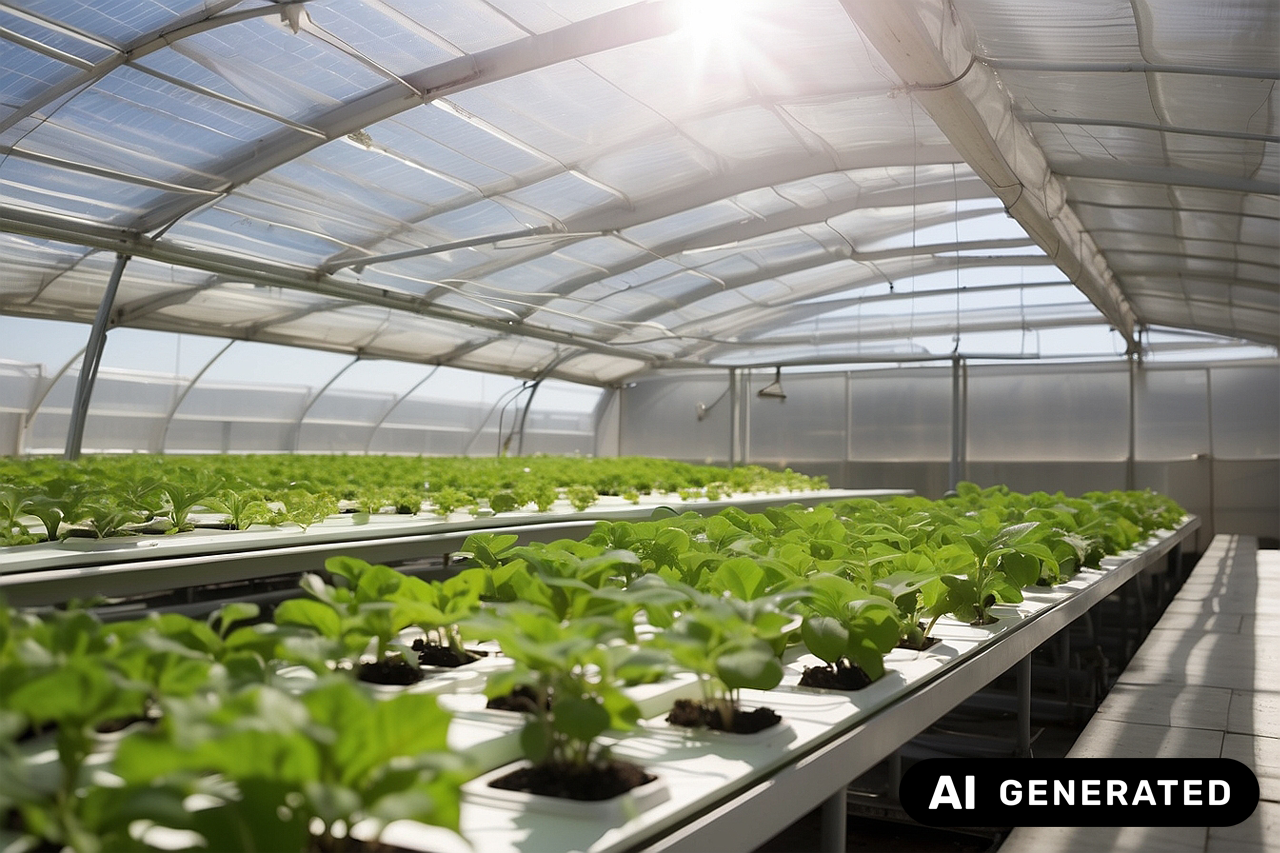
OPV | Organic Photovoltaic
Design and construction of a laboratory test rig for the integration of organic photovoltaic modules into crop production
The project aims to investigate the effects of integrating semi-transparent organic PV modules into greenhouse roofs on plant growth and the greenhouse climate.
Funding: ELSTATIK Foundation
Contact: Prof. Mathias Rudolph; B.Eng. Laura Ruminger
Project duration: 02/2024 – 12/2024

Mobility project: pothole detection
As part of a project funded by the VCD Foundation (Verkehrsclub Deutschland e.V.), a measurement system was designed to map road surface irregularities and damage in the city of Leipzig. In particular, problems arose when recording GPS readings, as these were either unavailable or severely distorted due to the sky being obscured or multiple reflections caused by the large number of tall, densely built-up residential areas. The aim of the new project is to minimise the inaccuracy of the GPS signal using an estimation method and a second reference value. To this end, a method known as ‘dead reckoning’ is used, which calculates the reference location by recording motion data – such as acceleration – and integrating this data.
Funding: VCD Verkehrsclub Deutschland e.V.
Contact: Prof. Mathias Rudolph, M.Sc. Silvio Hund
Project team: Jan Ebert (school pupil), Erik Hertwig (student research assistant)
Project duration: 10/2023 – 06/2024

BeaMove
Beamforming using a drone-swarm-based microphone array as an acoustic camera for noise detection
The aim of the “BeaMove” research project is to apply beamforming techniques to a moving swarm of drones for the rapid and straightforward visual representation and quantification of noise sources, for example in the transport sector.
Funding: Federal Ministry of Digital and Transport (BMDV)
Contact persons: Prof. Mathias Rudolph; M.Eng. Andreas Blum; M.Eng. Finn Bosholm
Project duration: 07/2023 – 03/2025
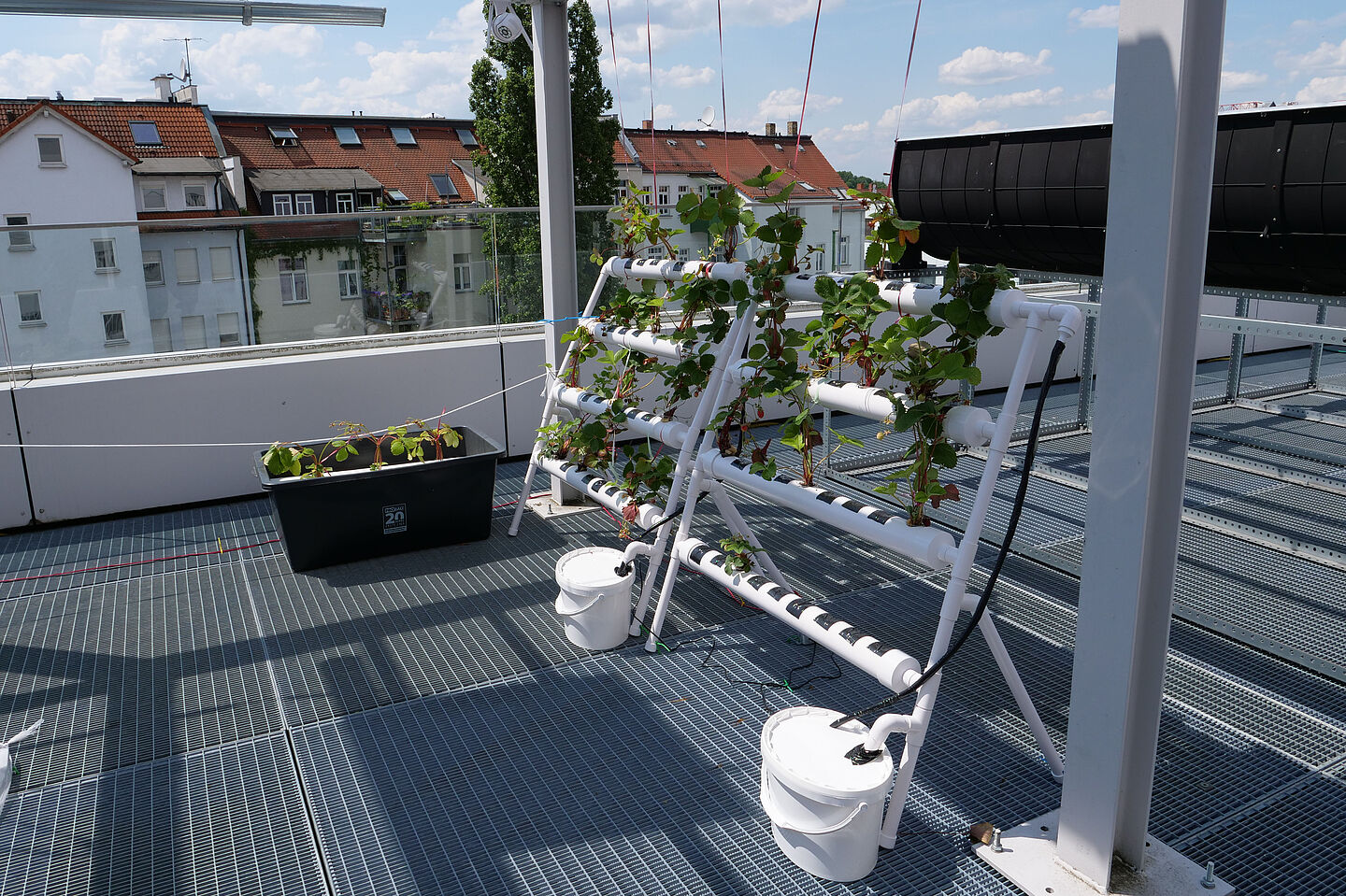
OptiPlant
Simulation-based energy optimisation of mini-PV systems (balcony power stations) for urban gardening applications
The research focuses on simulating the solar power output of photovoltaic energy systems for urban gardening applications. The aim is to use surplus energy from a balcony-based PV power plant to supply a grow box with power.
Funding: ELSTATIK Foundation
Contact: Prof. Mathias Rudolph
Project duration: 06/2022 – 12/2023
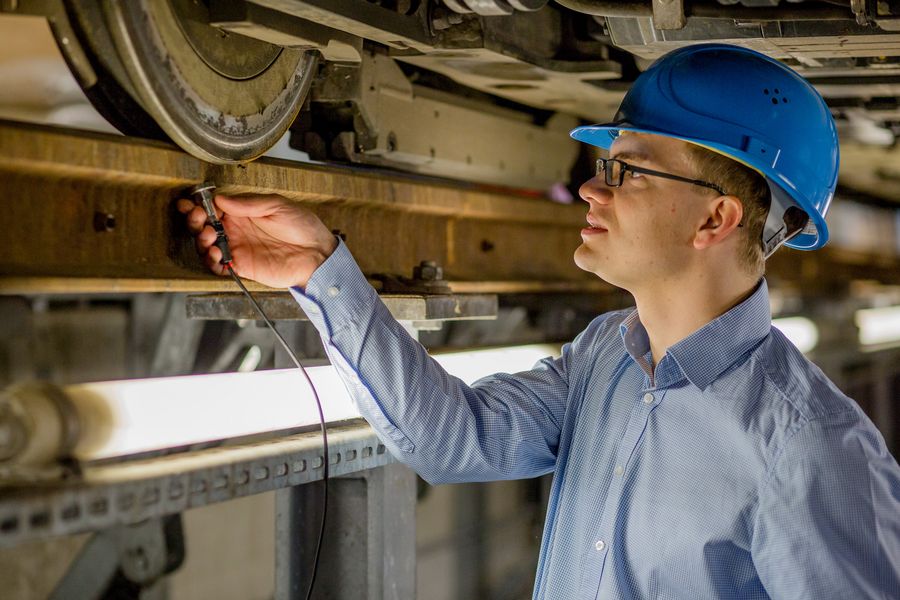
LaDeLok
Laser-based detection of loosening in tram tracks
The aim of the project is to evaluate continuous and automated condition monitoring of rails using a laser-based measurement system. The intention is to deploy this system in regular tram services at a later date.
Funding: Federal Ministry of Digital and Transport (BMDV)
Project partners: BitCtrl Systems GmbH, Leipzig
Contact: M.Eng. Maik Wolf
Project duration: 01/2023 – 06/2024
PiKE
Crop production in the context of climate change and the energy transition – a research project for school pupils
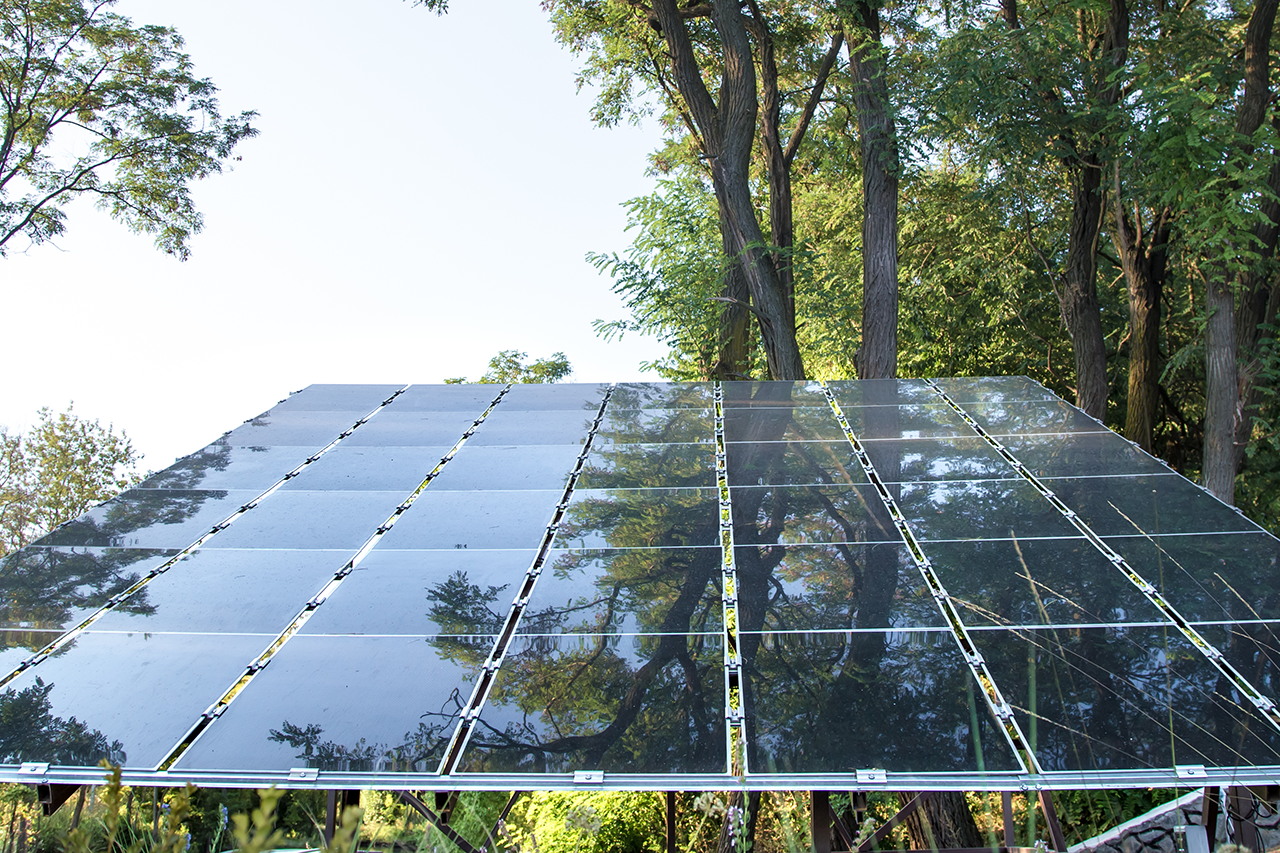
The energy transition is affecting all our lives: in order to link two key issues relating to the basic provision of services for the population, the project is exploring the shared use of land for agriculture and renewable energy generation via photovoltaics – agri-photovoltaics.
Funding: German Federal Environmental Foundation (DBU)
Contact: B.Eng. Ludwig Ostertag, Laura Rumninger
Project duration: 01/2023 – 03/2025
PAMKOP
Practical application of measurement technology in collaborative project groups
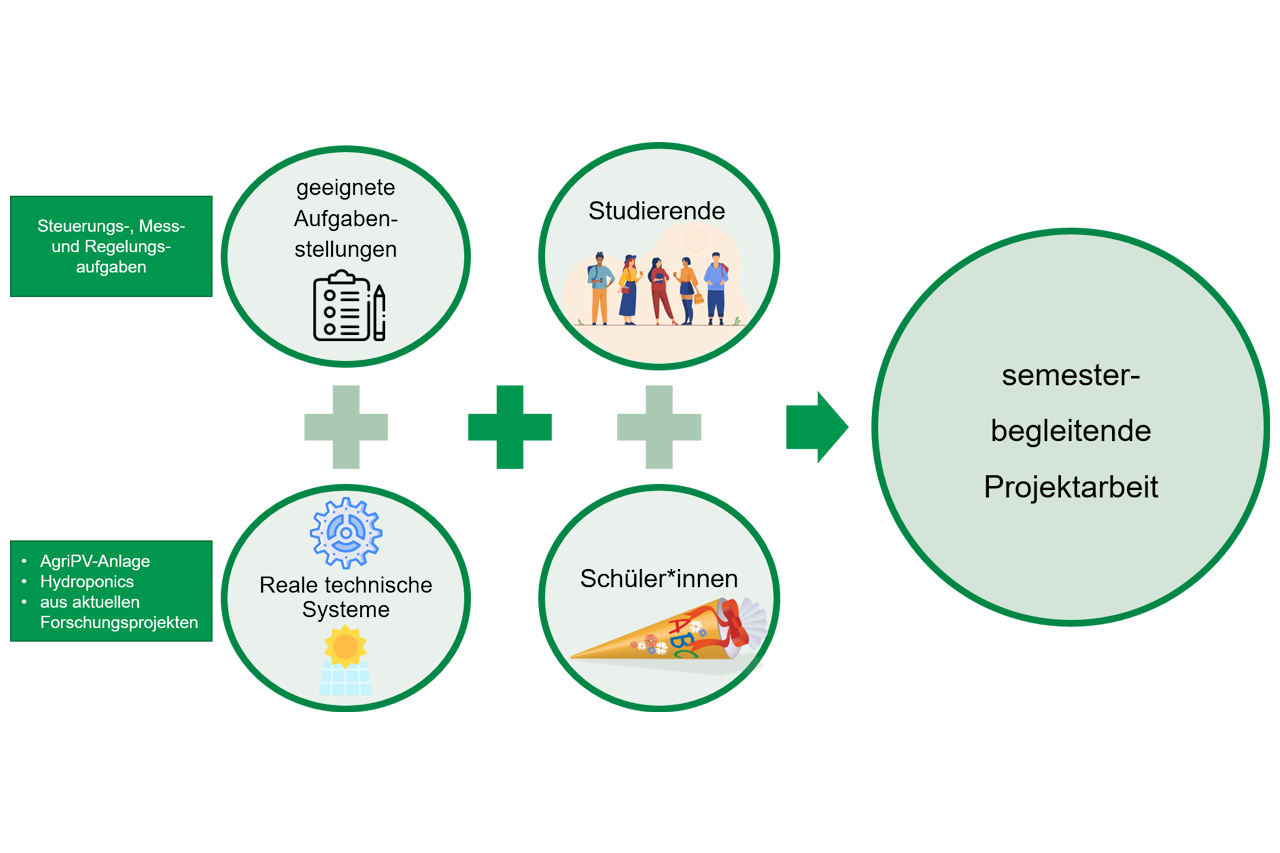
The basic concept of the project is to expand on existing teaching methods by introducing a project-based module running throughout the semester, in which a group of university students works alongside school pupils to tackle problems relating to real-world technical systems and installations in the fields of photovoltaics and smart farming.
Funding: Foundation for Innovation in Higher Education Teaching
Contact: Dipl.-Ing. Tobias Korth; B.Sc. Elena Richter
Project duration: 09/2022 – 02/2024
PVmCharge
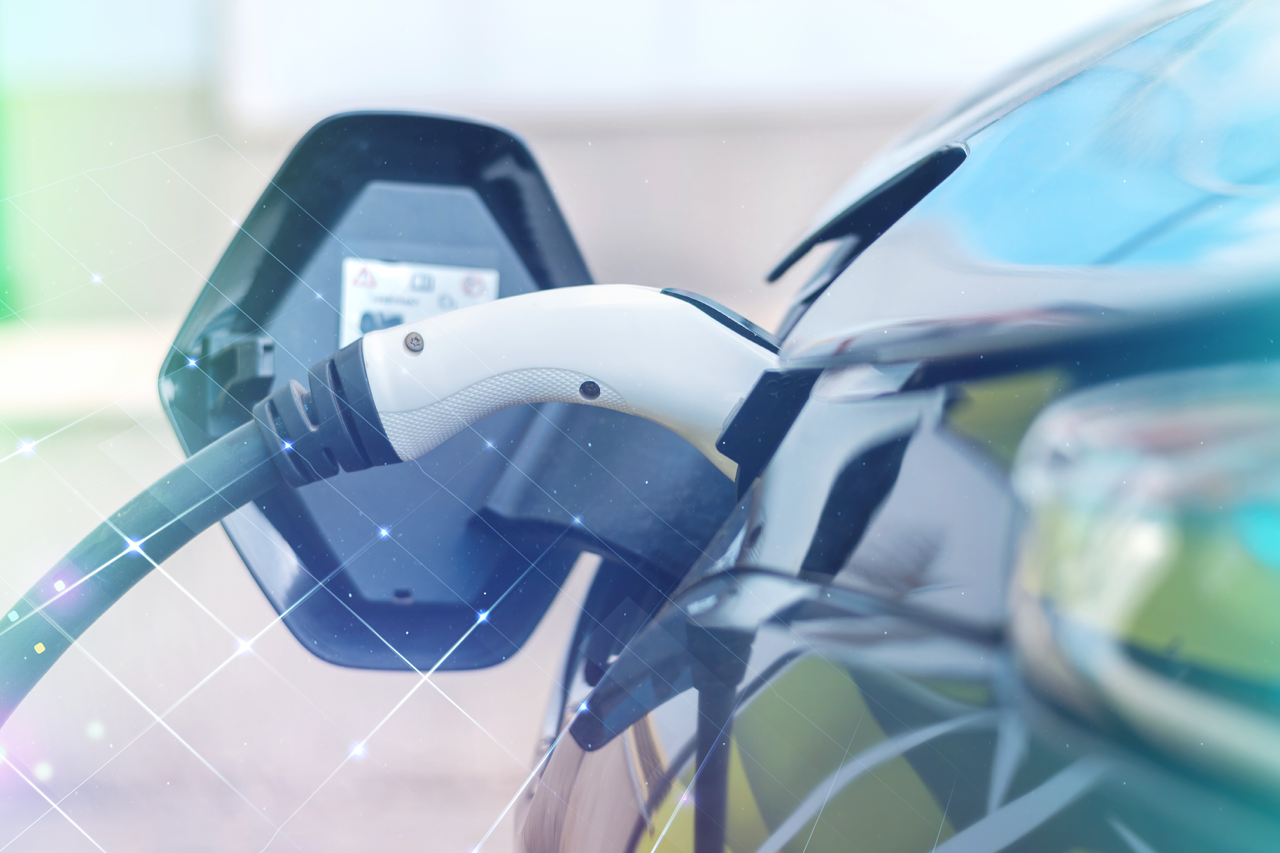
Charging electric cars with solar power: Predicting suitable locations for integrated photovoltaics
One obstacle to the electrification of private transport is the limited number of charging points in public spaces, particularly for people without a private car parking space. One option is to use integrated photovoltaic systems directly to charge electric vehicles. This can be achieved through vehicle-integrated photovoltaic systems or through integrated photovoltaic systems in public car parks.
Funding: mFUND (BMDV)
Contact: M.Sc. Paul Gallin
Project duration: 07/2022 – 06/2023
Web-SZVM
Development of a digital laboratory experiment in the field of photovoltaics
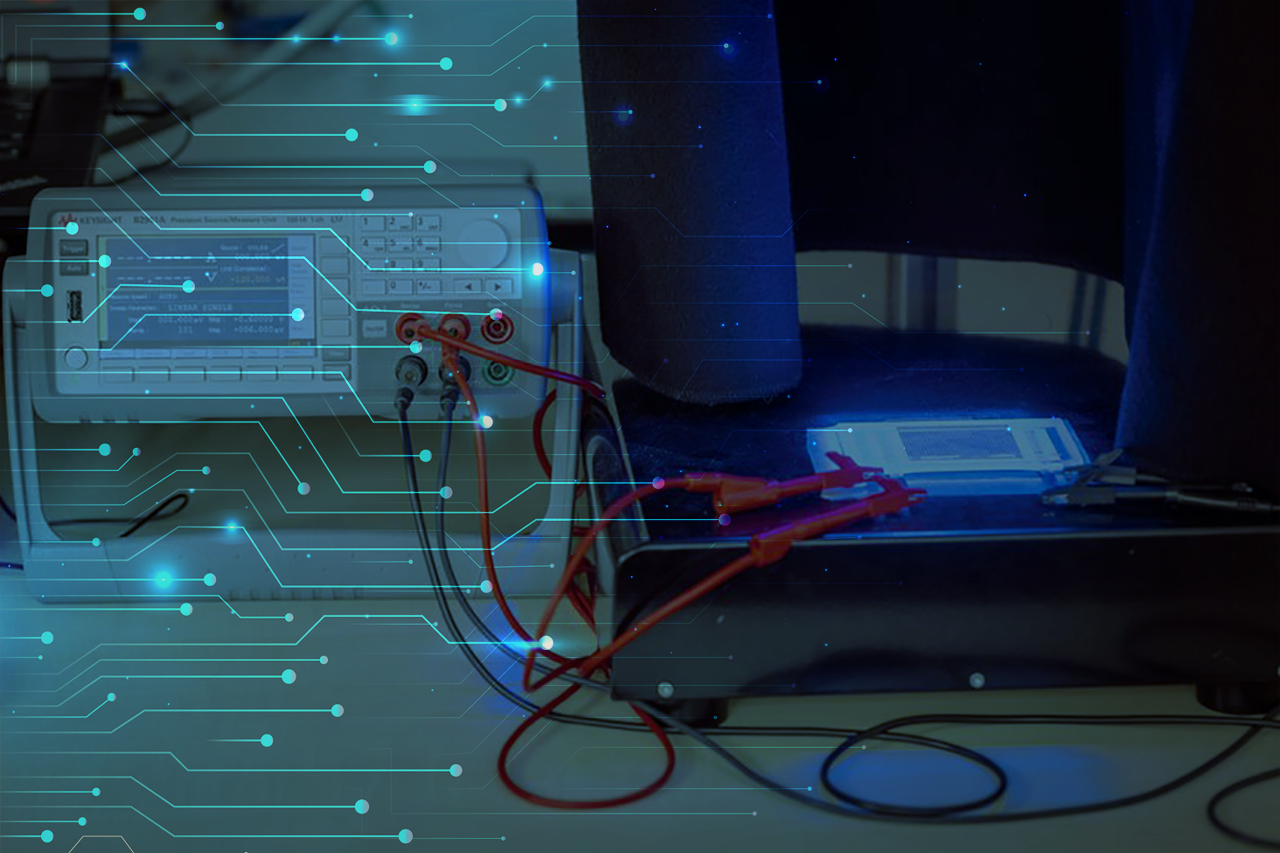
The aim of the project is to translate the concept of a laboratory experiment into a digital learning environment. The implementation is to be carried out as a holistic approach encompassing all phases of a laboratory experiment (preparation, execution and evaluation).
Funding: SMWK | Saxony Education Portal – E-Learning Working Group of the Saxony State Education Authority (LRK Sachsen)
Contact: M.Eng. Julian Hofbauer
Project duration: 03/2022 – 03/2024
SunProcess
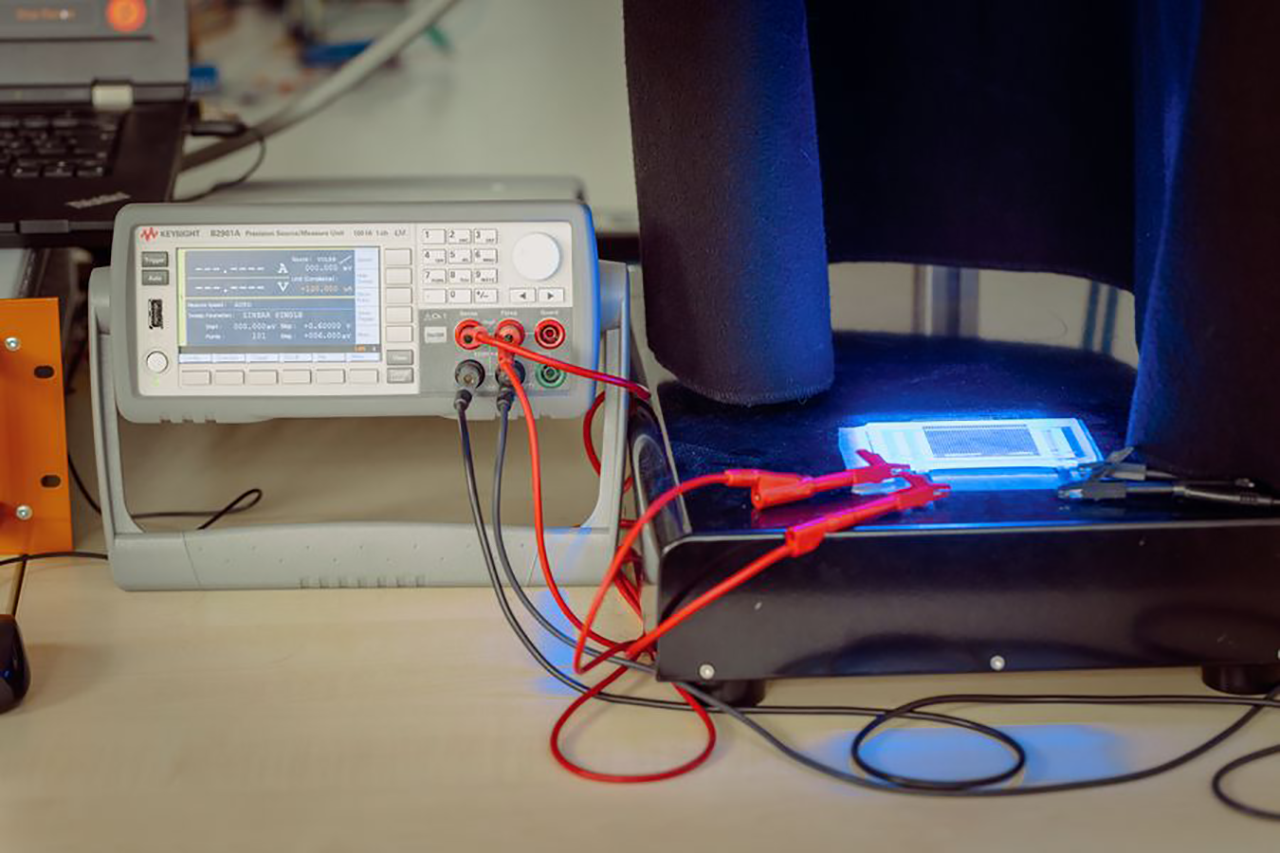
Planning assistance system for the design and installation of perovskite photovoltaic systems
Perovskite solar cells are regarded as the technology of the future in the field of photovoltaics due to their high efficiency (theoretical limit of 43 per cent, compared with 29 per cent for silicon solar cells) and low production costs. One of the objectives is to develop a software prototype that planners and installers can use to support the installation of perovskite photovoltaic systems.
Funding: “Improvement of the regional economic structure” (GRW)
Contact: M.Eng. Julian Hofbauer
Project duration: 12/2021 – 05/2023

FAssMII(c)
Sub-project: Automated delivery and assessment of online engineering practicals in measurement technology/industrial measurement technology
Overall project: FAssMII | Feedback-based e-assessment in mathematics, computer science and engineering
Sub-project c: Laboratory practicals are essential to the learning process for engineering students, particularly due to the application-oriented, practical knowledge transfer that takes place there. The aim of the project is to implement needs-based and location-flexible laboratory practicals in digital form. The approach involves providing remote access to laboratory equipment to generate the necessary data, and utilising the digital learning platform ‘OPAL’ to create an electronic training and examination environment.
Sub-project leader: Prof. Dr.-Ing. Mathias Rudolph
Funding: Foundation for Innovation in Higher Education Teaching
Contact: M.Sc. Silvio Hund
Project duration: 08/2021 – 12/2025

Measurement uncertainties in on-site analysis
As part of this research project, the aim is to use soft-computing methods to model and quantitatively assess the environmental influences currently affecting measurement uncertainty, particularly in existing on-site analytical methods. In addition, an outcome-driven recommendation for action regarding environmental and pollutant monitoring will be developed.
Funding: ESF PhD scholarship
Contact: M.Eng. Stefanie Penzel
Project duration: 01/2020 – 12/2022
AirTreat
Project: Efficient removal of stagnant water and elimination of residual moisture in the pipework systems of compact building services installations.
Funding: ZIM programme of the BMWi
Project partners: bau msr GmbH Leipzig, DRECHSLERtechnik GmbH (associated)
Contact: M.Sc. Paul Gallin
Project duration: 07/2020 – 11/2022

Our Common Future | Agro-photovoltaics
Agro-photovoltaics: is growing crops beneath PV panels a win-win situation?
Which crops can be grown beneath photovoltaic modules? What impact do plants have on photovoltaic modules? Pupils at the Wilhelm-Ostwald-Gymnasium in Leipzig are exploring these and other questions in working groups. They are supported in this by scientists.
Funding: Robert Bosch Stiftung
Contact persons: M.Eng. Julian Hofbauer, B.Eng. Lea Möller, Marlene Damm
Project duration: 09/2020 – 12/2022
String Optimisation
Optimising the performance of photovoltaic systems using variable module configurations
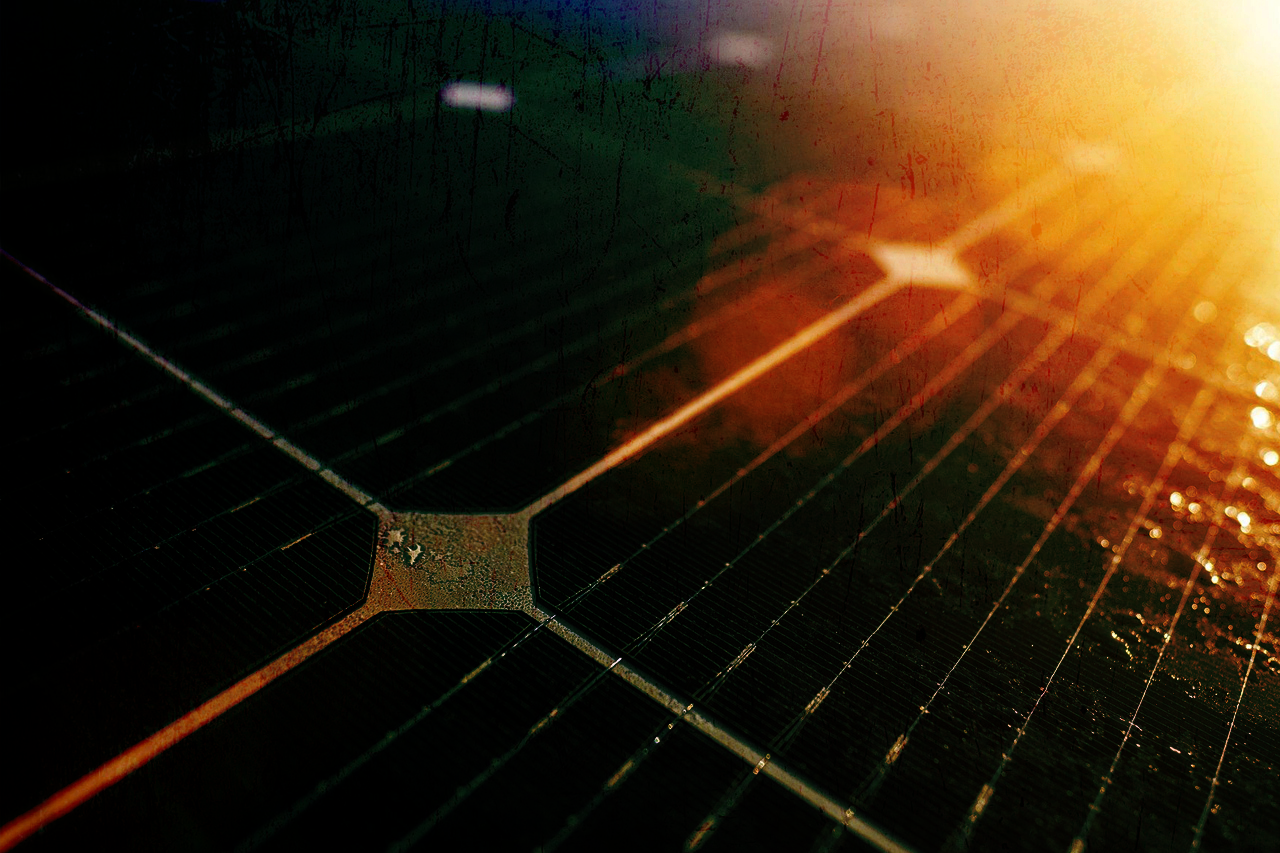
The project aims to investigate performance optimisation of photovoltaic systems based on variable module configuration. For the planned practical application, a prototype of a miniaturised PV system is to be developed accordingly, and a simulation solution is to be generated to support this.
Funding: ZIM of the BMWi
Project duration: 10/2019 – 07/2022
SCE
Smart Control in energy supply systems for forecasting and increasing flexibility in supply demand, and improving energy efficiency
As part of this research project, an intelligent and practical control system (“Smart Control”) is being developed for the various forms of energy (electricity, heat, cooling, gas, etc.) and for their interconnection. The aim is to enable the forecasting of energy demand and demand-based distribution across decentralised subsystems of any size, thereby improving energy efficiency.
Funding: SMWK
Project partners: bau msr GmbH
Contact: M.Eng. Julian Hofbauer
Project duration: 10/2019 – 06/2022
RailState
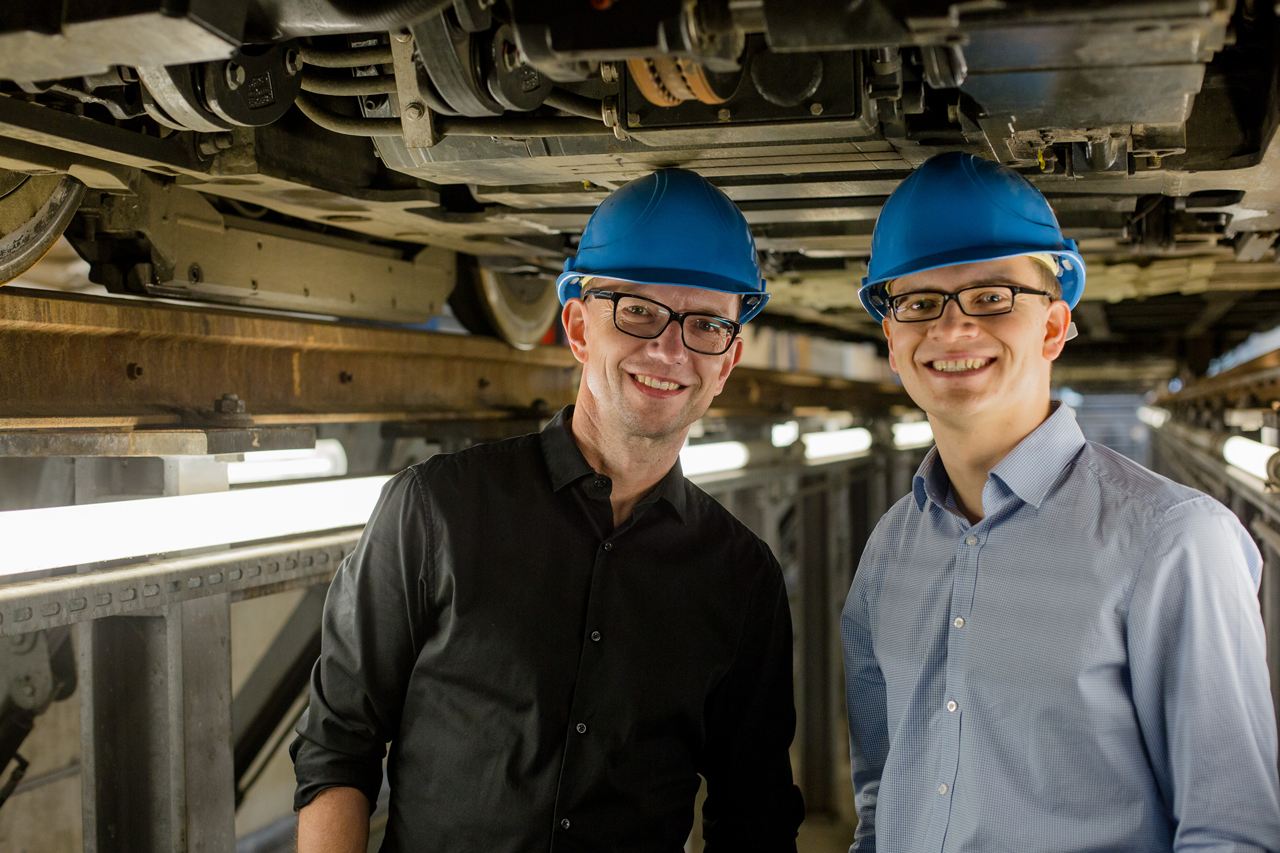
In collaboration with regional companies, a method is being developed to reliably detect the technical and acoustic condition of tram tracks. This will enable the associated partner, LVB GmbH, to identify, for example, specific measures for carrying out maintenance work cost-effectively.
Funding: ZIM programme of the BMWi
Project partner: Leipziger Verkehrsbetriebe (LVB) GmbH (associated)
Contact: M.Eng. Maik Wolf
Project duration: 08/2019 – 12/2021
Smart Bear
In collaboration with an SME, an ultrasound-based diagnostic technology is being developed to directly measure technical condition parameters for the early detection of rolling bearing damage, using integrated, miniaturised and wireless sensors on the inner ring. Decision-making will be automated on the basis of measurement data processing.
Funding: ZIM programme of the BMWi
Project partner: BestSens AG
Contact persons: M.Eng. Michel Ullrich, M.Eng. Maik Wolf
Project duration: 07/2019 – 12/2021

DiagnOptik
Development of wireless optical and self-powered sensor nodes for non-contact vibration diagnosis on machinery
The aim of the project is to develop a method that can be used for vibration diagnosis in machine tools, in order to monitor wear processes whilst the machine is in operation and to be able to take appropriate action at an early stage.
Funding: ERDF
Project partners: Chair of Physics, Laser and Optical Engineering, HTWK Leipzig; SCHAUDT MIKROSA GmbH; SDS – Schwingungs Diagnose Service GmbH
Contact: M.Eng. Andreas Blum
Project duration: 07/2018 – 06/2022
SysKo
System diagnostics for building services compensator installations to derive a condition-based maintenance strategy with automated decision-making
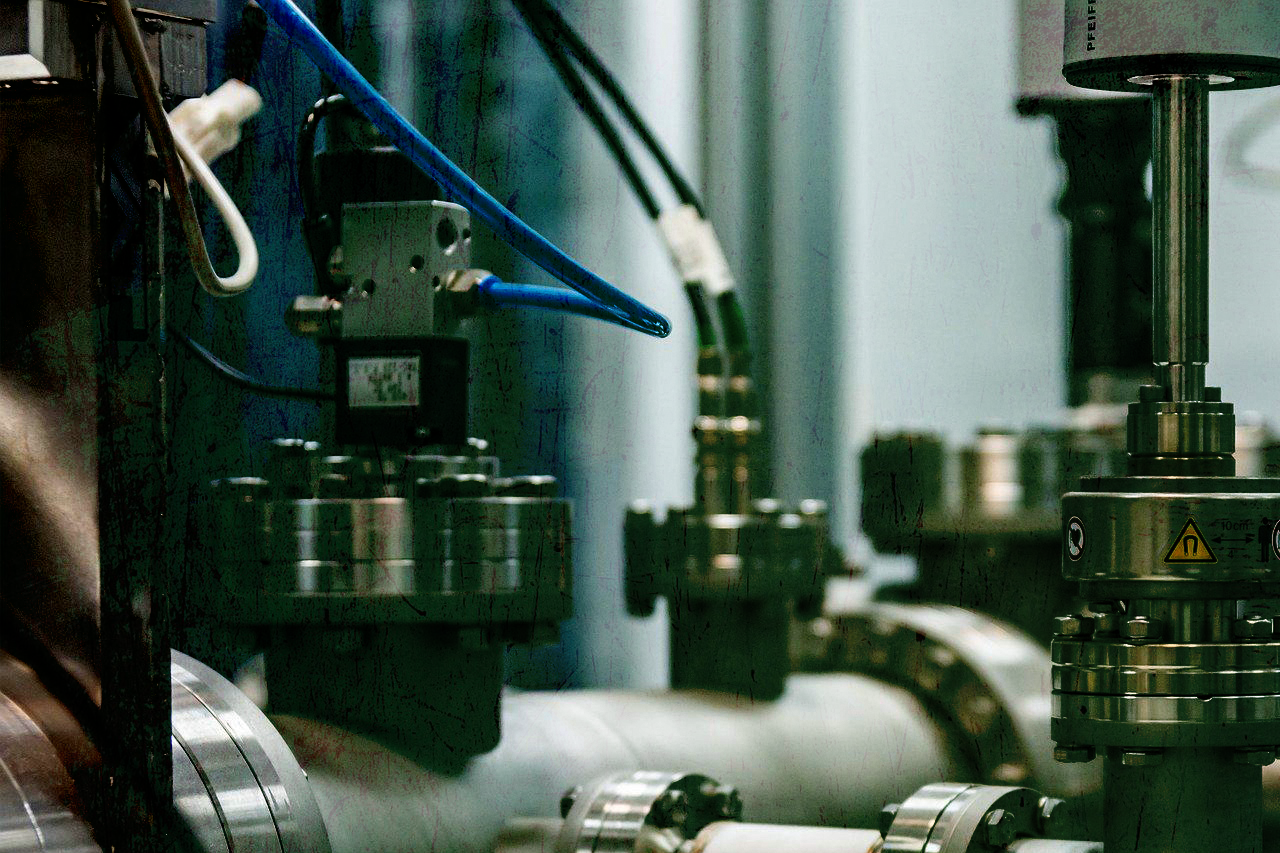
The project investigates wear and tear processes (fatigue and wear) in building services expansion joint installations, with the aim of being able to diagnose the maintenance condition of a component so that measures to extend its service life can be taken at an early stage, before the component fails.
Funding: ZIM of the BMWi
Project partner: bau msr GmbH, Leipzig
Contact: M.Sc. Silvio Hund
Project duration: 07/2018 – 12/2020
Our Common Future | Photovoltaics
Optimisation of photovoltaic modules
How can photovoltaic modules be optimised using measurement methods? What sources of interference and error need to be taken into account? What are the risks and potential benefits of using sunlight to generate electricity? Pupils at the Wilhelm-Ostwald-Gymnasium in Leipzig are exploring these and other questions in working groups. They are supported in this by scientists.
Funding: Robert Bosch Stiftung
Contact persons: M.Eng. Julian Hofbauer, B.Eng. Lea Möller, Marlene Damm
Project duration: 08/2018 – 07/2020

WebL@b
Conducting a web-based experiment on the fundamentals of engineering (particularly measurement and control engineering)
The aim of the project is to develop a generic methodological approach for the flexible implementation of a web-based experiment covering the fundamentals of engineering, particularly in the fields of measurement and control engineering. This includes, in particular, the development of didactic and media-related expertise, for example with regard to the potential applications of relevant media that are effective for creating interactive and digital learning resources.
Funding: SMWK | Saxony Education Portal – E-Learning Working Group of the Saxony
State Council for Education Contact: M.Sc. Silvio Hund
Project duration: 11/2017 – 12/2018
SmartTram
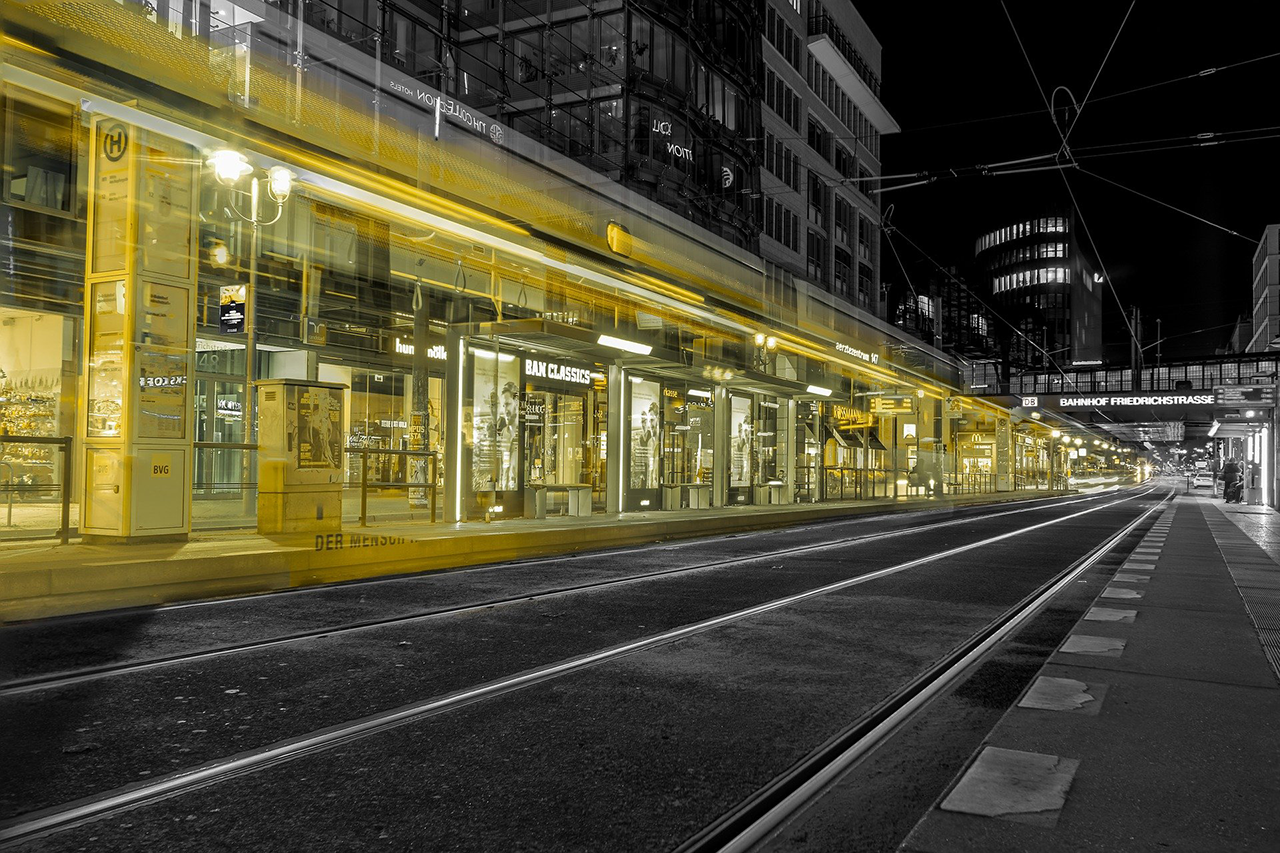
Development of a track-based diagnostic technology for the (simulation-aided) early detection of wear processes typical of trams, with the determination of broadband threshold values for proactive maintenance
The aim of the proposed development is to establish a method for the comprehensive diagnosis of tram vehicles.
Funding: ZIM programme of the Federal Ministry for Economic Affairs and Energy (BMWi)
Project partners: SDS Schwingungsdiagnose Service GmbH, SONOTEC Ultraschallsensorik Halle GmbH
Contact: M.Eng. Maik Wolf
Project duration: 04/2017 – 05/2019

FuzzySun
Measurement and control automation of LED solar simulators for the optimised and rapid performance assessment of solar cells and modules
The FuzzySun project aims to optimise LED-based solar simulators in which LEDs of different colours combine to produce a single spectrum.
Funding: BMBF
Project partners: WAVELABS Solar Metrology Systems GmbH, Fraunhofer CSP (subcontractor)
Contact: M.Eng. Julian Hofbauer
Project duration: 07/2016 – 12/2019
Our Common Future | Energy-Self-Sufficient Measurement Technology
Construction of a test rig to demonstrate energy-self-sufficient measurement technology
As part of the project, a prototype demonstrator sensor module is being developed in collaboration with school pupils, and its use on a test bench for monitoring vibration parameters is being assessed.
Funding: Robert Bosch Stiftung
Contact: M.Eng. Julian Hofbauer
Project duration: 03/2016 – 02/2018

TRAINCON
Diagnosis of drive systems using self-powered wireless sensor networks and the development of a condition-based maintenance strategy with automated decision-making
The aim of the project is to develop a method for detecting fatigue and wear processes in components of rail vehicles – such as roller bearings.
Funding: ZIM programme of the Federal Ministry for Economic Affairs and Energy (BMWi)
Project partners: SDS Schwingungsdiagnose Service GmbH, SINUS Messtechnik GmbH
Contact: M.Eng. Maik Wolf
Project duration: 01/2015 – 03/2017
