

Studying at the Faculty of Engineering
At the Faculty of Engineering (ING), students can study the accredited degree programmes in Energy, Building and Environmental Engineering, Electrical Engineering and Information Technology, and Mechanical Engineering at Bachelor’s level – some of which are joint Bachelor’s programmes – as well as at Master’s level.
Content navigation:
- Energy, Building and Environmental Engineering
- Electrical Engineering and Information Technology
- Mechanical Engineering
The six-semester Bachelor’s programme at the ING Faculty provides an introduction to the methods used to solve engineering problems, enabling students to develop the ability to think and act independently in an engineering context. Building on a broad foundation in the natural sciences and engineering, students can choose to specialise in areas relevant to their career aspirations through specific subject-based specialisations.
Following a Bachelor’s degree, students can progress to a Master’s programme, which is characterised by its academic rigour and practical relevance. Over a standard period of study of four semesters, students broaden and deepen their theoretical knowledge and skills as a prerequisite for more research- and development-oriented work.
Energy, Building and Environmental Technology
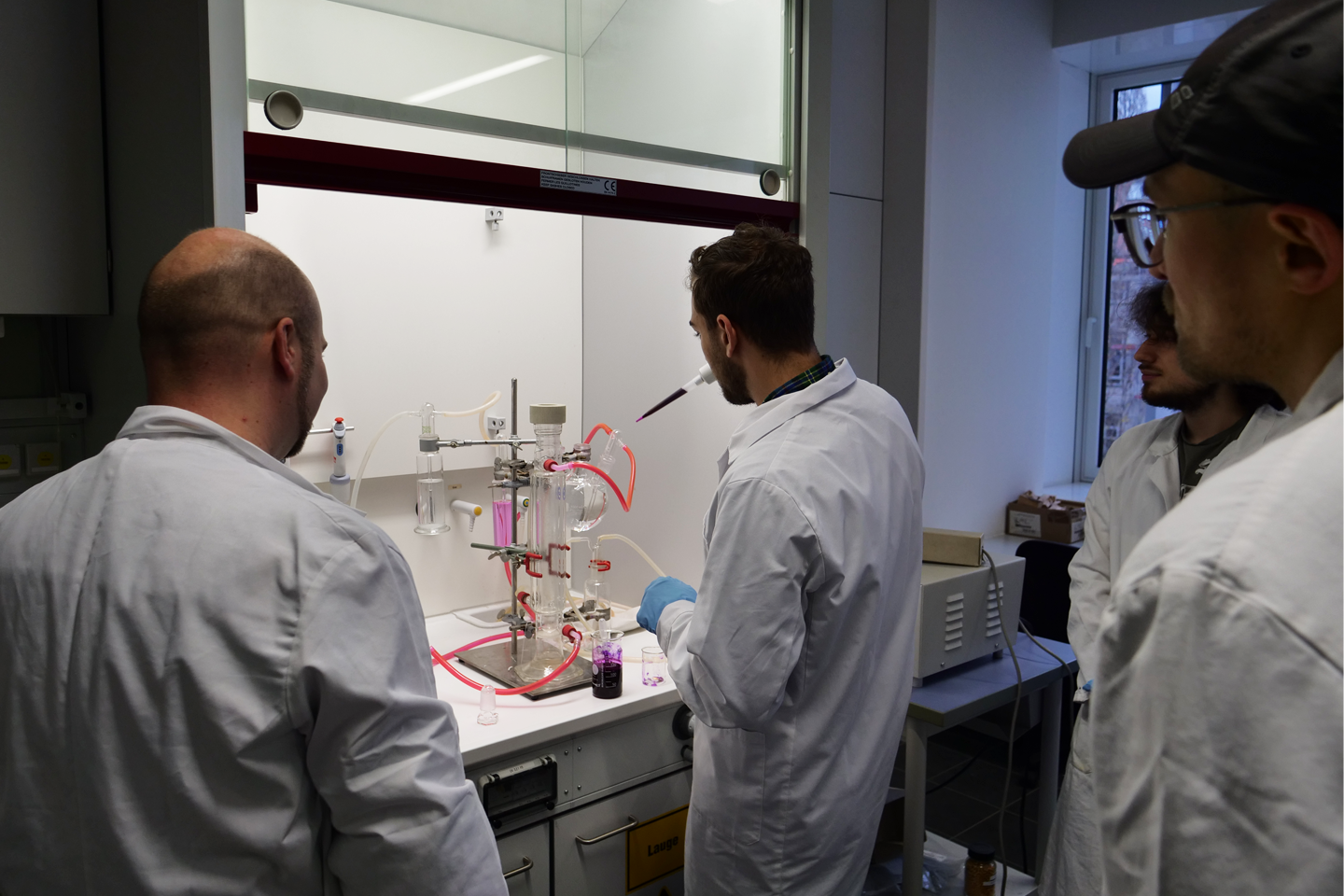
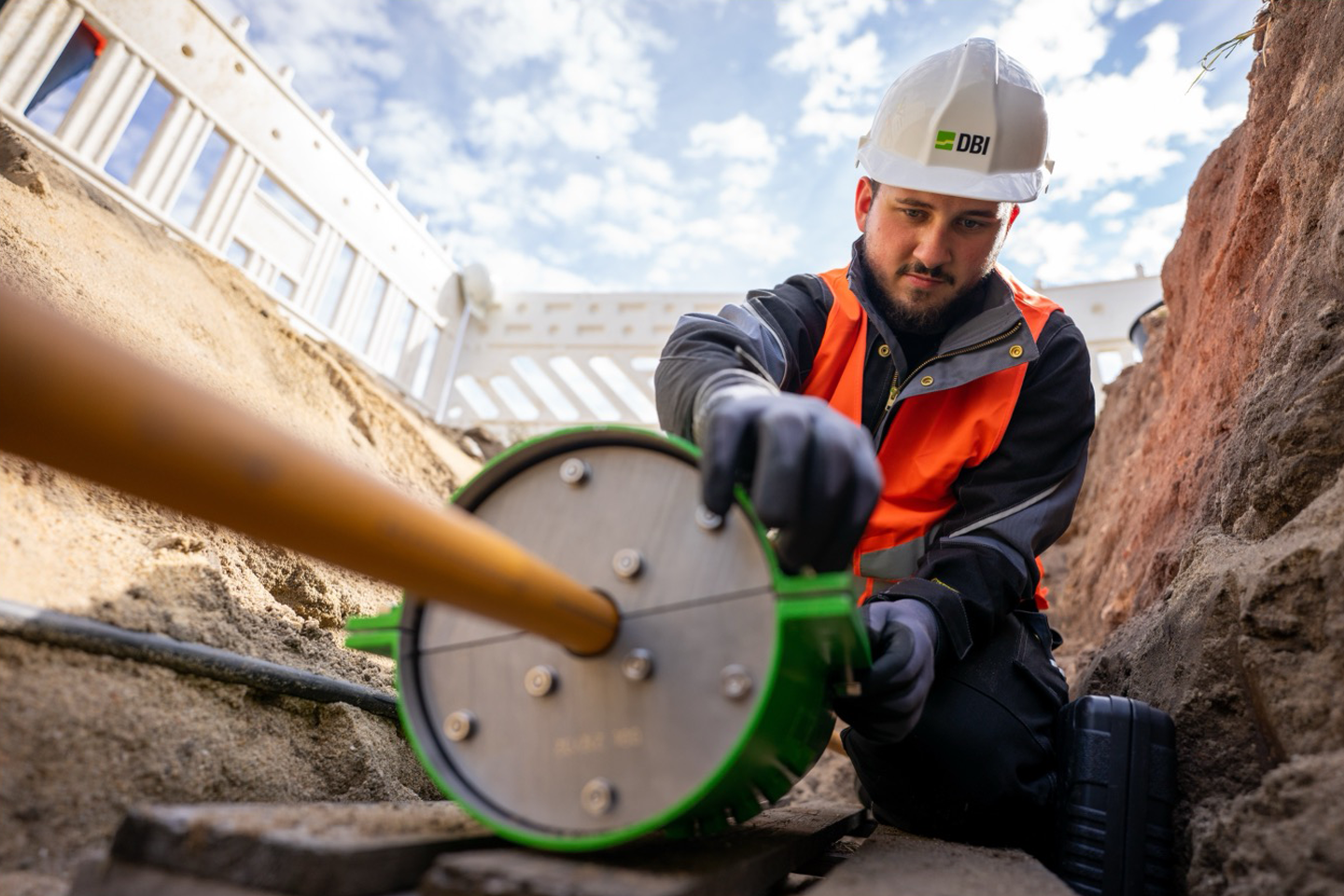
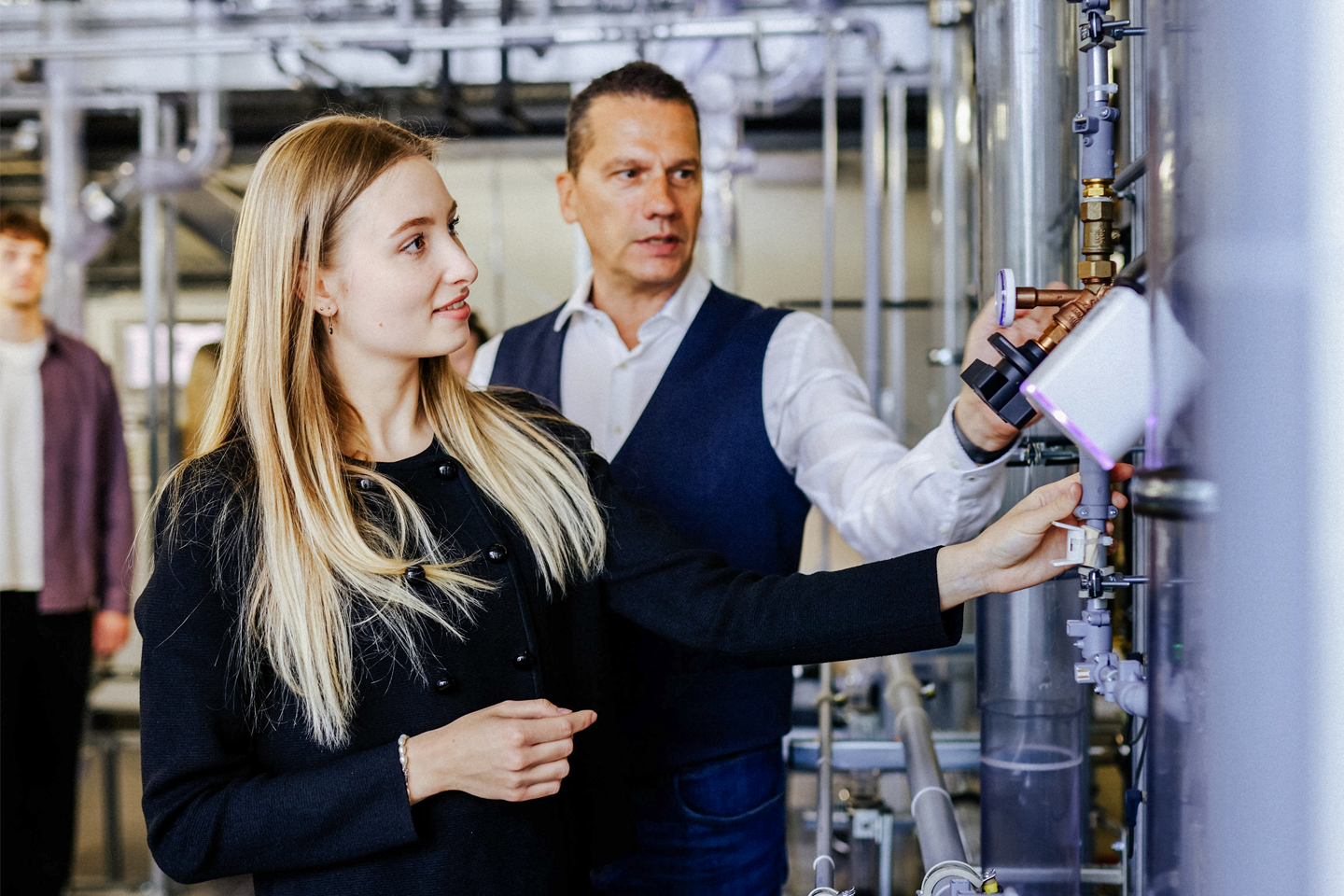
The Energy, Building and Environmental Engineering degree programme combines key engineering specialisations: energy supply, building services engineering and process engineering. Originally stemming from mechanical engineering, energy engineering has developed into a distinct engineering discipline. Progressive climate change is leading to the shared challenge of moving away from fossil fuels towards the use of sustainable energy sources. The focus here is on the thermal energy processes involved in energy supply, centred on the three pillars of energy generation, distribution and demand. The tasks range from the decentralised supply of individual buildings and neighbourhoods to complex systems at national and European level. As electrification progresses, there is an increasing overlap with electrical energy engineering. Engineers face the challenge of designing complex systems for energy generation and utilisation that efficiently integrate process-engineering-based energy conversion processes. The aim is to resolve key issues for an efficient, renewable and secure energy supply of the future. This degree programme specifically trains students for these key tasks. Career opportunities are diverse, ranging from grid operators and energy suppliers to building services engineering firms, and including research and development in energy engineering.
Bachelor’s
The six-semester Bachelor’s programme begins with the fundamentals of natural sciences and engineering in the first three semesters. Elements of a mechanical engineering degree are evident here, although in energy engineering the focus quickly shifts to thermodynamics and fluid mechanics. Furthermore, a more comprehensive chemistry programme is included to prepare students for the subjects in process engineering. In the fourth and fifth semesters, students can then specialise in the fields of energy engineering, building services engineering or environmental engineering through a wide range of compulsory elective modules.
Master’s
The Master’s programme, divided into four semesters, enables students to specialise further in specific fields and prepares them for more advanced roles in research and development, as well as management positions. Scientific training, in particular, is at the heart of the Master’s programme. In addition to further core subjects in numerical mathematics and simulation methods, students can choose from the following specialisation tracks:
Study Profile | Renewable Energies
The Renewable Energies specialisation focuses on energy supply from sustainable sources. The focus is on the technical design and operation of wind and hydroelectric power plants, the conversion of solar radiation into electrical and thermal energy, and energy generation from biomass, including biogas technology.
Study Profile | Energy Systems Engineering
The Energy Systems Engineering specialisation deals with energy distribution in energy networks on various scales, from microgrids to the gas network. In addition to the technical aspects, this specialisation bridges the gap to the energy industry, always with heat as the primary energy carrier. Methods for grid simulation round off the programme and provide training tailored to the current requirements in this field.
Study Profile | Building Services Engineering
The Building Services Engineering specialisation focuses on energy demand within buildings and provides training in the integrated planning and implementation of complex technical systems in buildings, with a view to realising energy-efficient and comfortable spatial concepts. The focus is on digitalisation in building services engineering and the use of Building Information Modelling (BIM) for efficient planning processes, taking into account current building physics and construction technology.
Students choose one of the three specialisations to tailor their Master’s programme. A wide range of compulsory-elective modules enables the further integration of relevant skills to ensure a comprehensive Master’s education.
Electrical Engineering and Information Technology
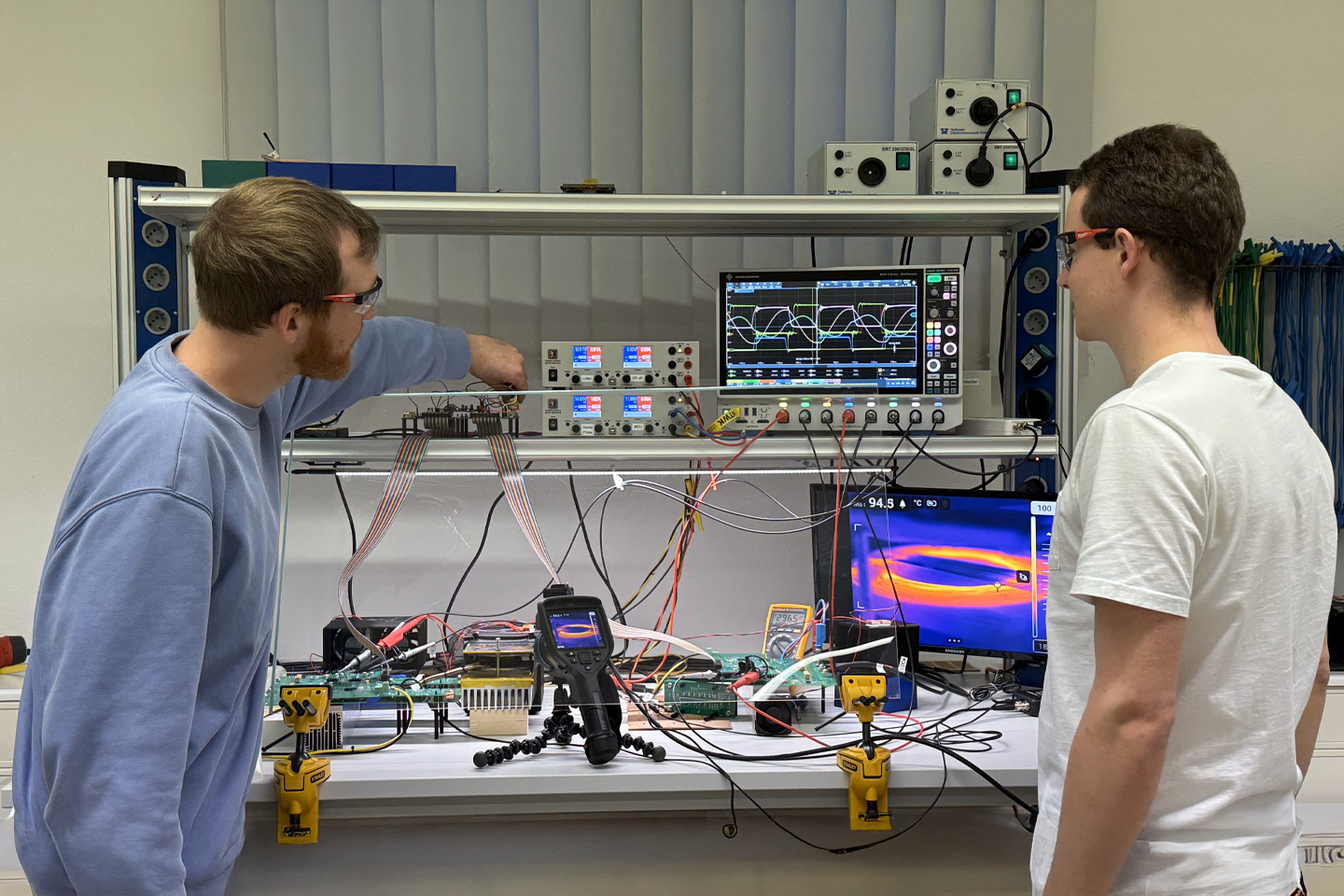
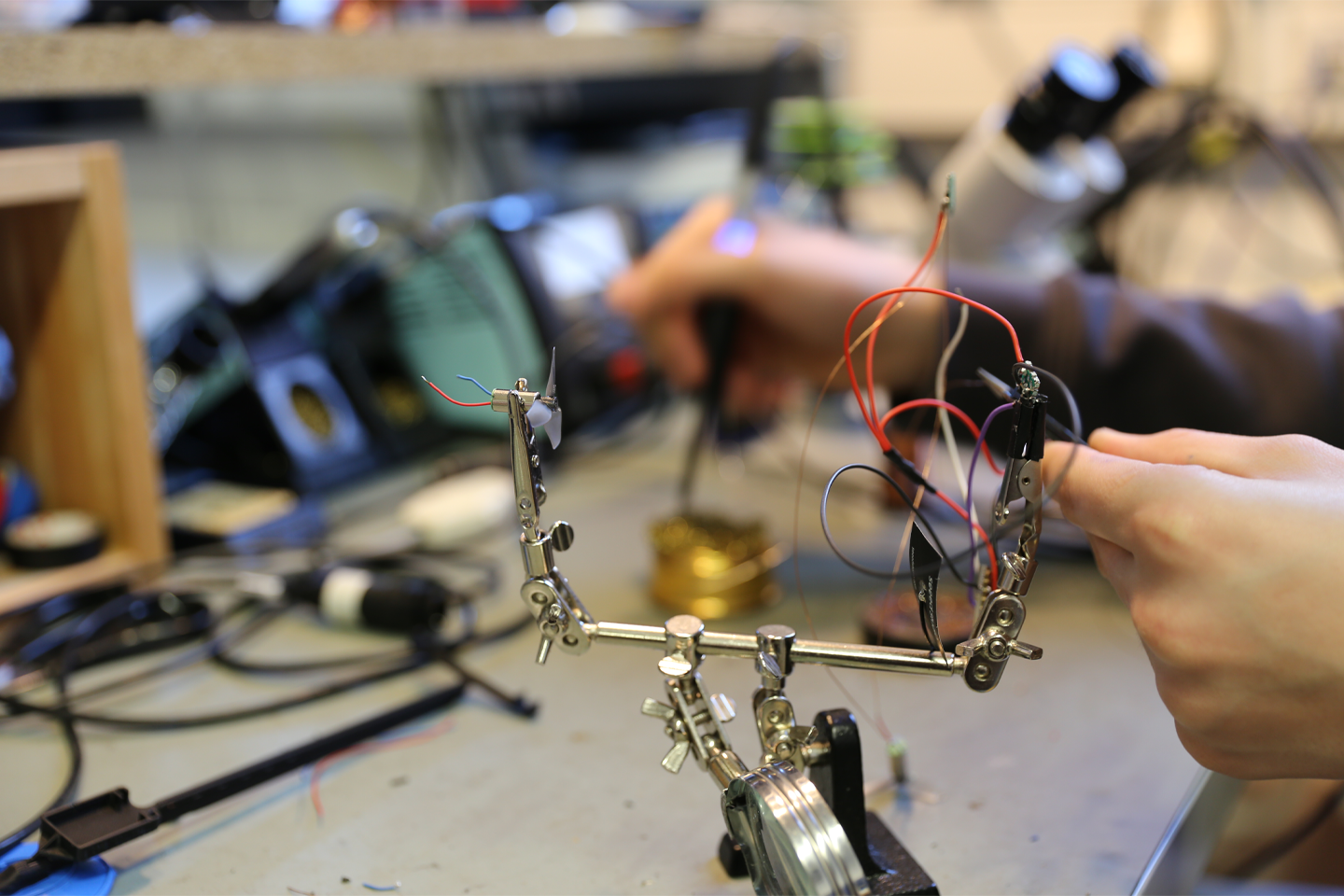
Electrical and Information Technology is a highly diverse engineering discipline with an extremely wide range of potential applications. The use of renewable energy is driving electrification in many sectors of industry, transport and building energy supply. At the same time, we are witnessing digitalisation and increasing connectivity in our private lives as well as in business and public administration. Consequently, the importance of electrical engineering and information technology is growing. This is epitomised by the vision of the ‘All-Electric Society’. Opportunities for engineers specialising in electrical and information technology can be found throughout the life cycle of a wide variety of technical systems – from the initial ideas through to development, manufacture, technical sales, commissioning and maintenance, right through to recycling. These systems may include, for example, power electronic converters for feeding renewable energy into the grid, medical devices for monitoring vital signs, mobile robots in a warehouse, or control systems on a machine tool. All these systems are characterised by the fact that, in addition to mechanical and electrical hardware, information processing – and thus software – is essential to their operation.
Due to the diversity of tasks and systems, electrical and information technology engineers specialise during their professional careers, having already laid the foundations for this during their studies.
Bachelor’s
The Bachelor’s programme in Electrical Engineering and Information Technology initially covers, over the first three semesters, the necessary mathematical and scientific foundations – including computer science – as well as the fundamentals of the discipline of Electrical Engineering and Information Technology. This foundation phase is also designed to ensure that, upon successful completion, graduates are versatile and able to adapt to various professional fields. From the fourth semester onwards, students can choose one of four specialisation profiles:
- Autonomous and Intelligent Systems
- Automation
- Electrical Power Engineering
- Signal Processing and Embedded Systems
The Autonomous and Intelligent Systems specialisation focuses on highly automated systems, such as autonomous mobile robots, and the methods and technologies required for them. Specific topics include the fundamentals of robotics, automation systems, computer vision and machine learning.
The Automation Technology specialisation deals with the methods and systems required to automate technical processes, such as measurement and sensor technology, regulation and control technology, industrial data communication, and automation and process control systems.
The Electrical Power Engineering specialisation focuses on methods and systems for the transmission and conversion of electrical energy, and the integration and utilisation of renewable energy. Topics include power electronics, high-voltage technology, electrical machines and electrical installations, as well as planning and project management.
The Signal Processing and Embedded Systems specialisation deals with analogue and digital circuit technology as the hardware basis, and with methods of signal processing and their applications, for example in communications technology and medical technology.
These specialisations provide an initial focus on a specific professional field. In addition, compulsory elective modules allow students to explore or deepen their knowledge in further areas. A typical feature of the Bachelor’s programme is that students first become familiar with concepts and methods and then, through exercises, practical sessions and project work, learn to master and apply them.
Master’s
The Master’s programme in Electrical Engineering and Information Technology is designed to equip graduates to take on challenging tasks, for example in research and development. It is also intended to prepare students for further academic qualifications. By choosing a study profile, students are expected to build on the initial specialisation gained during their Bachelor’s degree. There are four profiles to choose from:
- Autonomous and Intelligent Systems
- Automation
- Electrical Power Engineering
- Signal Processing and Embedded Systems
Furthermore, a wide range of compulsory electives allows students to focus on their own areas of interest. The Master’s programme typically involves working on projects. In doing so, students acquire new knowledge, research information and develop solutions to practical problems, which are often linked to research and development projects at the faculty.
Mechanical Engineering
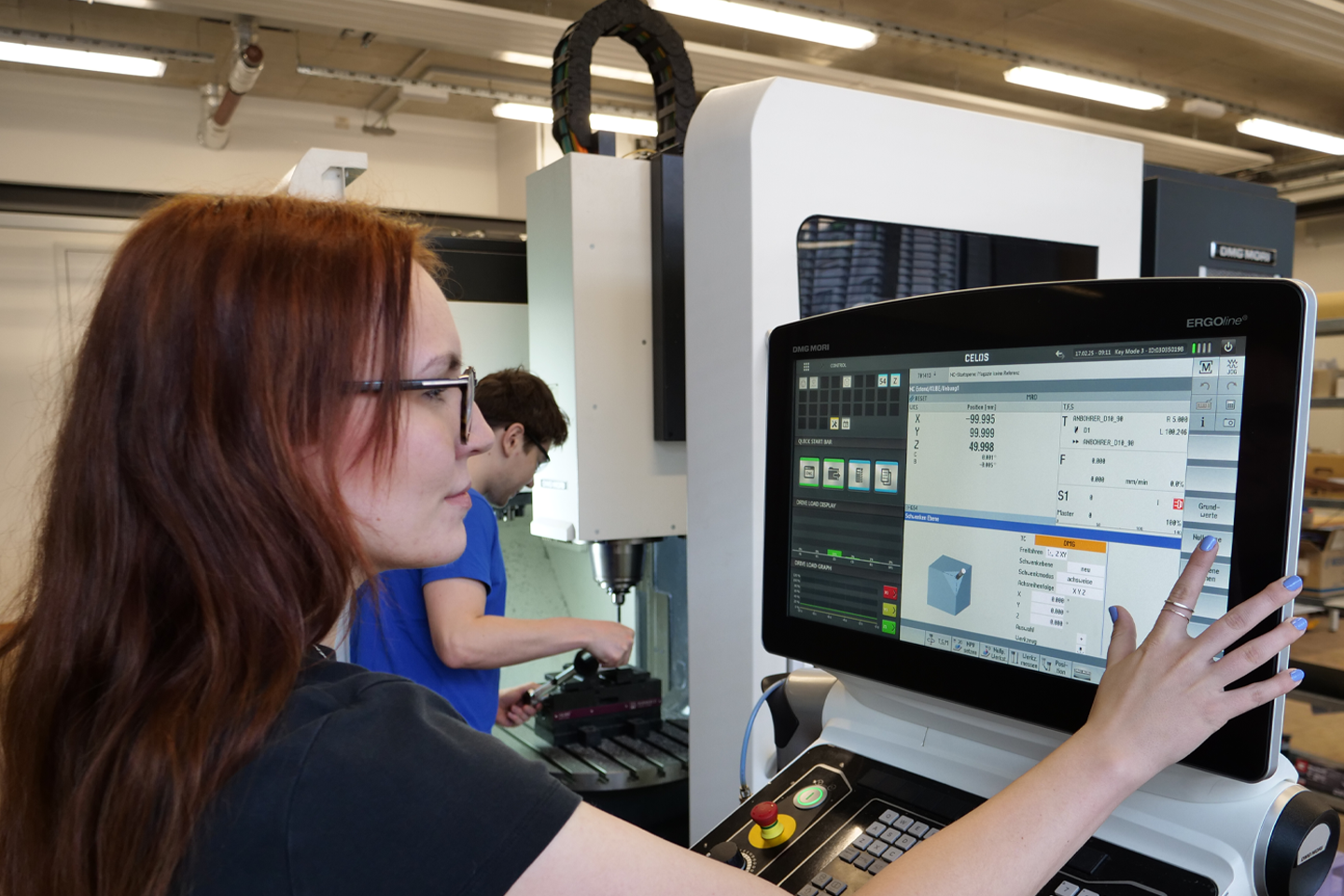
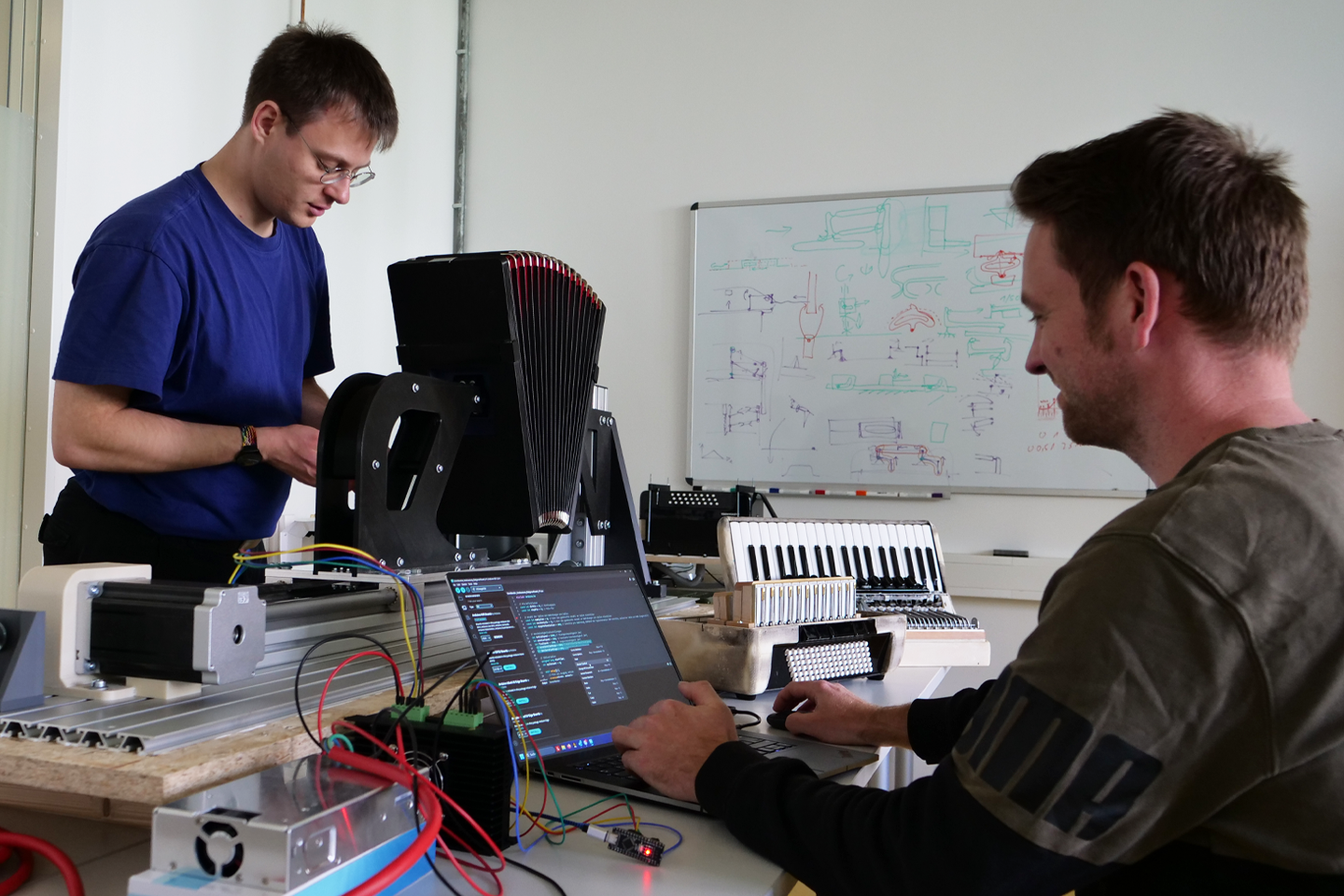
Mechanical engineering has now become a very broad field of knowledge. It ranges from the methods used in the initial stages of development to the final manufacture of products, from the initial commissioning of a machine to its complete recycling, from traditional manufacturing technologies such as casting or welding to the most advanced additive manufacturing processes, from traditional analysis and synthesis tools to state-of-the-art digital tools for all stages of the product life cycle. The subjects of interest in mechanical engineering also cover a broad spectrum. These include precision mechanical watch movements and the largest wind turbines, state-of-the-art lightweight bicycles and hydrogen-powered motor vehicles, autonomous robots and medical devices, to name but a few. It is therefore virtually impossible to offer a mechanical engineering degree programme that covers all sub-fields in sufficient detail. It seems more sensible to focus either on specific product categories (e.g. automotive engineering, medical technology), specific groups of technological processes (e.g. welding technology, lightweight construction technologies) or methodological areas of specialisation (such as product development, process development, simulation techniques, production engineering).
The mechanical engineering degree programme at HTWK Leipzig is primarily focused on the development and production of technical systems. Development encompasses all key processes, from the generation of initial concepts through the actual design – as the central creative process – to the simulation-based and experimental validation of functional properties. Production refers to all processes from the manufacturing concept through to the design of a complete factory for the manufacture of specific products. The development and production methods are, in principle, universally applicable; at HTWK, the focus is on medical technology applications (e.g. exoskeletons, mechatronic prostheses), transport systems (e.g. bicycles, hydrogen-powered trains, intralogistics) and energy technology (e.g. wind energy, photovoltaics).
Bachelor’s
The Bachelor’s degree programme in Mechanical Engineering is designed as a general engineering education in mechanical engineering and, without further specialisation, aims to provide a comprehensive overview of the field. It begins by imparting the necessary basic knowledge of mathematics and natural sciences, as well as the general fundamentals of mechanical engineering, over the first three semesters. Building on this, modules specific to mechanical engineering follow. In the fourth and fifth semesters, students can then specialise in development or production methodology through four compulsory-elective modules in each semester.
Computer-based work using relevant software (computer algebra, CAD – Computer-Aided Design, CAM – Computer-Aided Manufacturing, FEM – Finite Element Method) is carried out throughout the entire course. Thanks to numerous project-based module contents, an engineering placement and an industry-related final dissertation (in the concluding sixth semester), the programme is strongly practice-oriented. In the context of digitalisation and Industry 4.0, the course content is constantly being further developed and adapted to the requirements of industry and society.
Master’s
The four-semester Master’s programme in Mechanical Engineering, which can be undertaken either immediately following the Bachelor’s programme or after a period of practical work experience, focuses on preparing students for senior roles in research and development, particularly in scientific work. Furthermore, it is possible to choose from various specialisations within the Master’s programme in order to develop one’s skills as an engineer in a self-selected profile. There are four specialisation areas or profile tracks to choose from:
Study Profile | Mechatronic and Cyber-Physical Systems
Mechatronics is broadly concerned with the design of mechatronic (interdisciplinary) systems. It provides in-depth knowledge at the interface between mechanics, electrical engineering and computer science. The focus is on the design of electromechanical systems, the development and control of robotic systems, and the application of electrical actuators and drives. This specialisation is complemented by cutting-edge technologies from microsystems engineering, bionics and advanced control engineering, enabling students to optimally manage complex, dynamic systems.
Study Profile | Digital Product Development
The Digital Product Development specialisation focuses on the efficient design of complex products within a modern, networked working environment. Core topics include the integration of digital methods and tools, as well as product data management (PDM) for the end-to-end organisation of the entire development process. The programme delves deeper into traditional engineering disciplines such as the design of machine components – particularly gear technology – and the innovative use of lightweight materials. This combination equips students to apply state-of-the-art, collaborative development tools for digital modelling and simulation in Industry 4.0 environments.
Study Profile | Computational Mechanics
The Computational Mechanics (Applied Mechanics) specialisation offers in-depth specialisation in numerical modelling and structural analysis. The focus is on a fundamental theoretical understanding of the finite element method, as well as advanced engineering mechanics and strength of materials. The curriculum covers the analysis of non-linear structural behaviour and material models for the reliable assessment of component load-bearing capacity, ranging from steel through to ceramics and fibre-reinforced composites.
Study Profile | Production Engineering
The Production Engineering specialisation focuses on the organisation, control and optimisation of manufacturing processes and production facilities within Industry 4.0. The programme centres on mastering digitalised production systems for efficient process design. Particular emphasis is placed on the simulation of production processes for planning and fault analysis, as well as on the use of innovative manufacturing methods such as additive manufacturing. Fundamental knowledge of materials testing and diagnostics complements the programme and equips students to design state-of-the-art production environments.
At the start of the Master’s programme, students choose two of the four specialisation tracks and undertake all modules within their chosen profiles. These profiles allow students to specialise in their future career field according to their personal interests, supplemented by further options in the compulsory-elective area.
An insight into the mechanical engineering degree programme
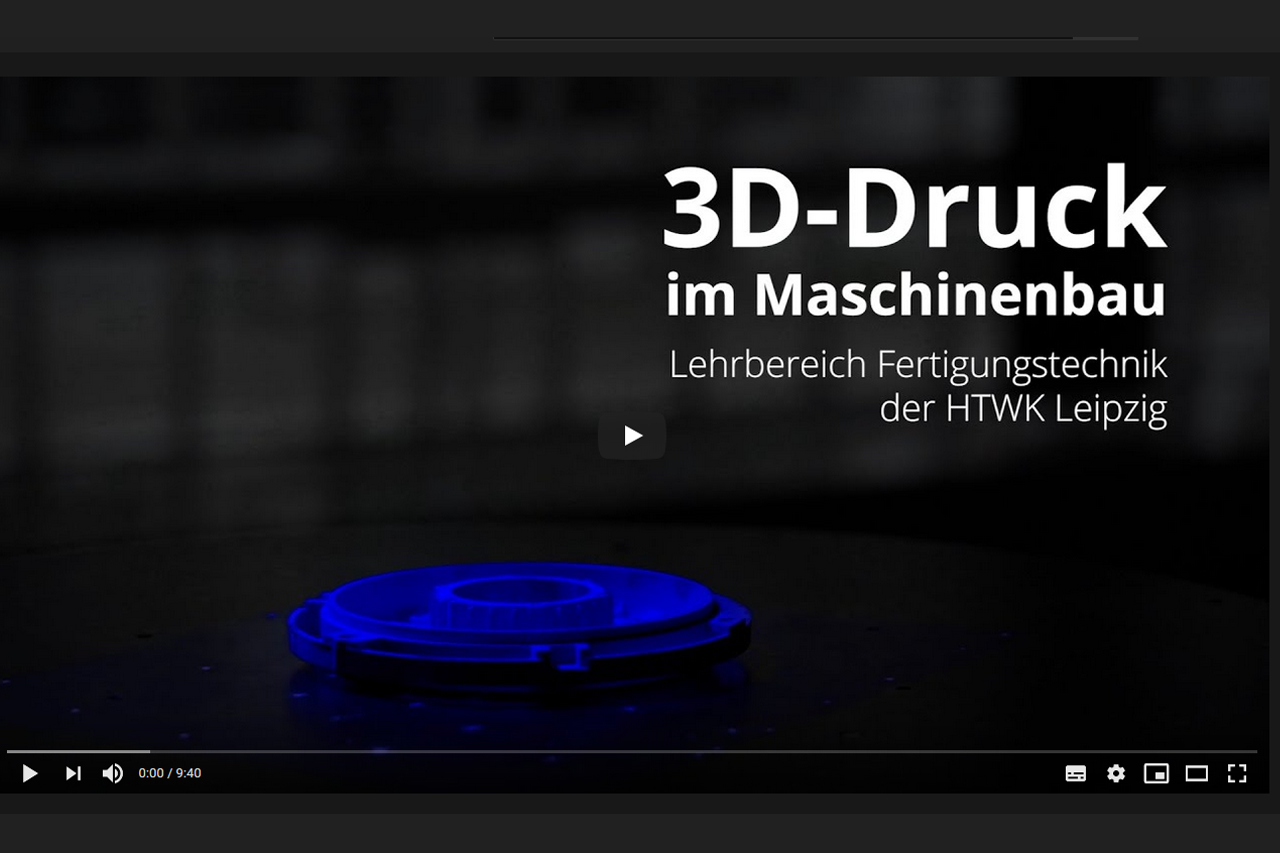
Video: 3D printing in mechanical engineering (degree course)
3D printing in mechanical engineering has led to significant innovations: from medical technology to aerospace, bespoke components can now be printed that could not previously be manufactured. But how does 3D printing work in mechanical engineering, and what study and research opportunities are available in this field at the Faculty of Engineering at HTWK Leipzig? The video provides insights, showcases exciting models and reveals why and how we are developing our own 3D printer.
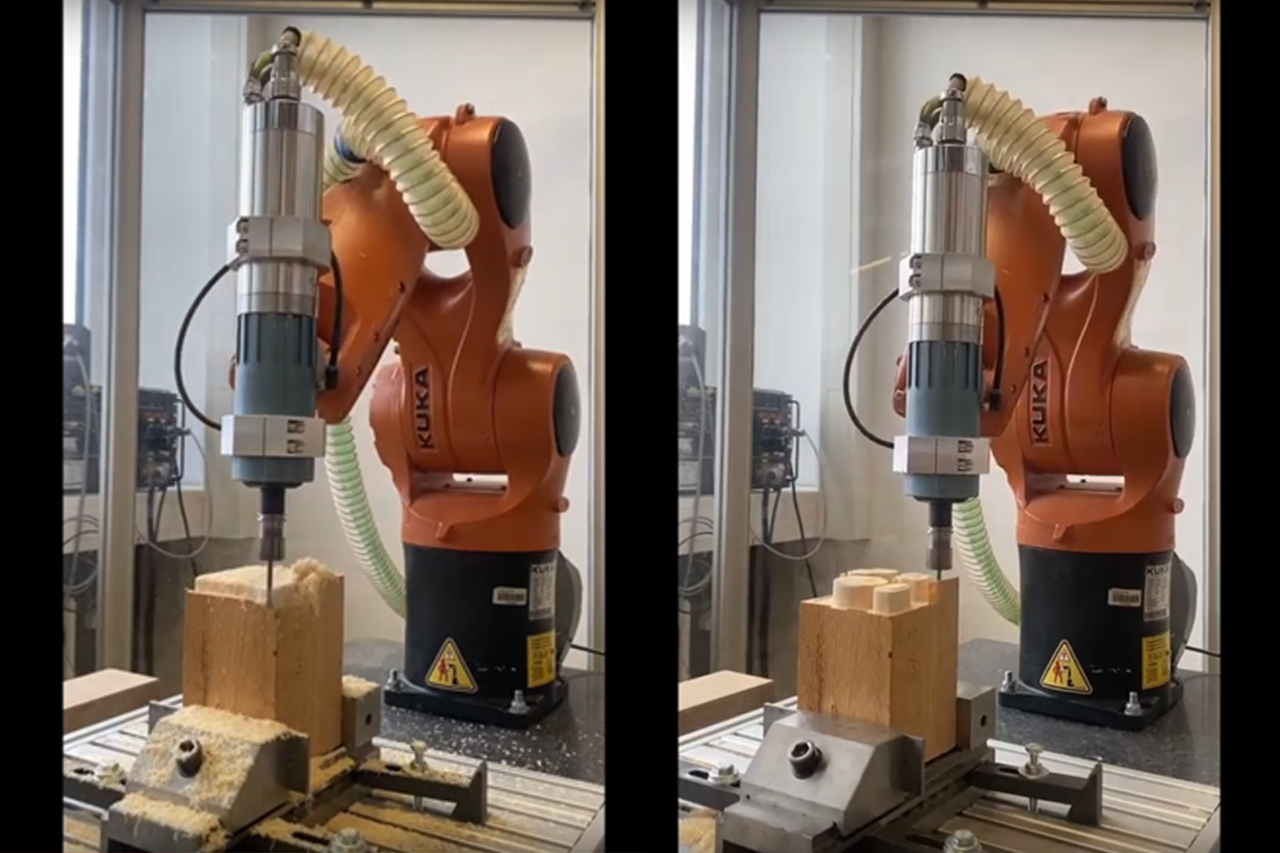
Milling robots: Production using robots – from model to component
Thanks to its very high positioning accuracy, a robot can precisely trace out specified geometries. This enables 3D models to be manufactured from various base materials – such as wood, metal or plastic – using a given CAD model and a milling head. The advantage of a robot over a ‘conventional’ milling machine lies in its working space. As the robot arm can move freely in all directions, the working space is also three-dimensional.
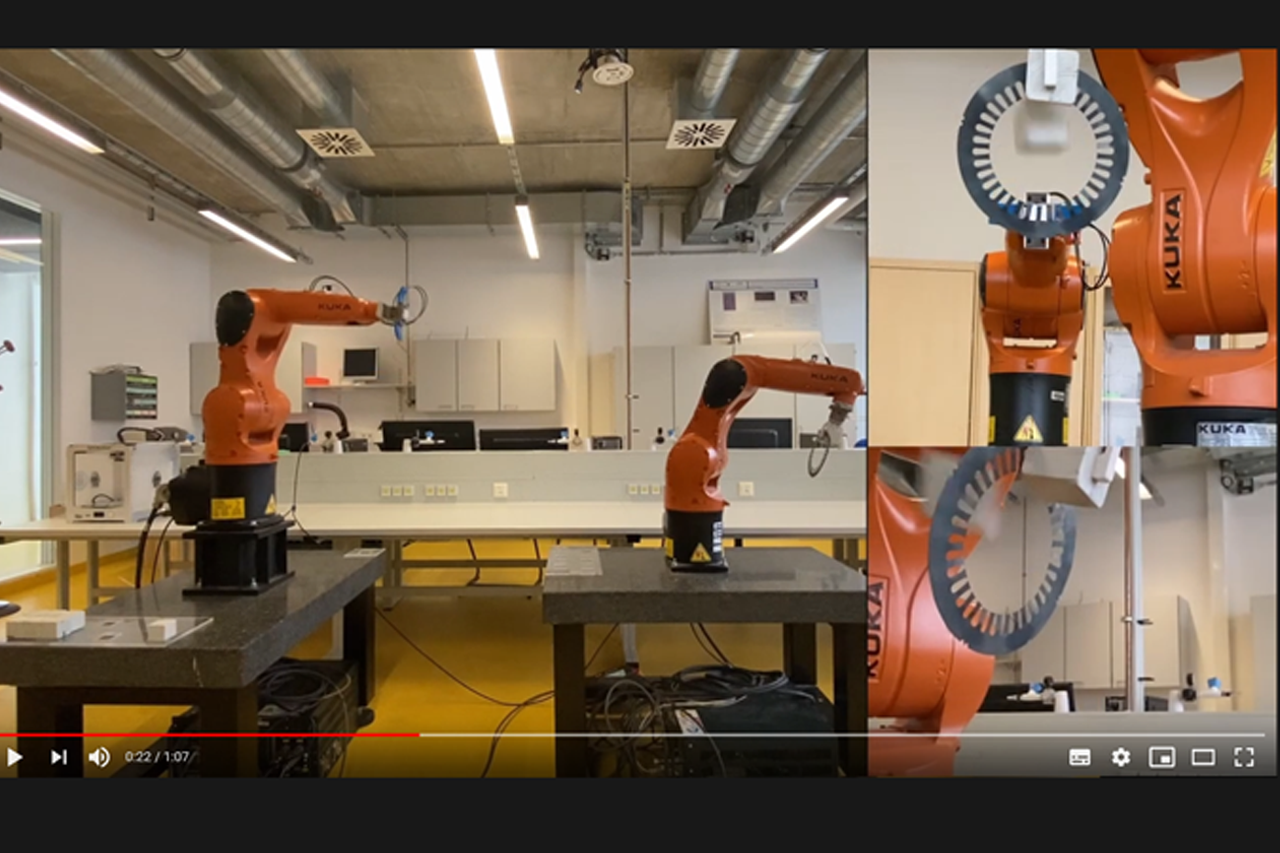
Throwing robot: Take on the challenge – “Play against the robot”
Robots can carry out tasks round the clock – 24 hours a day, 7 days a week – without making mistakes and without getting tired or slowing down. To be able to repeat exactly the same process over and over again, they require a very high degree of repeatability. We demonstrate and explain how this works in the time-lapse video. Take on the robot: try to hit a wastepaper basket 3 metres away with a crumpled piece of paper in ten consecutive throws.
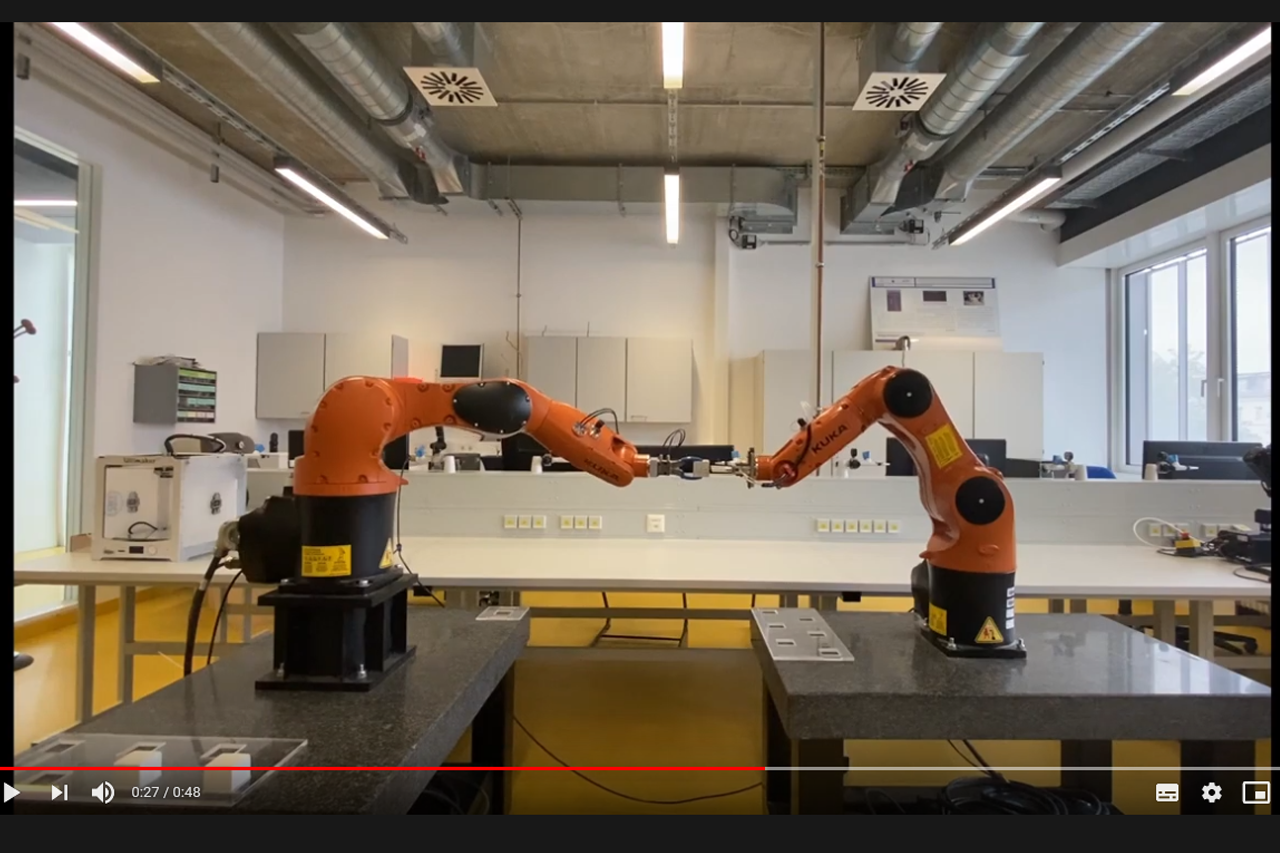
Your colleague, the robot – collaboration made easy
For larger or combined workflows, two or more robots can work together cooperatively. To do this, they must either communicate with one another or receive the necessary process information from a higher-level control centre. For this collaboration to work, the individual robots must be positioned with a very high degree of precision, even when performing a practically infinite number of repetitions. In the video, we show how Kuka robots work together.
