

Key areas of research and development
- Electrical Networks and Smart Grids
- Machine diagnostics and large-scale equipment
- Wireless Sensor Networks (WSN)
- Academic and Scientific Exchange
Area of expertise | Electrical Networks and Smart Grids
Electricity grids are of great importance to the success of the energy transition, as they can transmit a universally applicable form of energy. In addition to increasing transmission capacity, maintaining or improving reliability in accordance with the NOVA principle (network optimisation before reinforcement before expansion) is also a key aspect of these developments. In this context, topics being addressed include harmonics, earthing systems, diagnostic tools for assessing grid conditions, monitoring systems for predictive maintenance, and the detection of overhead line sag.
Area of expertise | Machine Diagnostics and Large-scale Equipment
Rotating machinery is found in a wide range of applications. Despite their varied designs, they all have one thing in common: they wear out over time. Against the backdrop of environmental and economic considerations, technical diagnostics aims to develop individual, condition-based maintenance strategies. Gearbox and bearing analyses present a major challenge in this regard, as the required vibration sensors must be installed as close to the interior as possible and the measured values transmitted wirelessly to the outside. The trade-off between sampling rate and energy consumption is just one of many exciting areas of research.
Area of expertise | Wireless Sensor Networks (WSN)
A continuous wireless connection is essential for the development of autonomous, embedded and distributed sensor networks. However, even the most advanced radio modules often require a power consumption of over 10 mW, which is why, in battery-powered systems, reception intervals are significantly restricted and increased latency and response times are accepted as a necessary trade-off. The WakeUp Receiver’s approach, on the other hand, is to ensure that the sensor node remains continuously ready to receive signals whilst consuming an average of 10 µW. To this end, the research group analyses, builds and tests a wide variety of circuit designs.
Area of expertise | Academic and Scientific Exchange
Interdisciplinary international networking is essential for overcoming the ongoing shortage of skilled workers and for effectively addressing global challenges in the energy sector. Sustainable collaborative research projects with university partners from neighbouring European countries and Africa, as well as with industry, have therefore been an integral part of the Chair since 2013. The findings from these projects are used effectively for the training and further education of professionals at various career stages. Established measures in this context include, amongst other things, the direct involvement of students and PhD candidates from Tunisia in research, work placements and train-the-trainer events for early-career lecturers from Zambia, as well as the ongoing development of further collaborations, for example with Egypt and the Philippines.
Prof. Dr.-Ing. Faouzi Derbel
Chair in Smart Diagnostics and Online Monitoring
EETInstitute
| Institute of Electrical Power Engineering
Research Profiles
:Advanced Materials
,Smart Energy & Environment
Telephone: +49 (0)341 3076 1148
Email: faouzi(dot)derbel(at)htwk-leipzig.de
Team
- Wajdi Abbassi, Dipl.-Ing.
- Dipl.-Ing. Mohamed Aymen Abdelhedi
- Khalil Baazaoui, MEng
- Dr.-Ing. Kai Bartholomäus
- B.Eng. Christian Johannes Bommersheim
- M.Sc. Johannes Braun
- Achref El Abed, Dipl.-Ing.
- M.Sc. Fritz Falland
- M.Sc. Robert Fromm
- M.Sc. Martin Glaß
- M.Sc. Stefan Große
- Paul Kollascheck, Dipl.-Ing.
- M.Sc. Trung Hoang Nguyen
- Sarah Ouerghemmi, Dipl.-Ing.
- M.Sc. Lydia Schott
- M.Sc. Florian Strakosch
- Maissa Taktak, BEng
- M.Sc. Tommy Teichert
- M.Sc. Robert Thiel
- M.Sc. Jens Voigt
- M.A. Maike Vorwald
- M.Sc. Maximilian Weber
- M.Sc. Fabian Wießner

RASAFF
Reactive application of specialised algorithms for overhead distribution networks
To prevent large-scale power outages caused by earth faults in distribution networks and to make these networks safer, the Smart Diagnostics and Online Monitoring working group is developing, as part of the RASAFF project, a method for the minimally invasive detection of potential earth fault currents in 110 kV networks.
Funding: SAB SMWA/ERDF
Project duration: 12/2025 – 05/2027

Wise-Net
Development of a smart, wireless sensor network for monitoring natural environmental systems
The overall aim of the project is to develop a smart, wireless sensor network for monitoring the soil parameters of soil density and water content, based on a new measurement method using electromagnetic waves in the soil.
Funding: ZIM BMWE/AiF
Project duration: 10/2025 – 03/2028
DUFLOR
Sagging detection on overhead lines using optical alignment sensors
The aim of the DUFLOR project is to develop a measurement method for overhead line monitoring that determines the actual load-bearing capacity of the conductor cables by means of contactless, direct sag measurement.
Funding: SMEKUL/SAB
Project duration: 05/2025 – 12/2027

OMOT
Online monitoring of joints and insulation on HVDC cables to detect partial discharges
The aim of the OMOT research project is to develop a monitoring system for monitoring the insulation of DC cable installations, in particular cable joints. To this end, the project is developing non-invasive, retrofittable partial discharge sensors that can be fitted to the joints along the length of the cable.
Funding: SMWK/SAB
Project duration: 09/2024 – 08/2027

MENKI
Measurement methods for earth fault currents in 110-kV networks using complex impedance networks
In order to obtain the necessary measurement data in 110 kV networks without running the risk of a double earth fault, the MENKI project is developing a method in which a condition similar to an earth fault is created using the voltage transformers available in the substations and a measurement circuit connected to them. This should make it possible to transport the measurement equipment used much more easily.
Funding: BMWK
Project duration: 10/2021 – 09/2024

SUSIC
Smart Utilities and Sustainable Infrastructure Transformation
Digitalisation project: The overall project is divided into sub-projects carried out by the University of Leipzig and HTWK Leipzig. The sub-project at the University of Leipzig focuses primarily on the economic modelling of the overall system, whilst the project at HTWK Leipzig is dedicated in particular to the microgrid modelling of selected prototype system variants and, as an interface to the University of Leipzig’s sub-project, provides real-world data points on sector coupling. This integration enables the development of concrete solution strategies for municipal energy supply systems and recommendations for their operation.
Funding: SMWK/SAB
Project partners:University of Leipzig
Project duration: 06/2019 – 12/2021
ZAPDOS
Reliable, self-contained and practical sag measurement based on optical systems
The aim of the project is to develop a measuring device capable of determining the sag of the cables directly and precisely without having to be attached to the overhead line.
Funding: SMWA/ERDF
Project duration: 09/2019 – 02/2022
EMBSeil
Investigation of electromagnetic interference during cable pulling in overhead line construction
Based on the findings of previous research projects, it has become apparent that the construction of overhead lines in the vicinity of neighbouring live conductor systems can result in significant currents and contact voltages. This project focuses on the resulting hazards to installation personnel and the equipment used, as well as possible remedial measures.
Funding: BG ETEM
Project duration: since 2017

FERD
Frequency-selective earth fault
The high reliability of supply in German distribution networks is largely determined by their ability to demonstrate a high level of fault tolerance in the face of one of the most common network faults: earth faults. To minimise the risk of grid outages, the frequency-selective earth fault protection was developed in close collaboration with MITNETZ Strom GmbH.
Funding: BMWi
Project partner: MITNETZ Strom GmbH
Project duration: 06/2014 – 11/2016

KoppBF
Interconnections and interactions in overhead line systems
The increased utilisation of high-voltage overhead lines frequently results in electromagnetic interference affecting third parties. As part of this project, calculations are being carried out on specific configurations in relation to interference caused by high-voltage overhead lines. Special interference configurations can be calculated using specially developed computational tools.
Funding: BMWI
Project duration: since 2014

GetMo
Rapid-calibration gearbox monitoring
Title: Development of a rapid-calibration gearbox monitoring system for the precise localisation of faults for the predictive maintenance of specialised gearboxes using a cascaded, integrated sensor array
Sub-project: Development of wireless, self-contained internal sensor technology and wireless communication between the individual sensor elements within the gearbox, with a connection to the exterior of the gearbox
The aim of the project is to develop a self-calibrating gearbox monitoring system for the precise localisation of damage for the predictive maintenance of specialised gearboxes using a cascaded, integrated sensor array.
Funding: BMWE/AiF
Project/cooperation partner: Getriebebau Nossen GmbH & Co. KG
Project duration: 01/2026 – 08/2028

SIZA
Sensor-integrated gear
The aim of the research project is the systematic integration of sensor technology and electronics, including algorithms for in-situ data acquisition, into the gear wheel as a machine component. The data is pre-processed, transmitted to a central system and thus made available for determining the condition of the gear wheel.
Funding: DFG
Project partners: TU Munich
Project duration: 03/2025 – 02/2028
SchneckCheck
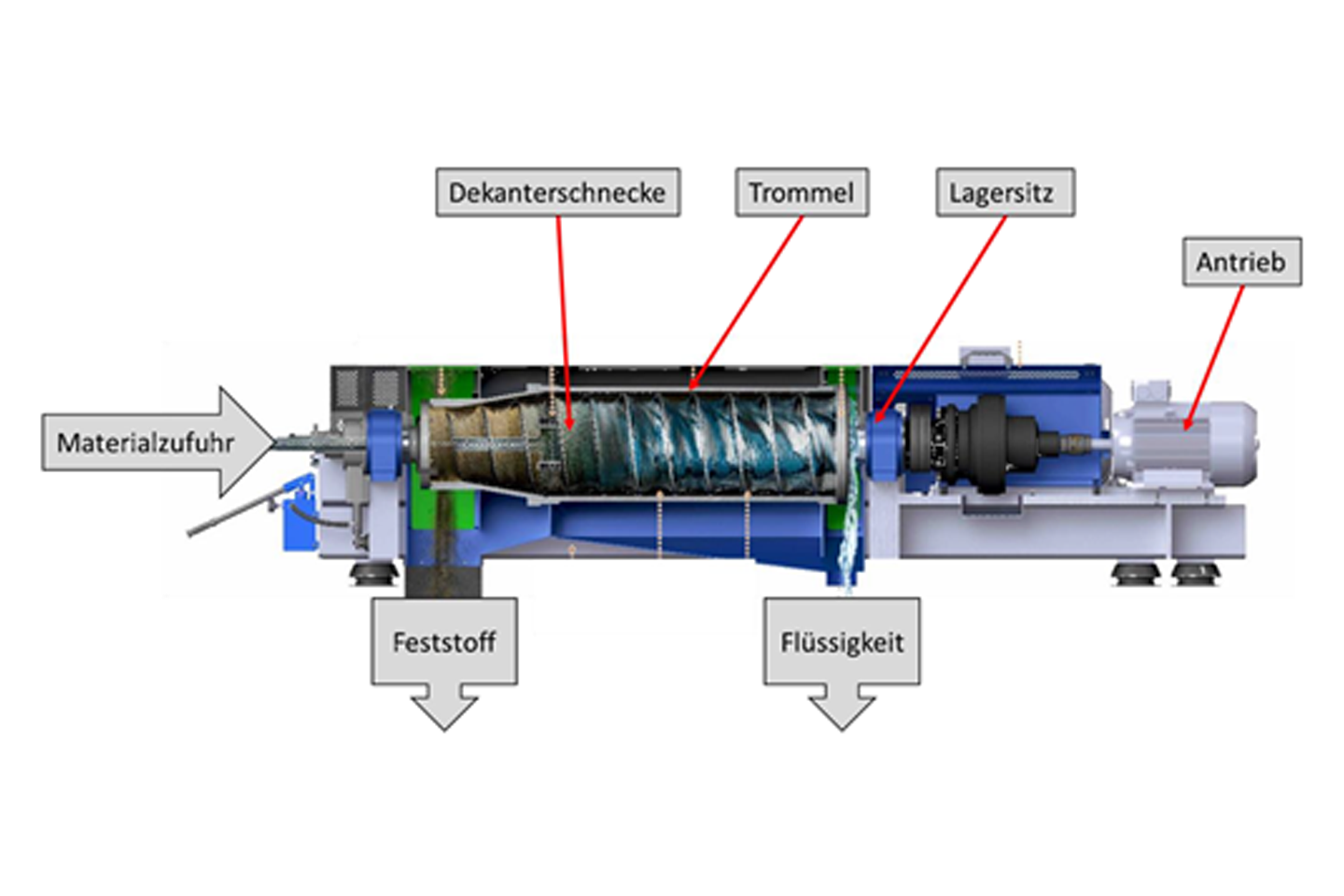
Development of an innovative and novel system of sensors for the rapid and precise detection of wear mechanisms in the bearings of a decanter screw
Development of plant sensor technology, including the associated power supply and data transmission, for the detection of anomalies in the bearing of a decanter screw, as well as the development of condition-based machine diagnostics
Funding: BMWK/AiF
Project/cooperation partner: GHS Separationstechnik GmbH
Project duration: 08/2024 – 07/2026
IntelliSeal
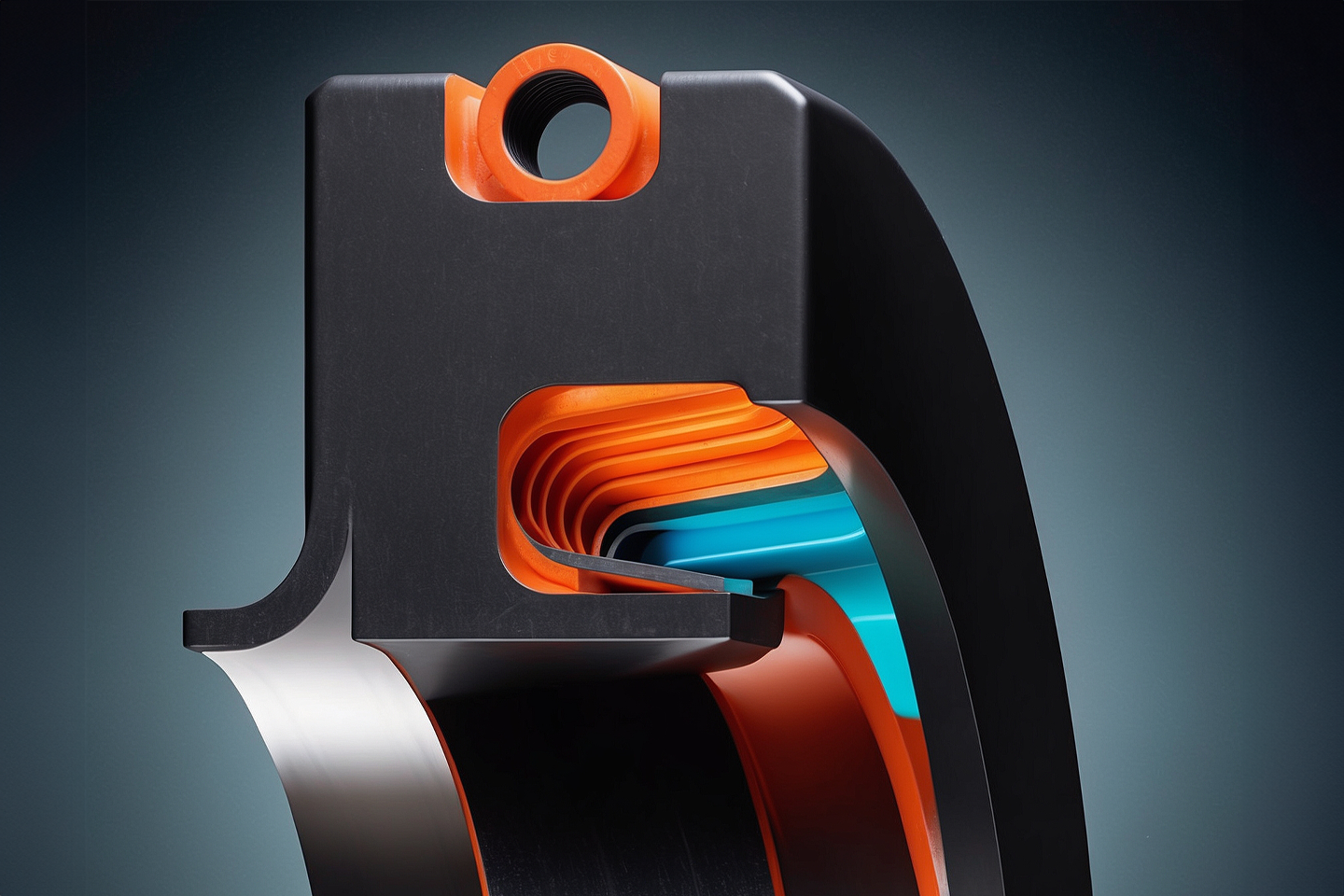
Development of a sensor system integrated into a seal for condition monitoring of PTFE shaft seals in high-temperature applications
The aim of the IntelliSeal project is to develop a new sensor system with an integrated seal for PTFE shaft seals, for condition monitoring in high-stress applications.
Funding: BMWK/AiF
Project/cooperation partners: tech-solute GmbH; GFD – Gesellschaft für Dichtungstechnik mbH; Forschungs- und Transferzentrum Leipzig e.V. (Prof. Ingo Reinhold)
Project duration: 05/2024 – 12/2026

SchubZi
Development of an innovative sensor-based monitoring system for dynamic components of push-floor centrifuges, designed to enable the early and accurate detection of wear mechanisms
The aim is to develop an innovative and novel sensor-based monitoring system for dynamic components (in particular bearings and shafts) in push-floor centrifuges.
Funding: BMWK/AiF
Project partners: IDS Innomic Schwingungsmesstechnik GmbH; Lanner Anlagenbau GmbH
Project duration: 04/2024 – 03/2026

GEOROK
Geometry-driven optimisation of the power supply to rotating sensor nodes
The GEOROK project focuses on the integration of an inductive wireless power transfer system into a sensor network for the predictive maintenance of large gearboxes.
Funding: SMWA/SAB
Project duration: 11/2023 – 04/2025

RELAXO
Predicting the remaining service life of complex, distributed plant assets – applying AI methods to improve the reliability of rail operations
The Relaxo project focuses on the predictive maintenance of functional elements of the rail infrastructure through residual service life forecasting. For the successful implementation of a transport transition, it is essential that the infrastructure can be used with as few faults as possible. Particular focus is placed on components which, as mechanically moving parts, are especially prone to failure.
Funding: BMBF/VDI
Project duration: 02/2023 – 07/2025

CODICES
Condition Diagnosis of Earthing Systems
Integrated condition monitoring of distributed earthing systems: The aim is to develop an active electrical measurement method that enables the progression of corrosion – and thus the condition of the earth electrode – to be assessed. Building on this measurement method, a measurement system is to be developed that handles data pre-processing and transmission. To enable the generic use of this new approach, a specialised IoT device (Industry 4.0 component) is being developed and tested as a prototype.
Funding: BMBF
Project duration: 11/2019 – 04/2022
MIBRAG
Multiple integrated RF-based bearing vibration sensors for automated gearbox diagnostics
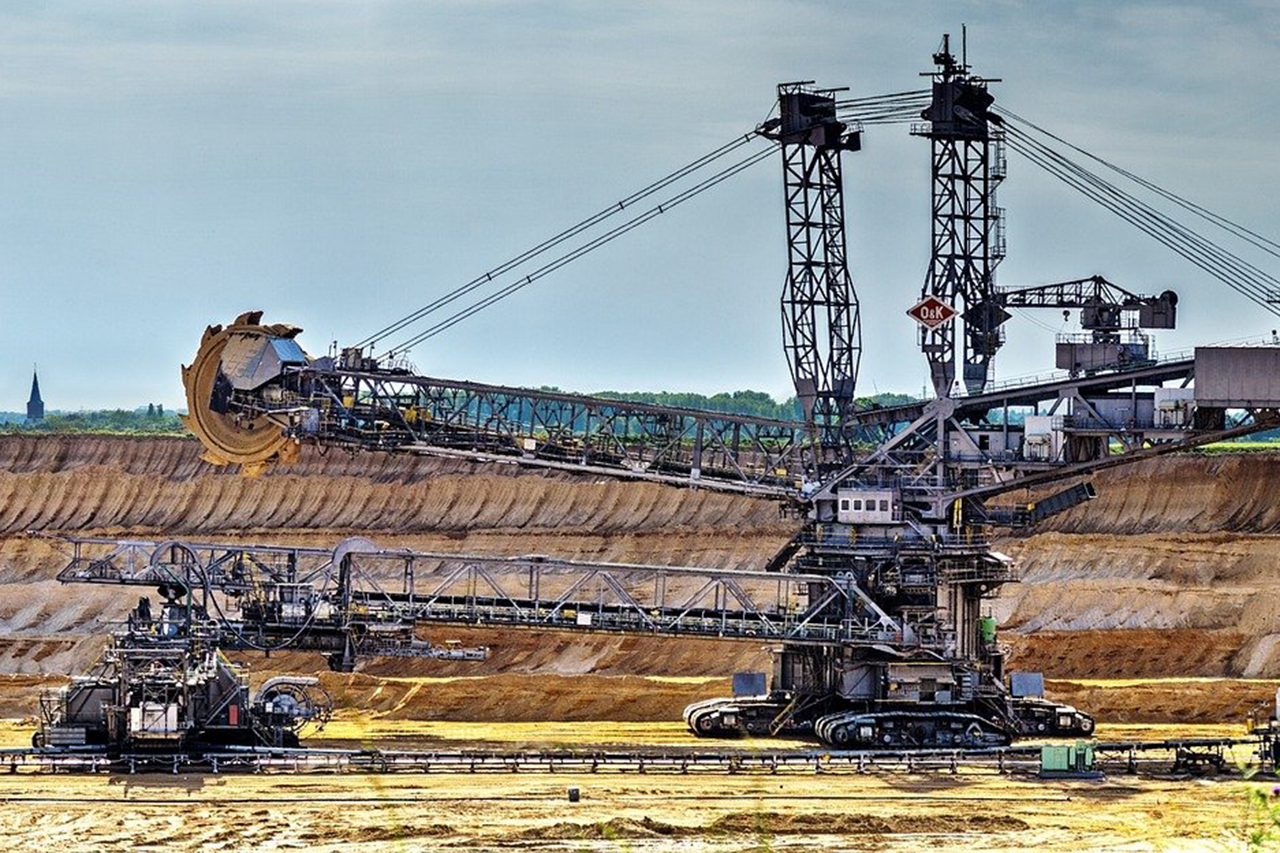
Mitteldeutsche Braunkohlengesellschaft mbH (MIBRAG) operates several opencast mines in the south of Leipzig using a variety of bucket-wheel excavators. These steel colossi are powered by high-performance engines, which transmit their power via multi-stage gearboxes. MIBRAG modules are being developed in collaboration with the company for the diagnostics and optimal maintenance of the roller bearings in the planetary stage.
Project partner: MIBRAG
Project duration: since 2016

ZUBAT
A forward-looking, Wake-Up-based, opportunistic IoT platform for the early detection of forest fires
The collaboration between Professor Krondorf’s and Professor Derbel’s research groups, known as ZUBAT, aims to improve the efficiency and response time of early forest fire detection through an advanced, wireless sensor network.
Funding: BMBF/VDI
Project duration: 01/2025 – 12/2028

PIMB
Person-specific indoor localisation using wake-up signals and motion vectors
The aim of the PIMB project is to develop a tracking and information system – a so-called wireless sensor network (WSN) in the 2.4 GHz frequency band, capable of providing continuous or on-demand tracking of people and assets for over six months whilst being self-sufficient in energy, even without line of sight, both indoors and outdoors.
Funding: SMWK/SAB
Project duration: 07/2023 – 12/2024

FUBE
Lightweight wireless sensors for space-based animal monitoring
The collaboration between Professor Krondorf’s and Professor Derbel’s research groups aims to develop an energy-efficient, satellite-based positioning system which, using lightweight sensors, will enable, amongst other things, the monitoring of wildlife.
Funding: BMBF/VDI
Project duration: 09/2022 – 08/2026

DLS-500
Development of a distributed localisation service based on radio and inertial data from mobile assets and individuals in IP500 networks
In many areas of business, so-called wireless sensor networks (WSNs) are used to collect environmental data, including for controlling lighting systems, door contacts or automated access control solutions. The aim of the project is to continuously track the locations of all relevant individuals and mobile assets (such as mobile devices or tools) and to make this data available to building, logistics or security management via the WSN.
Funding: BMWi
Project duration: 06/2022 – 05/2023
iFacts
Intelligent, functional and decentralised plant monitoring for efficient process automation
‘Intelligent Facts’ (iFacts) refer to integrated process information that intelligently supplements and expands sensor data. They have low power consumption and are particularly relevant at the lower levels of the process control hierarchy; they can be used, amongst other things, for monitoring and diagnosing plant processes.
Funding: BMBF
Project duration: 05/2016 – 04/2019
DemoS TP1
Sensor-based management and monitoring system
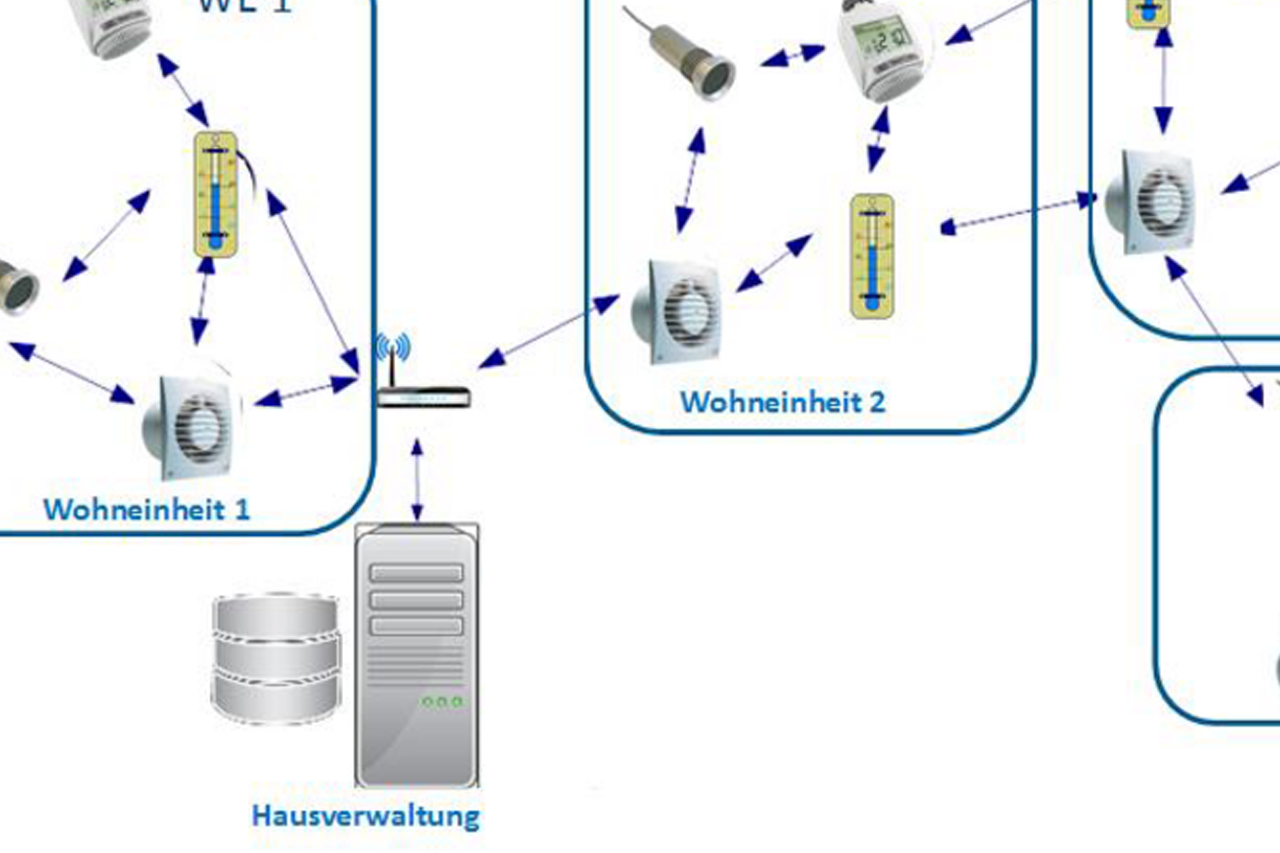
A user-friendly, sensor-based monitoring and management system is being developed to maintain the building fabric. The system will dynamically address the requirements arising from changes in usage patterns during demographic change. The sensor technology from TP2 will form an important part of the system, thereby offering new monitoring capabilities. This will enable the indoor climate and the building environment, as well as their impact on the building fabric, to be monitored.
Funding:European Social Fund (ESF)
Project duration: 10/2016 – 07/2019

AiS
Self-sufficient smart sensor networks in manufacturing
Through this project, the AiS research group aims to make energy-autonomous sensor technology available for a wide range of applications in factories and plants. Information on processes and workflows, the condition of machinery, restocking, transport routes and similar aspects enables more efficient planning and a faster response to unforeseen situations in production. This helps to conserve important resources. The savings in materials and energy also boost competitiveness and facilitate sustainable production.
Funding: European Social Fund (ESF)
Project duration: 2013–2014

WakeUp Receiver
A continuous radio link is essential for the development of autonomous, embedded and distributed sensor networks. The aim of the project is to develop a specialised receiver circuit that ensures the sensor node remains continuously ready to receive signals.
Project duration: since 2013

SUP’COM 2024
Ta’Ziz Short-term initiative for academic exchange in the MENA region (Middle East and North Africa)
The aim of the collaborative project is to introduce future graduates to the practical aspects and areas of application, thereby bringing about a lasting improvement in training and optimising the teaching.
Funding: BMZ/DAAD
Project duration: 03/2024 – 12/2024

ENETCOM 2024
Ta’Ziz Short-term initiative for academic exchange in the MENA region (Middle East and North Africa)
For future graduates, activities such as a summer school in Leipzig and the integration of project work covering various aspects of the overarching theme of ‘smart grids’ serve to refine their practical experience.
Funding: BMBF/DAAD
Project duration: 03/2024 – 12/2024

INSPIRE
Establishing new frameworks for practice-oriented lectures that combine industrial needs and research findings through knowledge transfer and the exchange of experience
As part of this project, two fact-finding missions were carried out, enabling a delegation from the HTWK to travel to Kitwe, Zambia, and, some time later, to welcome a delegation from the CBU Africa Centre of Excellence for Sustainable Mining to Leipzig.
Funding: BMZ/DAAD
Project duration: 07/2023 – 12/2023

CONCENTRATE
Centre for Contact and Careers in International Research Projects, Active Knowledge Transfer and Enhanced Education
The aim of the project is to strengthen cooperation with the Tunisian partner university, ENETCOM. To this end, a joint Contact and Career Centre (CCC) is being set up at ENETCOM.
Funding: BMZ/DAAD
Project duration: 01/2023 – 12/2026

SmartHeads
Symbiosis approaches for the automotive and digitalisation sectors in Tunisia, involving collaboration between higher education and industry to ensure graduates are well-prepared for the labour market
The aim of this collaborative project is to examine, initiate and implement measures to establish and strengthen industry’s influence on the higher education system in Tunisia through collaboration and knowledge transfer.
Funding: BMZ/DAAD
Project duration: 09/2020 – 12/2023
