

Brief profile
In terms of research, the Chair focuses primarily on the design, construction and control of state-of-the-art topologies for AC/DC, DC/AC and DC/DC converters in the low and medium power ranges. A key focus is on the implementation of converters in a manner close to series production. In addition, soft switching, the design and characterisation of inductive components, and galvanically isolated topologies are central to the department’s research. The research group serves as a centre of excellence for the ECPE – European Centre for Power Electronics.
Our expertise is drawn in particular from Prof. Thomas Komma’s more than 25 years’ experience in pre-development at Siemens AG. Our in-depth expertise ranges from the design and selection of individual active and passive components, through the development of prototypes, to the optimisation of power electronics assemblies for series production.
With our existing equipment, we offer comprehensive capabilities for analysing not only individual power electronics components but also entire systems. Drawing on our expertise and state-of-the-art instrumentation and measurement technology, we are able to actively support companies and research institutions in their R&D projects.
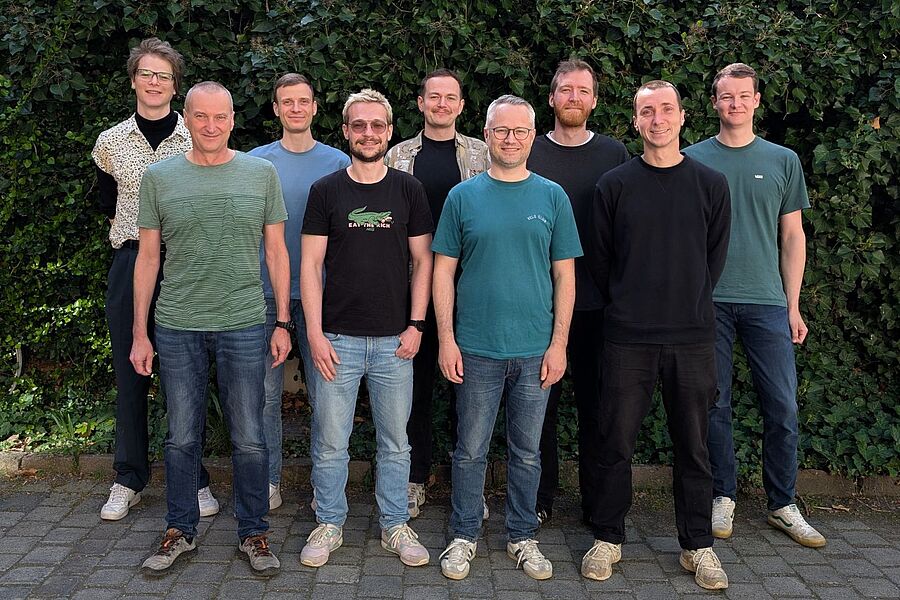
Team
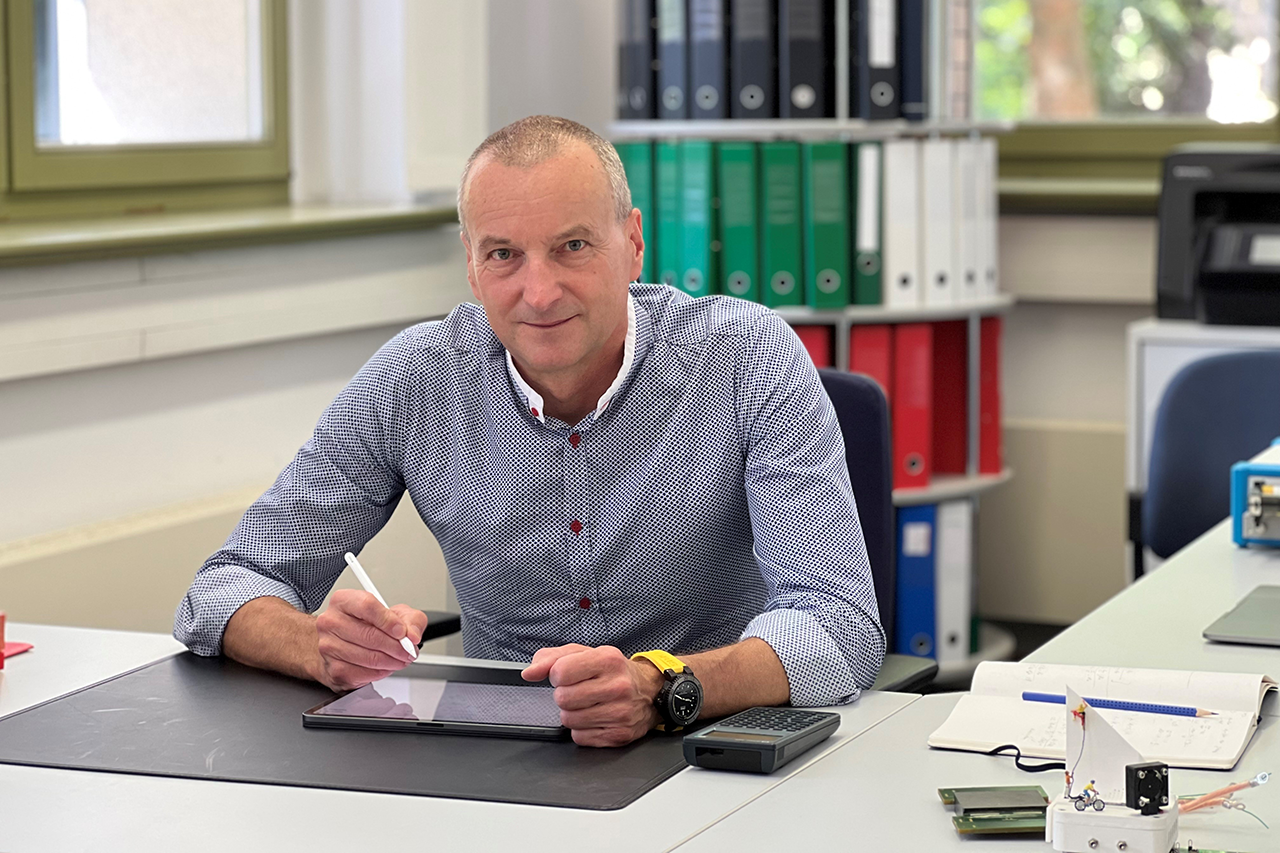
Prof. Dr.-Ing. Thomas Komma
Chair of Power Electronics and Electric Drive Systems
Institute
EET | Institute of Electrical Energy Technology
Telephone: +49 (0)341 3076 1115
Email: thomas(dot)komma(at)htwk-leipzig.de
The department is a centre of excellence within the ECPE – European Centre for Power Electronics. https://www.ecpe.org
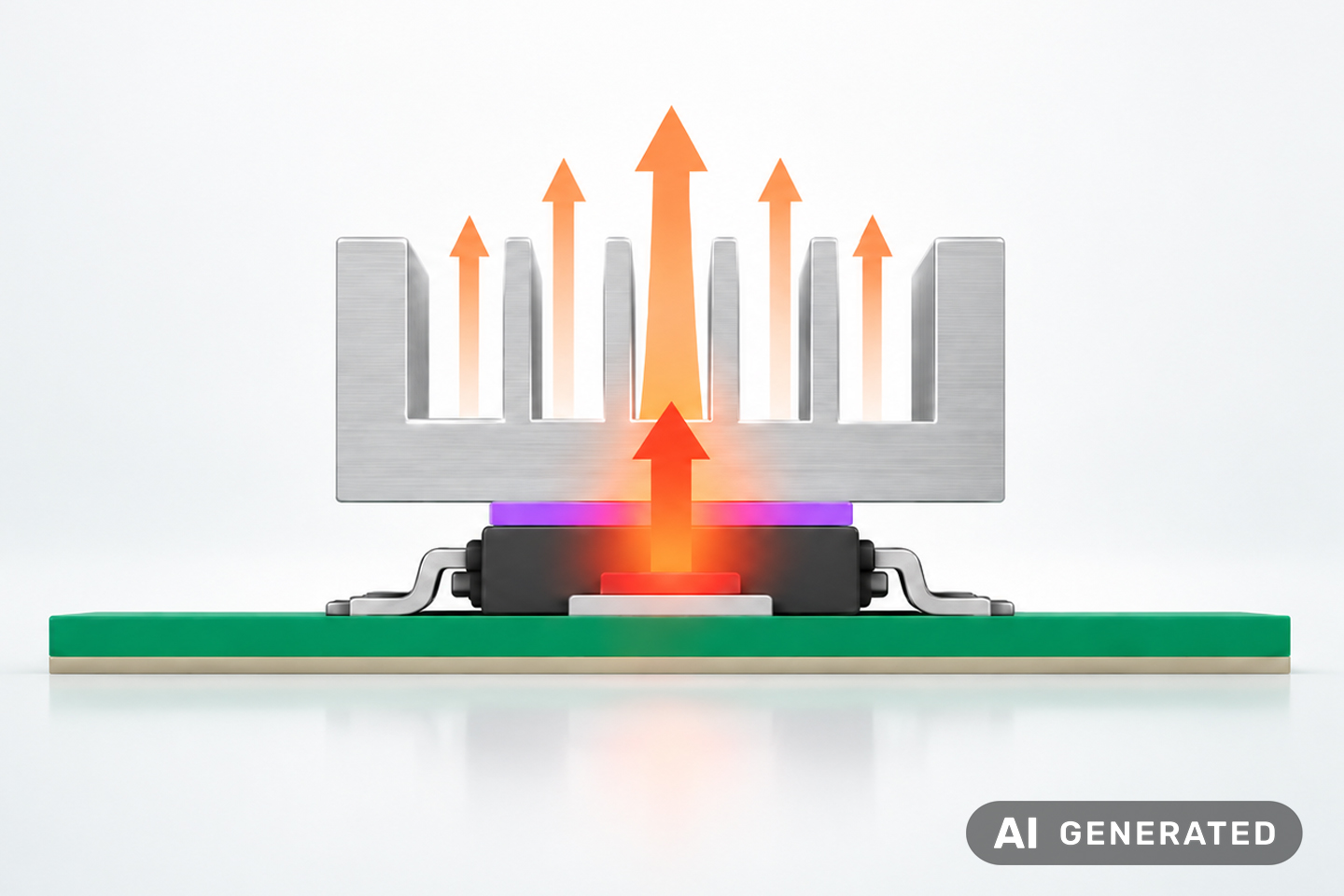
NotTooHot
Thermische Impedanzen – Messsystem zur Charakterisierung von Leistungshalbleitern
Im Projekt wird ein Messsystem zur thermischen Charakterisierung von Leistungshalbleitern weiterentwickelt und validiert.
Förderung: EFRE | Sächsisches Staatsministerium für Wirtschaft, Arbeit und Verkehr (SMWA)
Projektlaufzeit: 10/2026 - 09/2027

MAGIE
Magnetics concepts for green, innovative and energy-efficient power supplies
MAGIE aims to develop new magnetics concepts for green, innovative and energy-efficient power supplies. This is because, whilst current developments in the field of SMD-based power semiconductors do indeed enable theoretical current loads on magnetic components (magnetics) of over 70 Arms at high frequencies ranging from 100 kHz up to the MHz range, these new semiconductors are thus outperforming the current state of the art in magnetics.
Funding: SMEKUL
Project duration: 10/2024 – 06/2028

ENABLE
ENABLE the Grid: Establishing a centre of excellence for resonant coupling in power supply systems
As the energy transition progresses, green and sustainable electricity supplies are facing considerable pressure to innovate. On the one hand, this stems from demands for greater energy efficiency, the miniaturisation of circuits and a significant reduction in costs. On the other hand, due to the tight supply situation on the global market, strategic aspects relating to the availability of (sub-)technologies are also coming into focus. Overcoming these challenges is crucial to fully exploiting the advantages of resonant coupling technology and making future power supply systems more efficient and sustainable.
Funding: SMWK
Project duration: 08/2024 – 06/2026

PULSAR
Precise investigation of switching losses in power semiconductors for the analysis of resonant converters
To ensure that electricity reaches where it is needed, it must be distributed, converted and regulated. This is the role of power electronics. After all, it is power electronic power supplies that enable technologies such as photovoltaics, electric mobility and heat pumps to be connected to the electricity grid in the first place. Advances made in this area therefore contribute across the board to reducing energy consumption and greenhouse gas emissions. The power semiconductors used in these systems are under particular strain. They bear the brunt of the load in every power supply, not only electrically but also thermally. An efficient design of power supplies with high efficiency, high power density and low resource consumption therefore requires the most accurate possible knowledge of their electrical and thermal properties. However, these properties are difficult to determine for modern power semiconductors. This is because when currents of up to one hundred amperes are switched at voltages of several hundred volts in the lower nanosecond range, even modern measurement technology reaches its limits. PULSAR is intended to enable such measurements to be carried out at the HTWK.
Funding: SMWK
Project duration: 11/2023 – 12/2024

noLIMIT
Grid-oriented bidirectional charging with smart modules optimised for industrial manufacturing technology
The increasing electrification of the transport sector is posing new challenges for stable grid operation. For example, according to the Leopoldina National Academy of Sciences, charging behaviour in the low-voltage grid is one of three typical causes of future grid bottlenecks. However, electric vehicles can also be part of the solution: the electric vehicles planned for roll-out by 2030 offer very high storage potential, which can only be harnessed through bidirectional charging. To this end, the FTZ is developing novel power electronics for bidirectional high-power charging points as part of the “noLIMIT” project. As a key element of sector coupling, the charging points are intended to contribute to efficient grid operation and, through innovative concepts, enable highly automated manufacturing in Germany.
Funding: BMWK, BMUV
Cooperation partner: Siemens Aktiengesellschaft
Project duration: 10/2023 – 09/2025

MoFi-Flex
Modern, high-performance research infrastructure for innovative and flexible energy distribution systems using power electronic converters
The transient calorimetric power dissipation measurement facility planned as part of the ‘MoFi-Flex’ project is designed to enable the high-precision determination of power dissipation in power electronic components and systems. The measurement results will be used to characterise and thermally model active and passive components. The Chair is addressing the growing demands placed on complex circuits and individual components, particularly in relation to the high-frequency operation of wide-bandgap semiconductors.
Funding: SMWK
Project duration: 04/2022 – 12/2022
SMITH
High-precision current measurement for innovative thermal power dissipation analysis in the high-frequency range
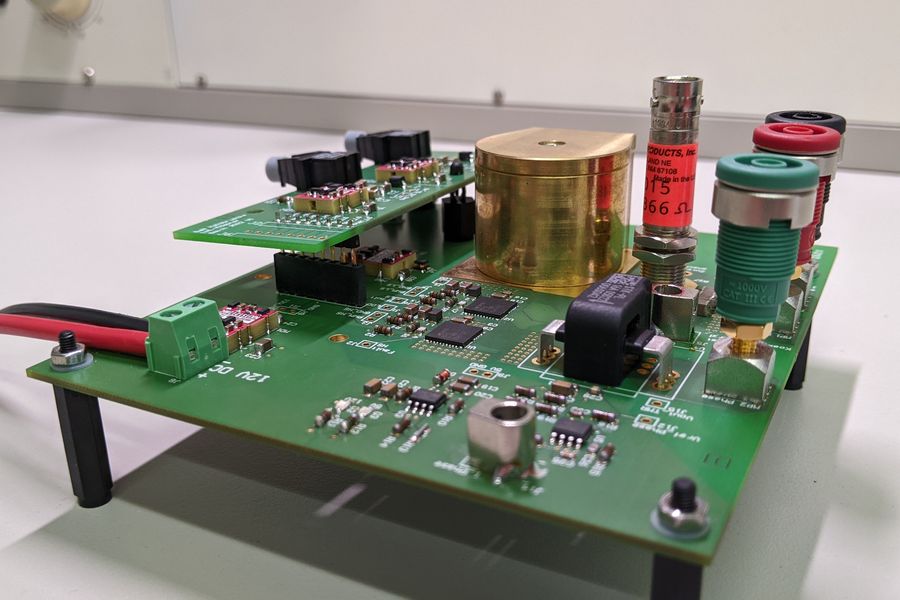
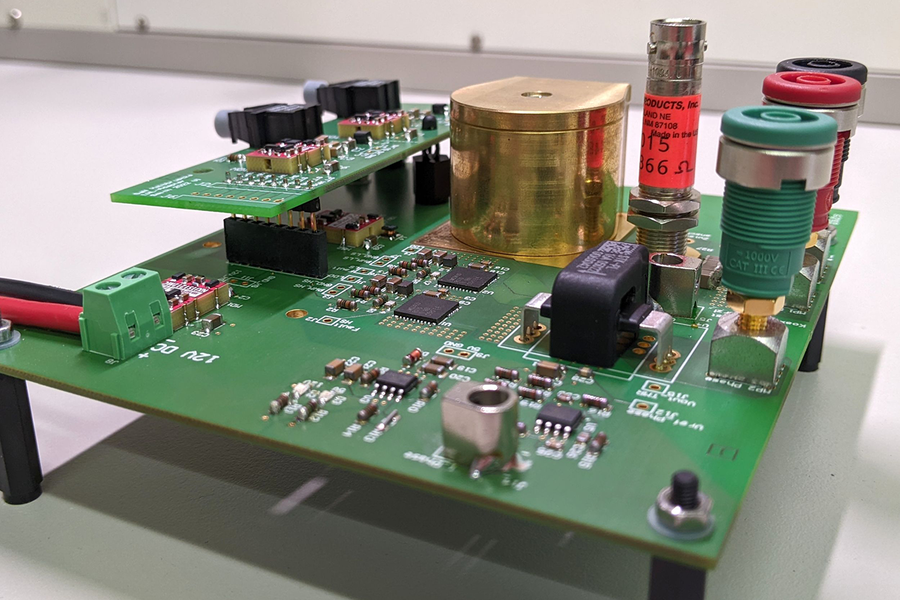
The SMITH project aims to develop a new measurement system for current-based power loss measurement in power electronic circuits and components. Existing solutions will be compared and new ones investigated, specifically for the high-frequency operation of wide-bandgap semiconductors based on silicon carbide and/or gallium nitride. To enable both high du/dt withstand capability and high bandwidth, the system will be implemented on a printed circuit board.
Funding: SMWK, SAB
Project duration: 02/2022 – 12/2022

Next-generation HVDC
Next-generation high-voltage power supplies with a voltage range of up to 400 kV and a power range of up to 100 kW
The aim of the project is to develop a new generation of high-voltage power supplies that are ideally suited for use in electron beam technology. The project focuses on the development of an innovative modular system which, through the use of various hardware modules, can be configured to meet specific customer requirements.
Funding: ZIM programme of the Federal Ministry for Economic Affairs and Energy (BMWi)
Project duration: 03/2021 – 09/2023
Publications
- B. Truschenski, T. Bargmann, M. Praast, C. Zeidler, A. Reinhold, J. Riedl and T. Komma, ‘Addressing Switching Losses of Low RDS(on) 1200 V SiC MOSFETs with ZVS PFCs Using the Parallel Capacitor Technique,’ PCIM Europe 2026; International Exhibition and Conference on Power Electronics, Intelligent Motion, Renewable Energy and Energy Management, Nuremberg, Germany, 2026
- M. Praast, J. Riedl, M. Hofmann, B. Truschenski and T. Komma, “A thermal-electrical approach for a turn-off loss measurement applied to a 1200 V SiC MOSFET in ZVS operation,” CIPS 2026 – 14th International Conference on Integrated Power Electronics Systems, Dresden, Germany, March 2026.
- B. Truschenski, A. Reinhold, M. Praast, C. Zeidler, L. Burgmaier and T. Komma, “Design and Experimental Validation of a Single-Phase Interleaved Active Bridge Converter for High-Power ZVS AC/DC Applications,” CIPS 2026 – 14th International Conference on Integrated Power Electronics Systems, Dresden, Germany, March 2026.
- Paul Korn, Marcus Praast, Andreas Reinhold, Bela Truschenski, Thomas Komma: Voltage generation for Sawyer-Tower Coss loss measurement based on resonant converters, Power Electronic Devices and Components, Volume 12, 2025, 100113, ISSN 2772-3704, https://doi.org/10.1016/j.pedc.2025.100113.
- P. Korn, M. Praast, T. Komma: Voltage generation for Sawyer-Tower COSₓ loss measurement based on resonant converters, The 26th European Conference on Power Electronics and Applications, GDR SEEDS France & EPE Association, March 2025, Paris, France. ⟨10.34746/epe2025-0299⟩. ⟨hal-05080171⟩
- M. Praast, C. Zeidler, T. Komma: Comparison of the electrical and thermal methods for determining the power losses of a QDPAK-MOSFET, The 26th European Conference on Power Electronics and Applications, GDR SEEDS France & EPE Association, March 2025, Paris, France. ⟨10.34746/epe2025-0021⟩. ⟨hal-05074020⟩
- B. Truschenski, M. Praast, L. Burgmaier and T. Komma: Comparison of power electronics concepts for modular bidirectional high-power charging points in the megawatt range, 2024 24th Young Researchers’ Conference, Testing, Networks, Power Electronics, Mittweida, Germany, 2024, pp. 13–19, doi: 10.48446/opus-15362.
- B. Truschenski, A. Reinhold, M. Praast and T. Komma: New Method for Determining the Peak Ripple Current for Different Modulation Techniques of Hard-Switching Three-Phase VSIs, PCIM Europe 2023; International Exhibition and Conference on Power Electronics, Intelligent Motion, Renewable Energy and Energy Management, Nuremberg, Germany, 2023, pp. 1–8, doi: 10.30420/566091355.
- M. Finkenzeller, M. Poebl and T. Komma: A New Approach to Resonant Converters Using a Large Air-Gap Transformer, 2020 22nd European Conference on Power Electronics and Applications (EPE’20 ECCE Europe), Lyon, France, 2020, pp. 1–8, doi: 10.23919/EPE20ECCEEurope43536.2020.9215723. keywords: {Air gaps; Resonant converters; Europe; Ferrites; Atmospheric modelling; Transformer cores; High-frequency power converter; Resonant converter; Transformer; DC power supply; Industrial application}
- A. Reinhold: Theoretical investigation and simulation of an active filter system with a parallel-series structure for six-pulse diode rectifiers, PhD thesis, TU Ilmenau, May 2018, Prof. J. Petzoldt.
- A. Reinhold, U. Raedel, R. Grohmann and J. Petzoldt: Influence of the zero-sequence voltage on the design of a series active filter, PCIM Europe 2016; International Exhibition and Conference on Power Electronics, Intelligent Motion, Renewable Energy and Energy Management, Nuremberg, Germany, 2016, pp. 1–6.
- A. Reinhold, U. Rädel, R. Grohmann and J. Petzoldt: AC-side parallel-series active filter with DC voltage control capability of a diode rectifier, 2015 17th European Conference on Power Electronics and Applications (EPE’15 ECCE-Europe), Geneva, Switzerland, 2015, pp. 1–8, doi: 10.1109/EPE.2015.7309184. keywords: {Active filters; Voltage control; Power harmonic filters; Rectifiers; Mathematical model; Harmonic analysis; Reactive power; Active filter; Power quality; Harmonics; DC power supply}
- A. Reinhold, U. Raedel, R. Grohmann and J. Petzoldt: Improvement of AC and DC power quality in diode rectifiers through parallel-series active filtering, Proceedings of PCIM Europe 2015; International Exhibition and Conference for Power Electronics, Intelligent Motion, Renewable Energy and Energy Management, Nuremberg, Germany, 2015, pp. 1–6.
- T. Komma, M. Poebl: Determination and Comparison of Equivalent Circuit Parameters in Large-Air-Gap Transformers by Different Methods, PCIM 2015, Nuremberg, May 2015.
- T. Komma, M. Poebl: Characterisation of Large-Air-Gap Transformer Systems Using Two-Port Theory, PCIM 2013, Nuremberg, May 2013.
- K. Kriegel, T. Komma, W. Kiffe, S. Levchuk and J. Otto: Influence of Baseplate Design on Cooling Performance and Reliability, 2012 7th International Conference on Integrated Power Electronics Systems (CIPS), Nuremberg, Germany, 2012, pp. 1–5.
- T. Komma and W. Kiffe: Dynamic junction temperature calculation and measurement using four-pole theory and complex Fourier series, 13th European Conference on Power Electronics and Applications, Barcelona, Spain, 2009, pp. 1–9.
- T. Komma and H. Gueldner: The effect of different air-gap positions on the winding losses of modern planar ferrite cores in switch-mode power supplies, 2008 International Symposium on Power Electronics, Electrical Drives, Automation and Motion, Ischia, Italy, 2008, pp. 632–637, doi: 10.1109/SPEEDHAM.2008.4581182.
- B. Ulrich, T. Komma and H. Gueldner: A measurement system for determining inductor losses in inverters in the MHz range, 4th International Conference on Integrated Power Systems, Naples, Italy, 2006, pp. 1–6.
- T. Komma: A universally applicable design algorithm for magnetic components in switching power supplies with different topologies and switching frequencies up to 2 MHz, PhD thesis, TU Dresden, 2005, supervised by Prof. H. Güldner.
- T. Komma, H. Güldner: A measurement method to determine core losses caused by a DC flux density bias, PCIM Nuremberg, 2002, PCIM/ZM Communications GmbH.
Skills
Hardware development in the low and medium power ranges: We cover the required R&D profile both broadly and with specialist expertise. A particular focus is on new technologies for switching power supplies. Through our research, we optimise these for higher power classes.
Area of Expertise 1 | Power electronic circuits and systems
Specialist expertise
- Potential-isolating topologies and high-voltage generation
- Resonant converters (quasi-resonant and fully resonant operation)
- System optimisation through the interaction of passive and active components
- Power supplies for specialised applications
Core expertise
- Topology studies and investigations
- Heat dissipation concepts
- Simulation at various model levels using LTspice, PLECS and MATLAB®
Current research topics
- Quasi-resonant AC/DC converters in the kW range
- Fully resonant DC/DC converters with a wide output voltage range
- Resonant converters for high-voltage generation
Area of Expertise 2 | Design and characterisation of power electronic components
Specialist expertise
- Inductive components
- Electrical modelling
- HF equivalent circuit diagrams for power electronic components using 2- and 4-pole measurement methods
- Losses in wound components under real-world operating conditions
- Non-linear capacitances of power semiconductors
- Thermal modelling
- Rapid temperature changes in components and systems
- Switching and conduction losses at the highest switching speeds using IR measurement technology
- Determination of power dissipation in components within a system
- Losses in wound components under real-world operating conditions
Core competencies
- Electrical modelling
- Dynamic characterisation of active components
- Optimisation of driver assemblies
- Filter characteristics, including EMC behaviour
- Simulation at different model levels using LTspice, PLECS and MATLAB®
- Thermal modelling
- Steady-state heat transfer (Rth)
- Transient heat transfer Zth
- Simulation at different model levels using LTspice, PLECS and MATLAB®
- Loading under operational conditions
- Overtemperature calculation
- Power loss calculation
Current research topics
- Transformers with a large air gap
- Transient calorimetric power loss measurement
- HF behaviour of power electronic components and systems
- Losses in power semiconductors in resonant converters
Technical specifications
State-of-the-art equipment for demanding development projects: Here you will find our test benches and a list of our equipment and measurement technology.
Specialised test stations
- Impedance spectroscopy: Frequency-dependent electrical behaviour of components and systems
- Thermal transient power loss measurement: Rapid determination of power loss in individual components and systems
- Dual-pulse test rig: Switching losses and switching behaviour of active components
Test stations
Impedance spectroscopy
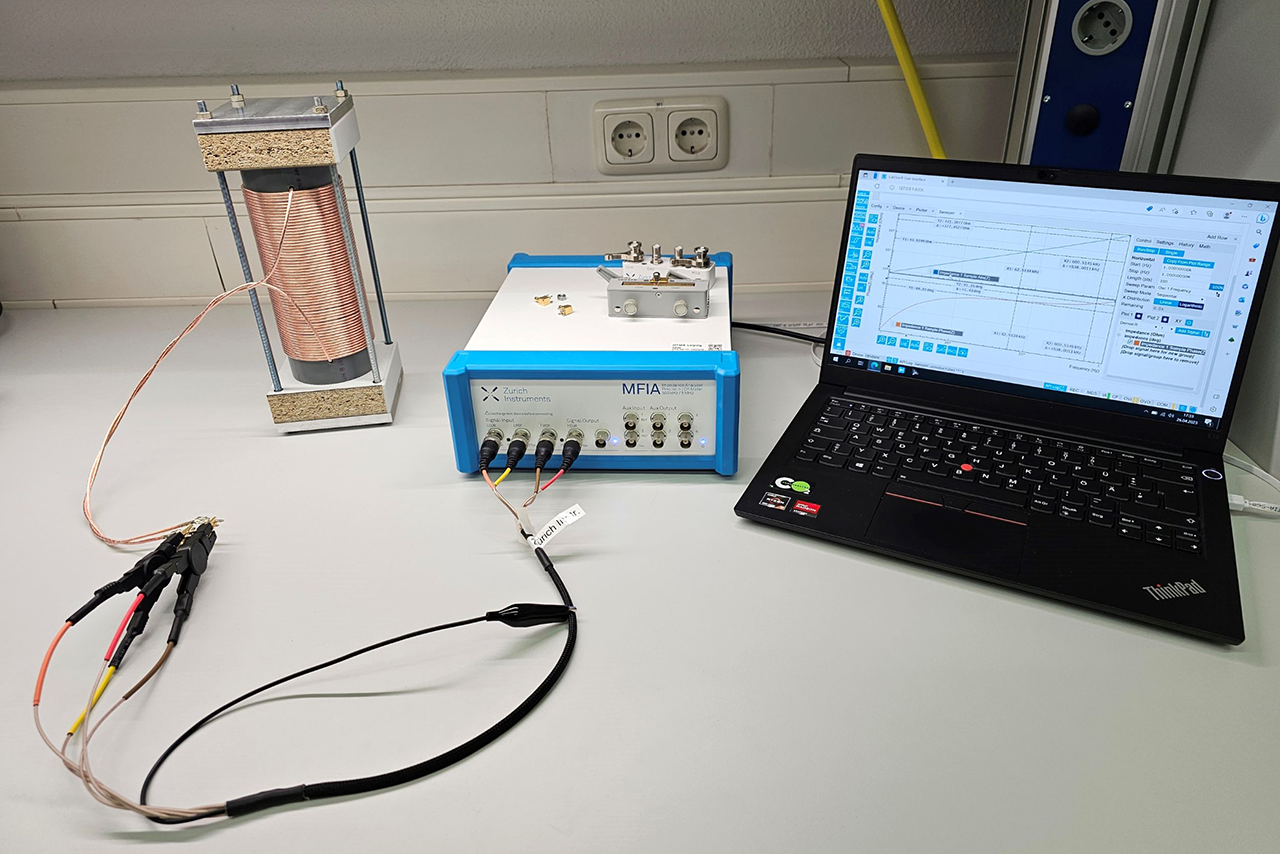
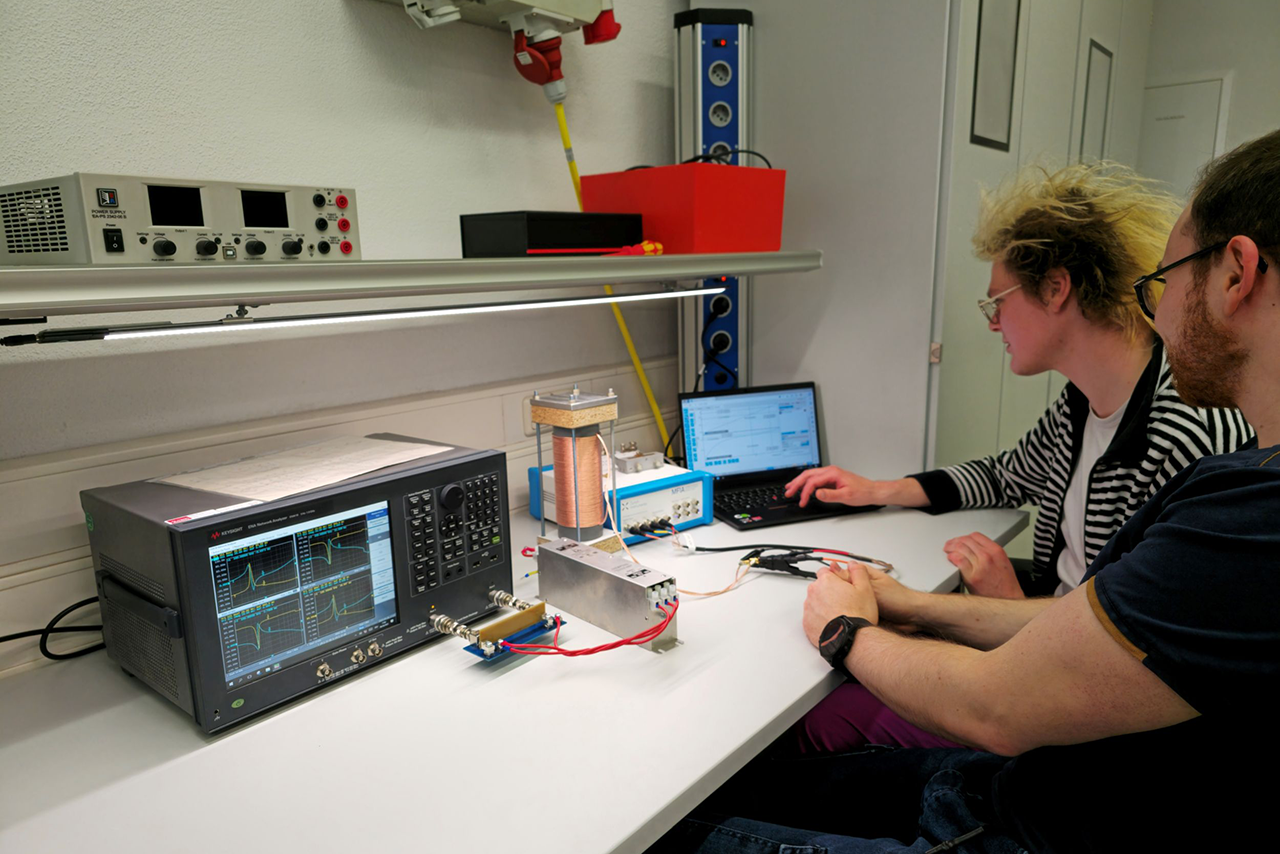
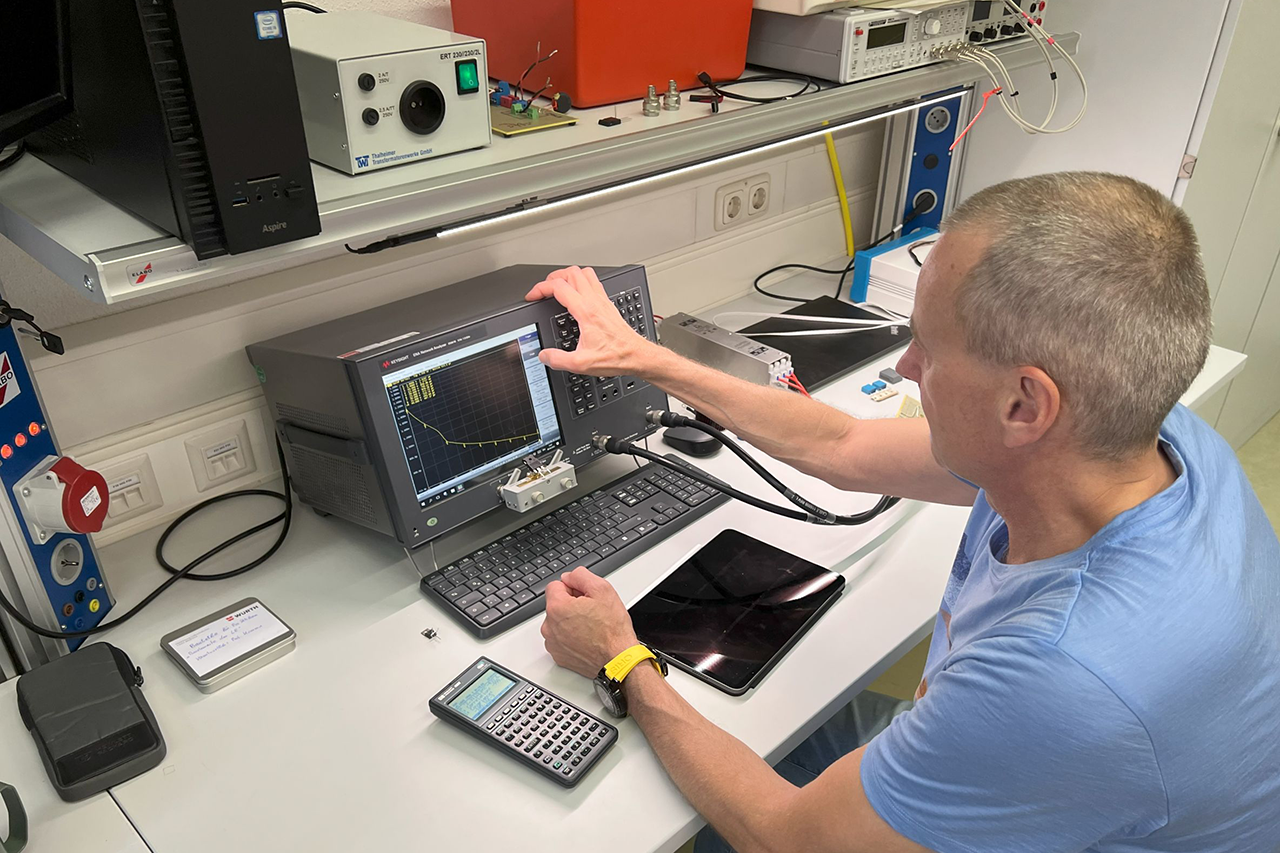
Astronomy sets the example: using established spectroscopic methods, a wide range of different properties can be determined. Using methods from communications engineering, we determine the complex electrical impedance in the small-signal range and analyse, amongst other things, the phase and frequency responses. We utilise state-of-the-art measurement technology in this process.
Areas of application:
- parasitic effects of passive and active components, such as the non-linear capacitance of power semiconductors or stray inductances
- RF equivalent circuit diagrams using 2- and 4-pole measurement techniques
- Transfer characteristics of, for example, controllers or sensors
- Analysis and design of resonant networks
- EMC filter characteristics
- Simulation in LTspice, PLECS and MATLAB®
Measurement methods:
- 2-pole measurement for, for example, chokes and capacitors using the Zurich Instruments MFIA impedance analyser (1 mHz to 5 MHz
- 4-pole measurement for, for example, transformers and the EMC behaviour of filters using the Keysight EN5061B network analyser (5 Hz to 1.5 GHz)
Thermal transient power dissipation measurement
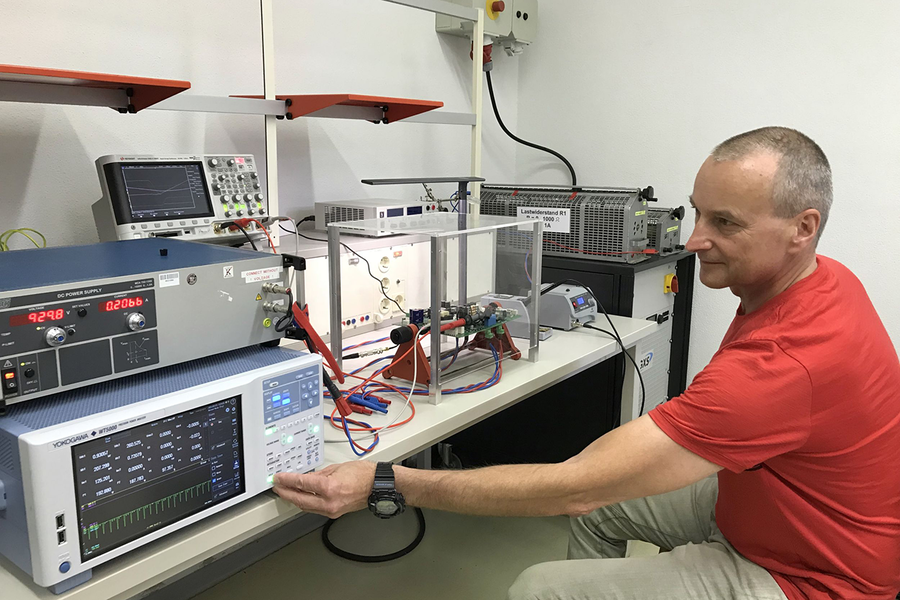
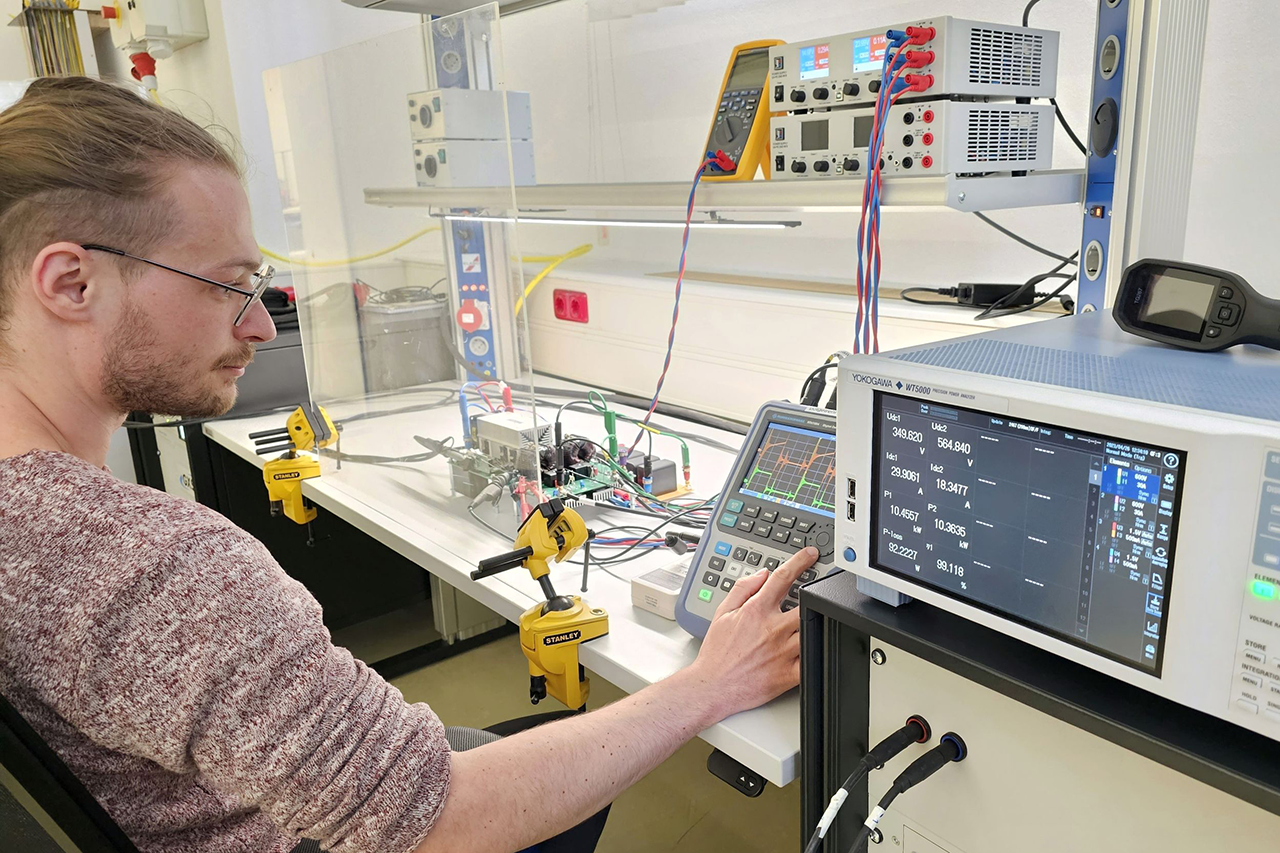
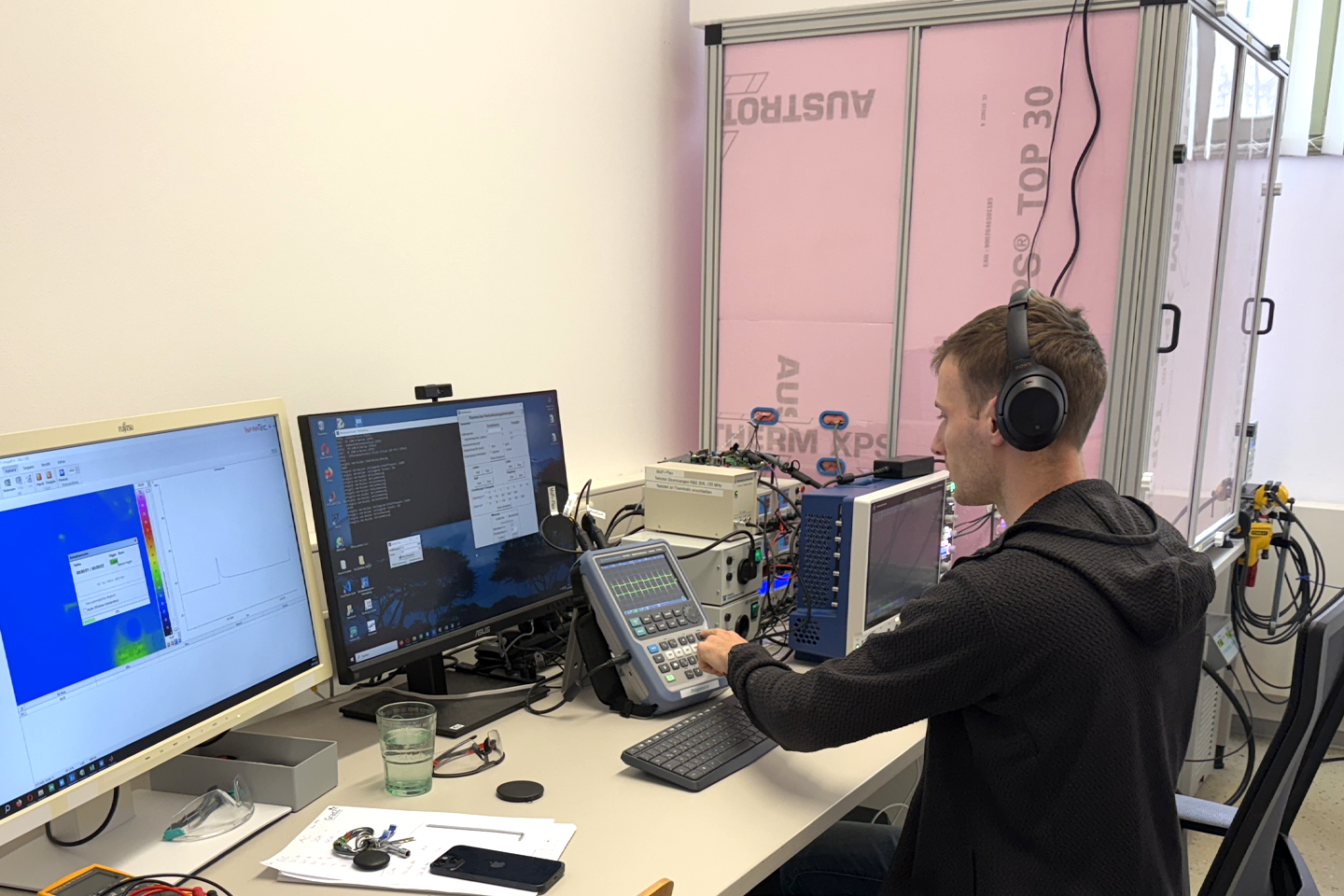
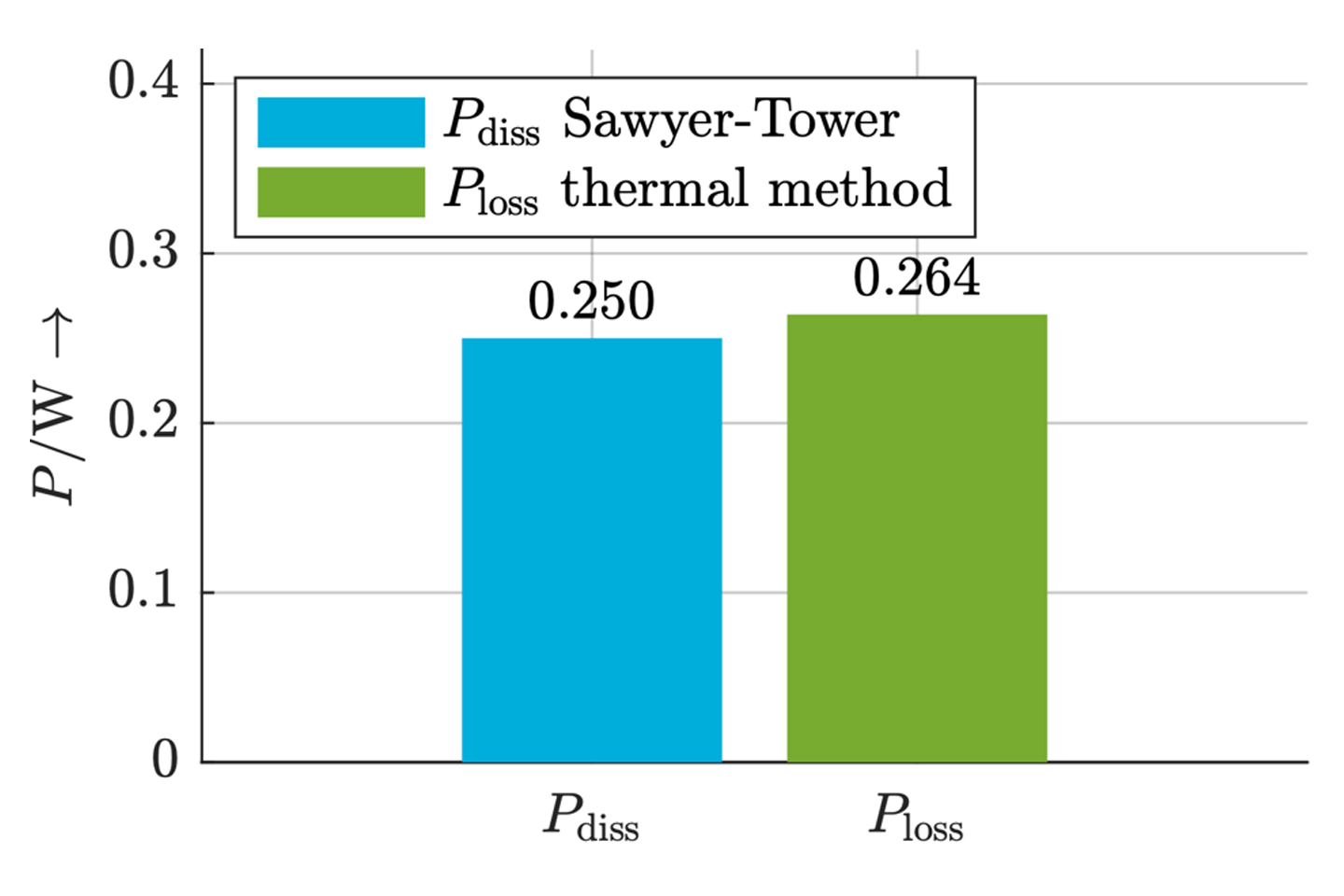
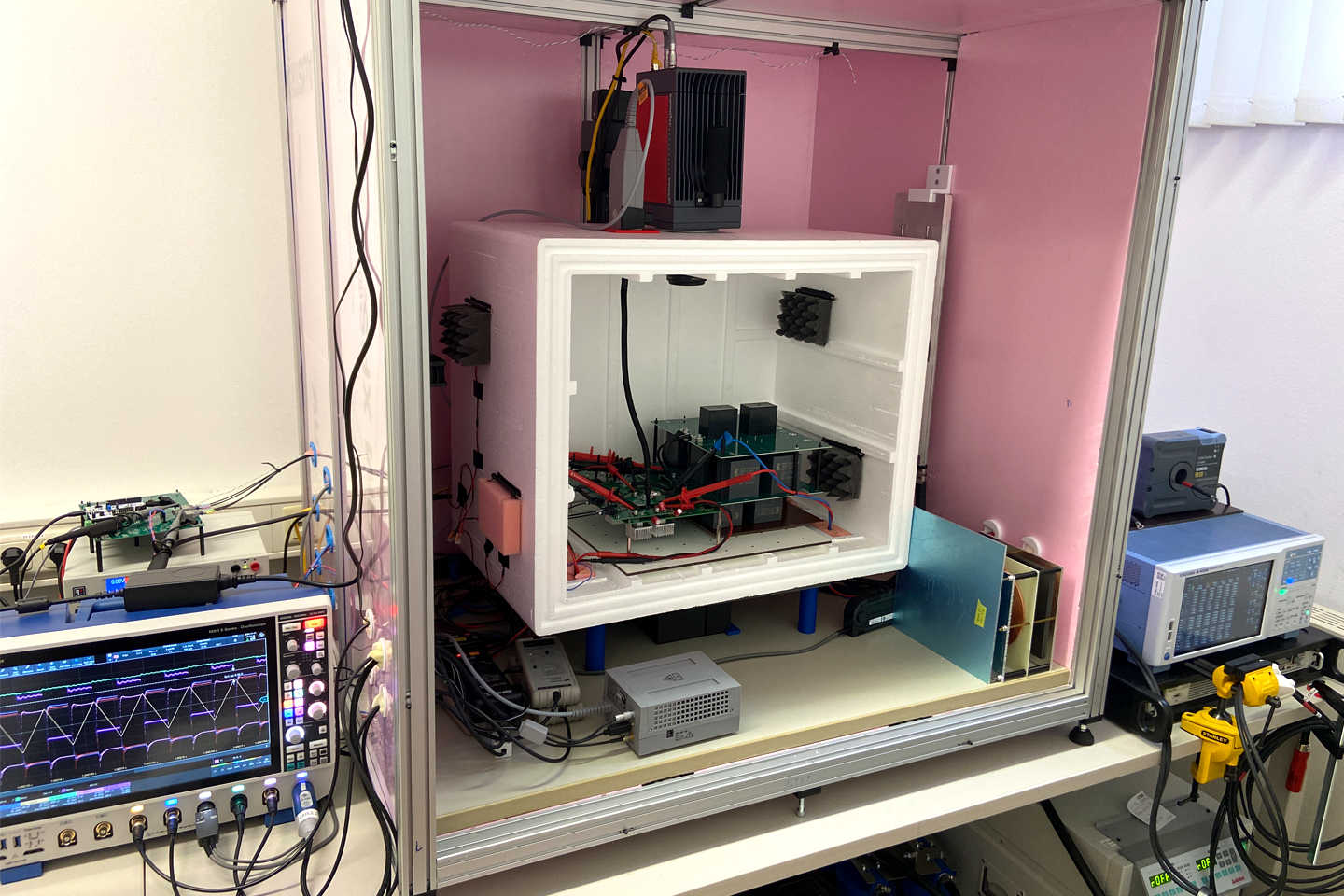
Unlike conventional calorimetry, we use transient temperature rises to determine the power dissipation of a component. This approach enables measurement results to be obtained within a timeframe ranging from a few seconds to a few minutes, thereby avoiding lengthy and error-prone stabilisation processes. With a measurement uncertainty of ±1.1%, reliable results can be achieved.
Using our high-quality equipment, we are able, amongst other things,
- measure parallel power dissipation sources simultaneously within complex systems,
- determine power dissipation independently of switching frequency and switching speed, and
- determine power dissipation down to the mW range.
This project is co-funded by taxpayers’ money in accordance with the budget approved by the Saxon State Parliament.
Areas of application:
- Switching and conduction losses at the highest switching speeds using IR measurement technology
- Quantification of turn-off losses in ZVS operation using the Parallel Capacitor Technique
- Losses in wound components under real-world modulation conditions
- Rapid temperature changes in components and systems
- Thermal analysis of circuits
Measurement method:
- Non-invasive and interference-free measurement using the highly dynamic ImageIR® 8300 thermal imaging camera (150 Hz to 4 kHz)
- Non-invasive and non-disruptive measurement using OTG-F optical fibre (response time 5 ms) and OTG-I220 (response time <= 35 ms)
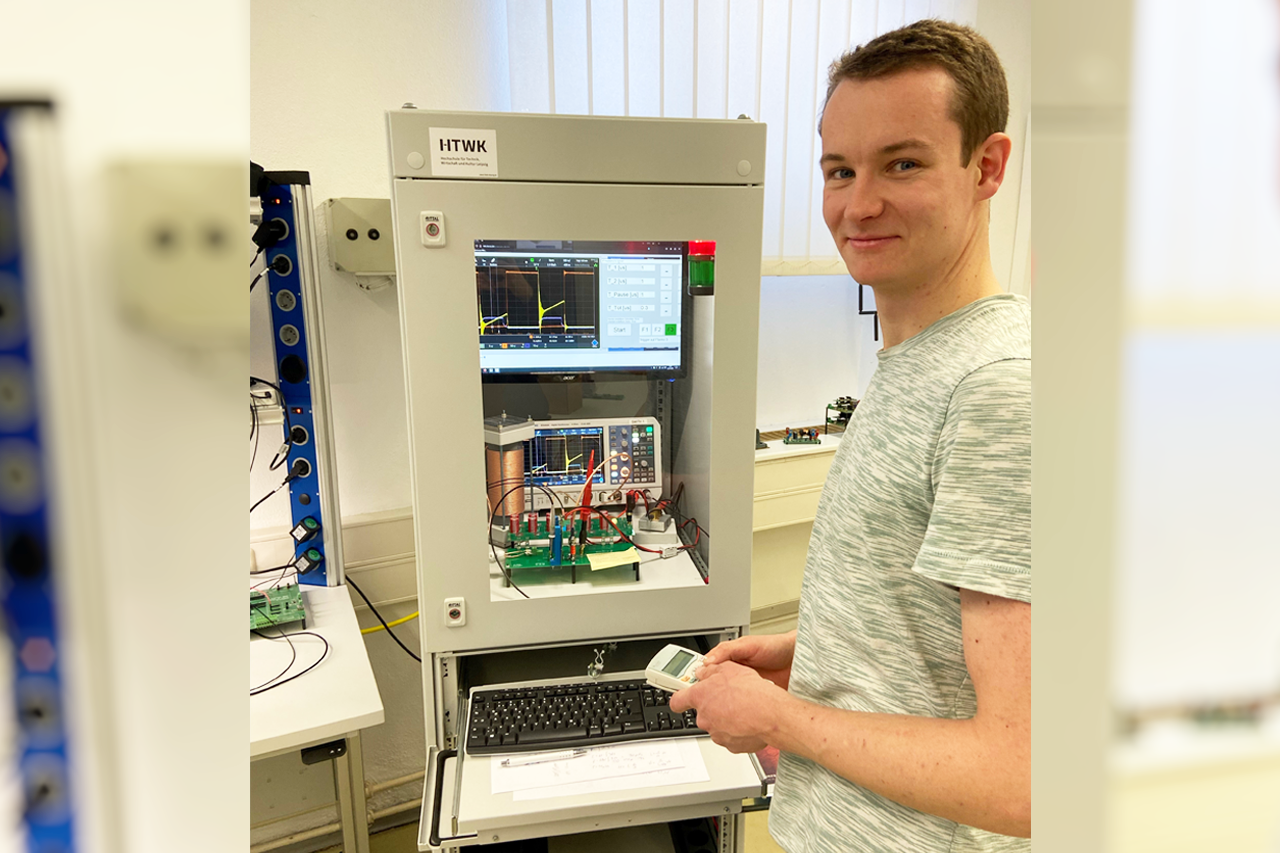
Dual-pulse measuring station (under construction)
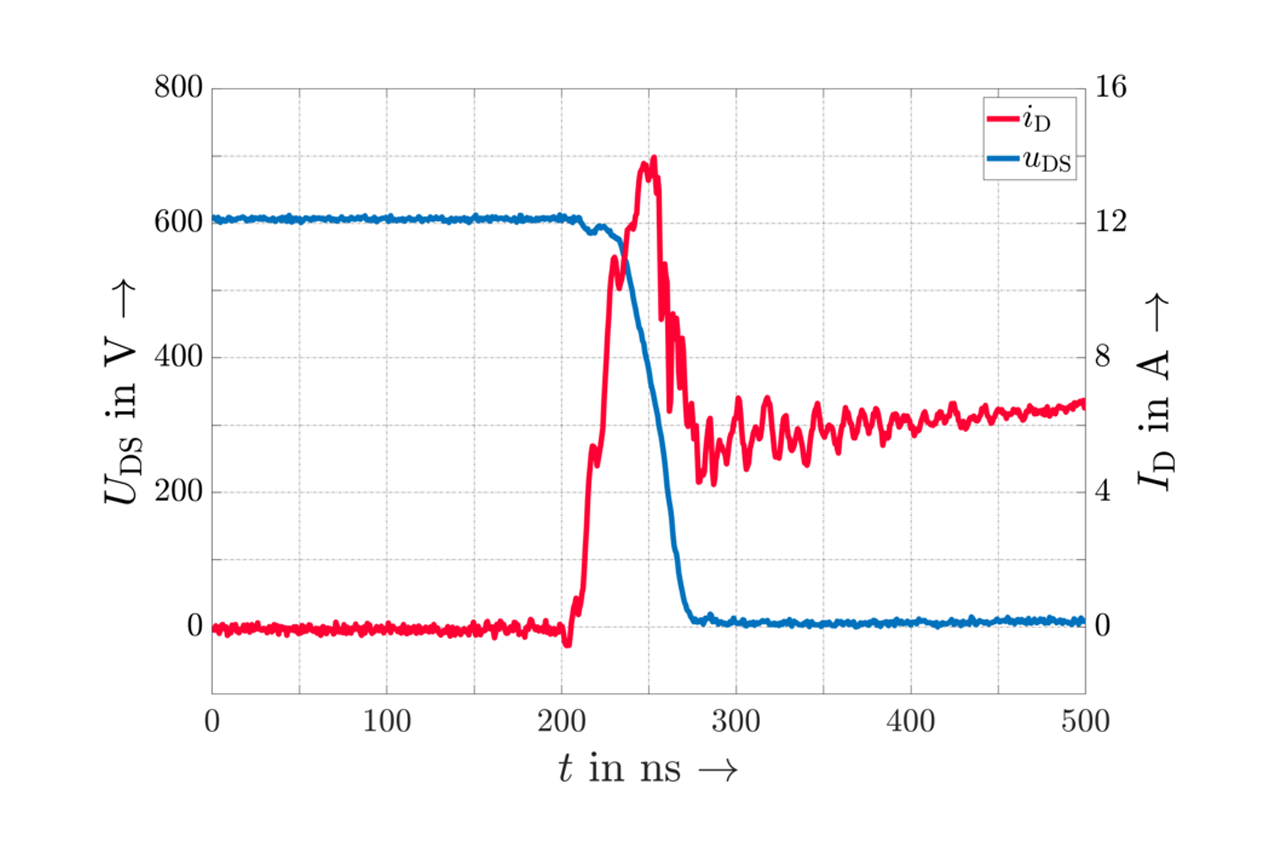
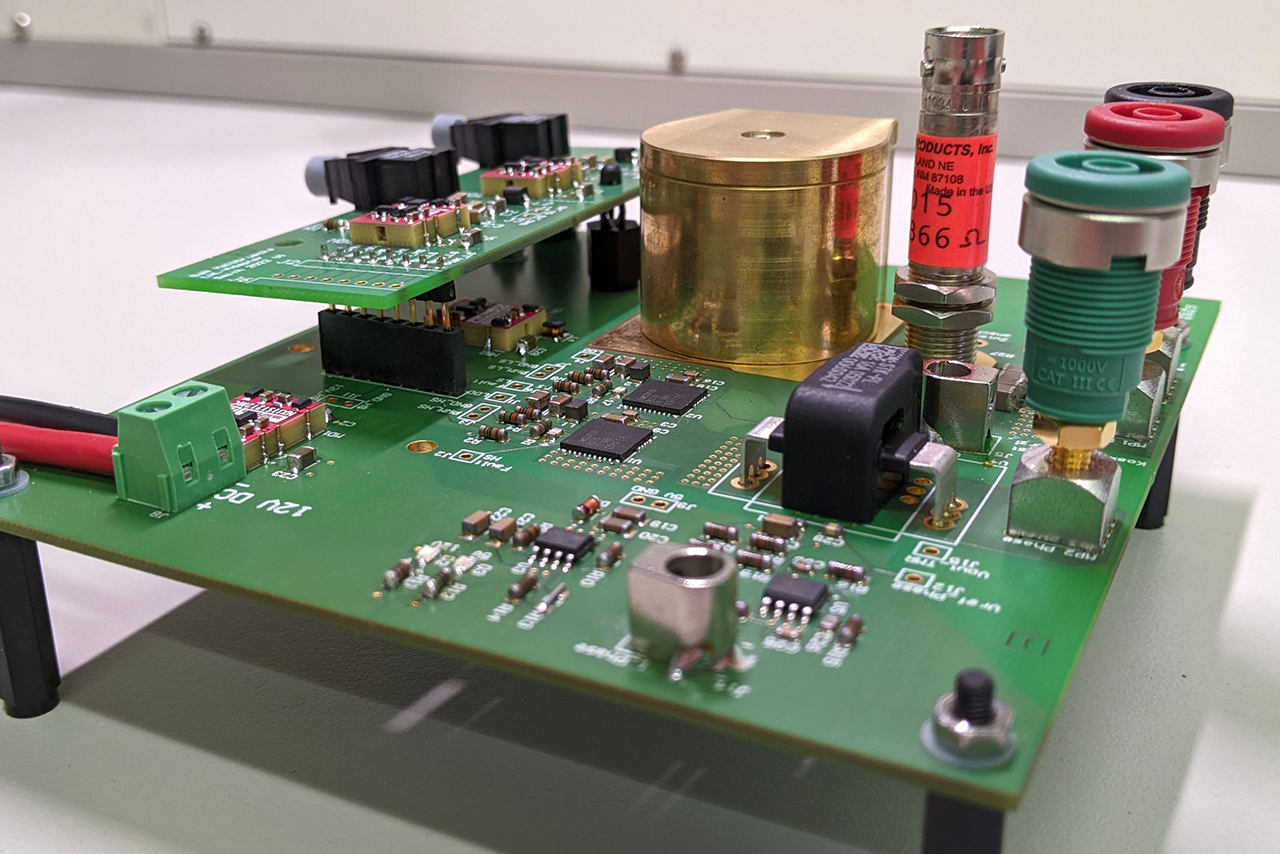
This test station is used for highly dynamic current and voltage measurements on modern power semiconductors. Switching and dead times can be set in 50 ns increments. Current measurement presents a particular challenge, for which various measurement methods are available. Drawing on our existing expertise, the dynamics of switching operations can be optimised. In addition, thermal reference measurements of switching losses are possible.
This project is co-funded by tax revenue in accordance with the budget approved by the Saxon State Parliament.
Fields of application
- Characterisation of active components
- Optimisation of switching behaviour
- Optimisation of switching losses
- Optimisation of driver assemblies
Specifications
- Intermediate circuit voltage up to 2,000 V
- THT and SMD packages
- Switching time resolution in 50 ns steps
- Adjustable stray inductance
- Current measurement methods: Pearson probes, coaxial shunts, Rogowski coils
Category 1 | Sources, sinks
- 4x bidirectional active DC power source: IT6018B-1500-40 (0–1500 VDC, 18 kW) from ITECH
- Bidirectional 3/1-phase AC source: IT7915P-350-90 (0–350 VLN, 15 kVA) from ITECH
- Active DC source: TopCon Quadro (0–600 VDC, 20 kW) from Heiden
- Active DC sink: TopCon TC.GXS (0–600 VDC, 20 kW, with battery emulation) from Heiden
- 2x power source: PSU 6-200 (0–6 VDC, 200 A, can be connected in series or parallel) from GW Instek
- Voltage source: HPp 20 757 152 (0–2000 VDC, 1500 W) from iseg-Spezialstromversorgungen
- 2x thermal source/sink: FC600 chiller (-20 … +80 °C, 1.2 kW heating capacity and up to 0.6 kW cooling capacity) from Julabo
Category 2 | Measuring instruments
- Power measurement instruments: WT5000 and WT3000 from Yokogawa, LMG 500 from Zimmer
- 4-pole network analyser: EN5061B (5 Hz to 1.5 GHz) from Keysight
- 2-pole impedance analyser: MFIA (1 mHz to 5 MHz) from Zurich Instruments
- LCR meter: HM8118 (20 Hz to 200 kHz) from R&S
- Thermal imaging camera: ImageIR® 8300 (640×512 IR pixels, 150–5000 Hz) from Infratec
- Optical fibre data logger: CoreSens GSX-2 (6 channels, 1 kHz) from OpSens Solutions
- Data logger: GL7000 platform with HSV (4-channel, 1 MS/s), M (10-channel, 100 S/s) and SSD (128 GB) options from Graphtec
- Various storage oscilloscopes: including 2x R&S®MXO58-500 (8-channel, 500 MHz), 1x R&S®RTA4004 (4-channel, 1 GHz) and 2x R&S®RTH1054 (4-channel, 500 MHz, isolated) from R&S
- Digital multimeters: DM6500 (1000 VDC, 750 VAC) from Keithley
Category 3 | Sensors
- Active AC/DC current clamps: 120 MHz / 30 A, 100 MHz / 30 A, 100 MHz / 50 A and 10 MHz / 150 A from R&S®
- Rogowski coils: 30 MHz / 120 A and 30 MHz / 600 A from Iwatsu and Keysight
- Pearson probes: 200 MHz / 100 A and 70 MHz / 400 A
- Various voltage probes: Differential and isolated probes (25–500 MHz, 700–1400 V)
- Logic probes: TLP058 (500 MHz, 30 V) from Tektronix
- Optical fibre: OTG-F (response time 5 ms) and OTG-I220 (response time <= 35 ms) from OpSens Solutions
