

Key areas of research and development
- Modelling and Simulation
- Methods and tools for model-based control and regulation design
- Virtual commissioning
- Artificial intelligence, in particular machine learning in automation and robotics
- Human-technology interaction
Team
- Nico Beyer, B.Eng.
- B.Eng. Moritz Benedikt Brüggemann
- M.Eng. Joel Focking
- M.Sc. Maximilian Gerwien
- M.Eng. Christian Rickert
- M.Sc. Robert Thiel
Prof. Dr.-Ing. Jens Jäkel
Chair of Systems Theory and Mechatronics
Institute
MSR | Institute of Measurement, Control and Regulation Technology
Research Profiles
Process Automation & IIoT
Robotics, Control & AI
Telephone: +49 (0)341 3076 1125
Email: jens(dot)jaekel(at)htwk-leipzig.de
Completed projects

Saxony5
Involvement in the application areas of production (resilient manufacturing) and energy (All-Electrical Society).
The aim of the ‘Resilient Manufacturing’ sub-project is to use co-innovation processes to transfer the results of applied research for use in the production systems of small and medium-sized enterprises (SMEs). In addition to maintaining the productivity of these enterprises, aspects of sustainability, the integration of people into the production process and the responsible use of AI also play a key role. Key aspects include human-technology interaction, wireless real-time industrial communication, cognitive and resilient manufacturing systems, and novel additive manufacturing methods.
By 2040, the transition from the fossil fuel era to an ‘All-Electric Society’ must be complete. Electrical energy is the key energy source of the future. In addition to the energy interconnection of the transport, industrial, commercial and residential sectors, information interconnection is a key prerequisite. Within the ‘All Electric Society’ sub-project, the transfer of applied research findings is intended to support social and economic stakeholders in this transformation process.
Project duration: 01/2023 – 12/2027
siBUS
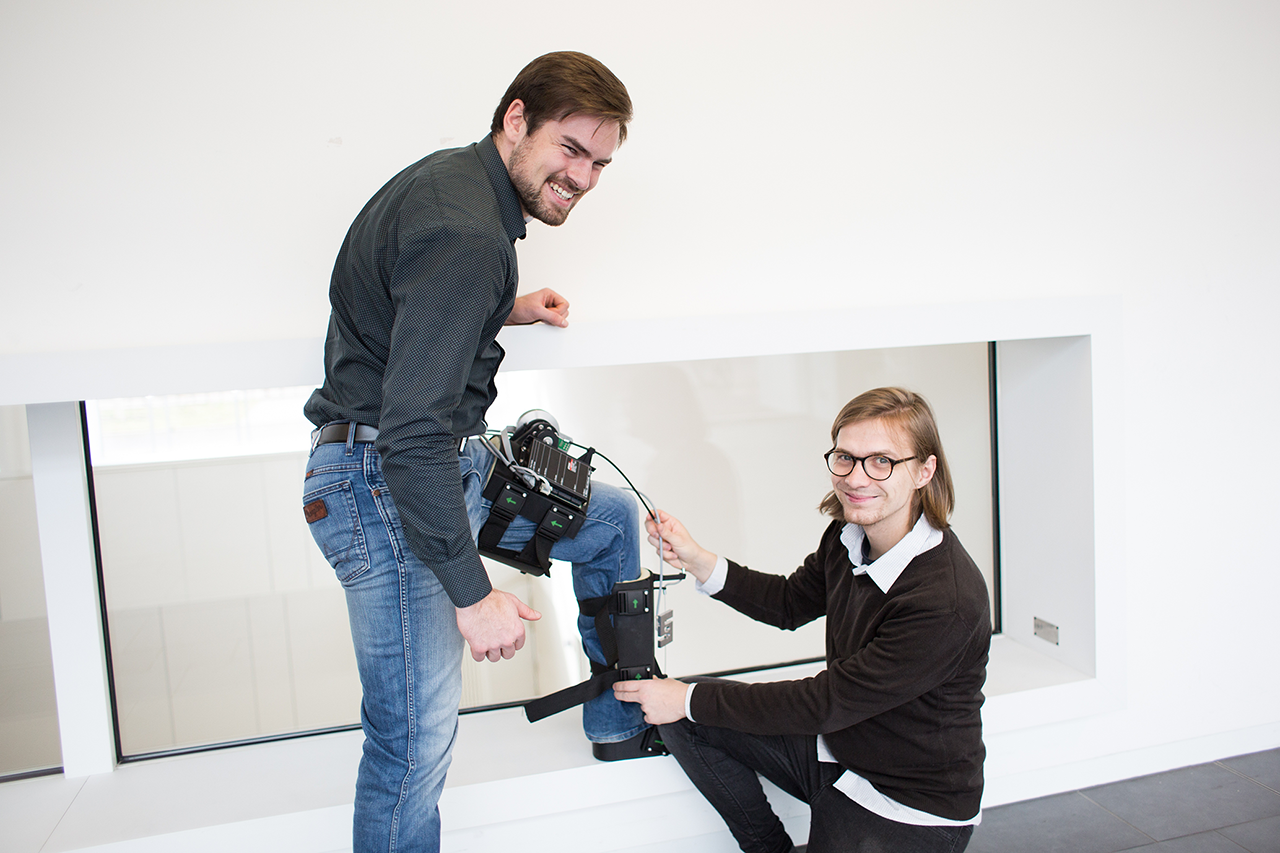
A safe, intelligent mobility assistance system for negotiating stairs – validation of the technical and economic potential and preparation for implementation
Germany’s demographic trends are creating a particular need for age-appropriate design of the living environment through technical solutions. The safe, intelligent mobility support system (siBUS) has been developed for this purpose as part of current and previous R&D projects. It helps older people to navigate stairs in their own homes. As part of the SAB validation grant, it is now to be validated and prepared for market transfer.
Funding: Validation funding from the Free State of Saxony
Project duration: 04/2021 – 09/2022
SmartTurbo
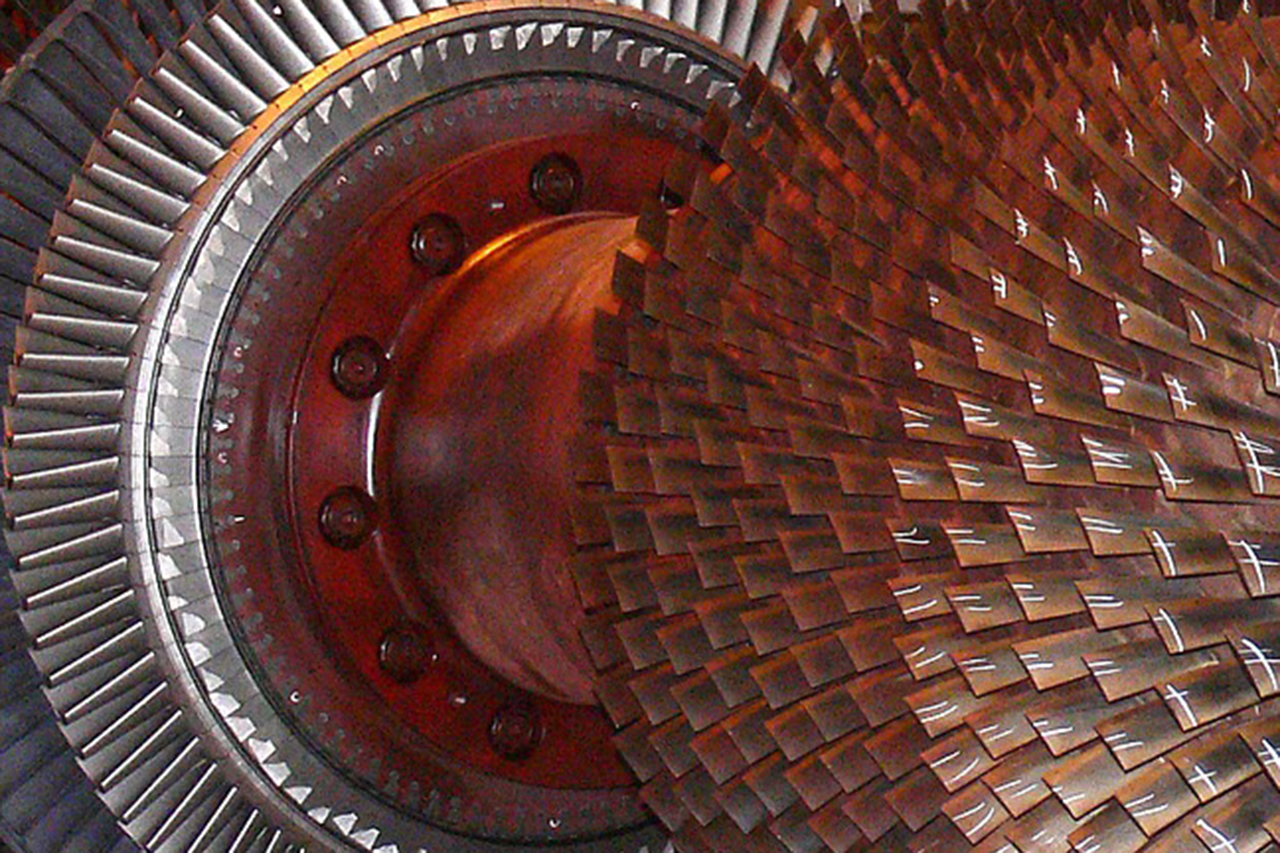
Digital technologies for the model-based monitoring, maintenance and modernisation of compressor and turbine systems
Automation systems for process plants are becoming increasingly complex, must meet ever-higher standards of quality and safety, and are subject to dynamic global competition. To meet these rising demands, the concept of the digital twin – a digital replica of the physical plant – has become established in the wake of industrial digitalisation and the increasing interconnection of plants. The need for digital transformation is also evident in the field of compressor and turbine plants.
Funding: Central Innovation Programme for SMEs
Project duration: 1/2020 – 2/2022
KISEC
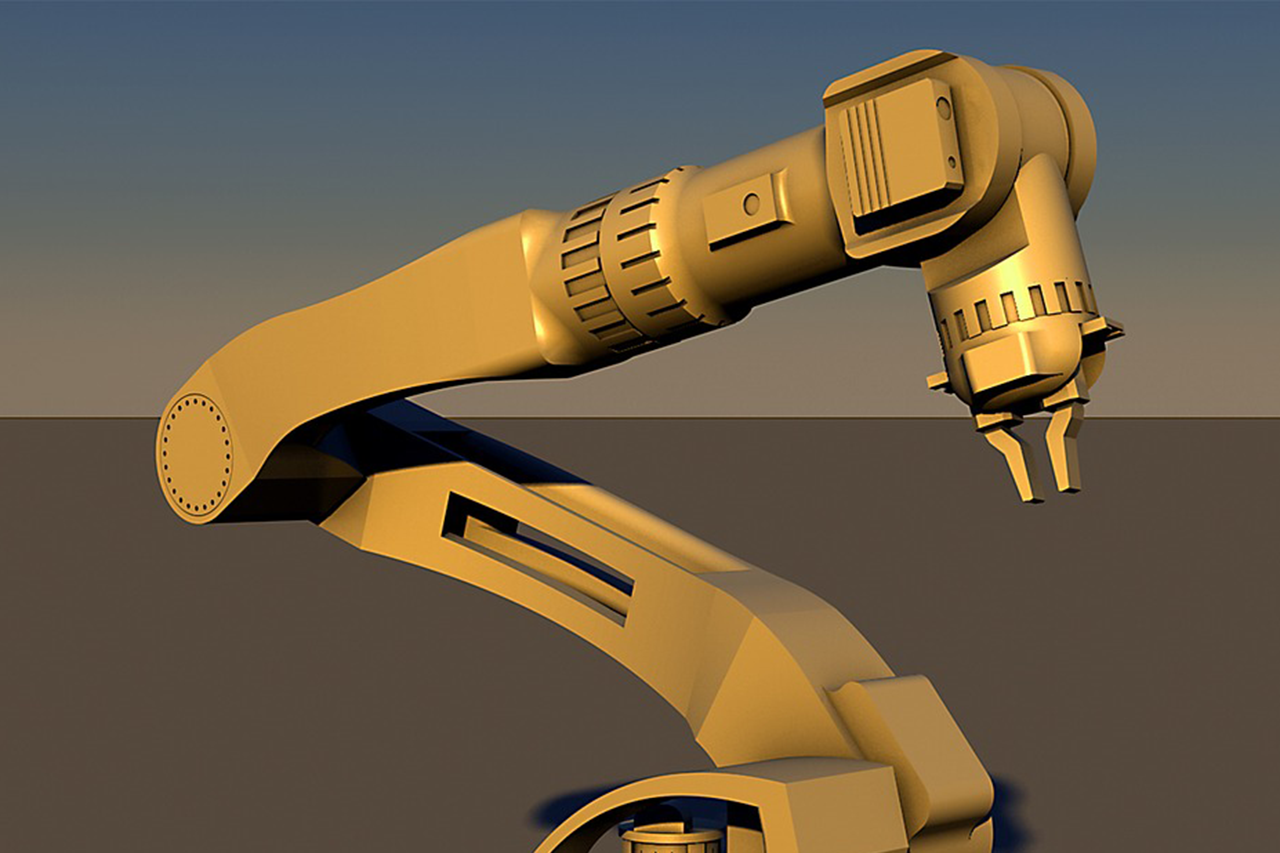
AI safety system for 7-axis robots
The aim of the project is to develop a safety system that safeguards the operation of an industrial robot outside traditional robot cells. The industrial robot is to be operated in an environment where people can move about freely and where objects may be present. The safety system is designed to allow and safeguard freedom of movement within the workspace. This is intended to prevent collisions with people or objects.
Funding: European Regional Development Fund (ERDF)
Project duration: 2019–2021
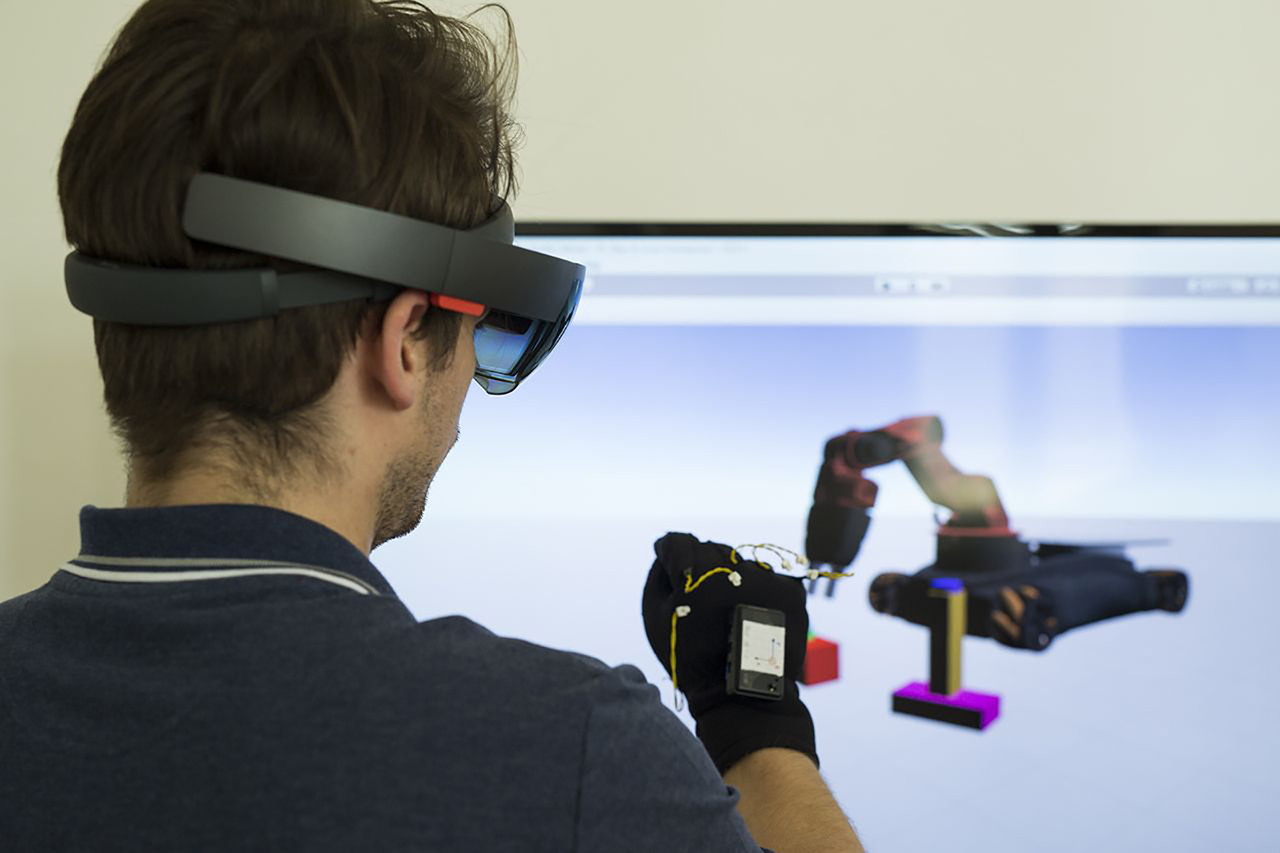
AugBot
Support for MRI using augmented reality glasses
Human-robot interaction (HRI) is a key component of the digitalisation and increased flexibility of modern industrial production. The aim of the project is to make HRI more user-friendly and safer through the use of augmented reality (AR) glasses. The plan is to develop a system that facilitates HRI with the aid of AR glasses.
Funding: Central Innovation Programme for SMEs (ZIM)
Project duration: 2018–2020
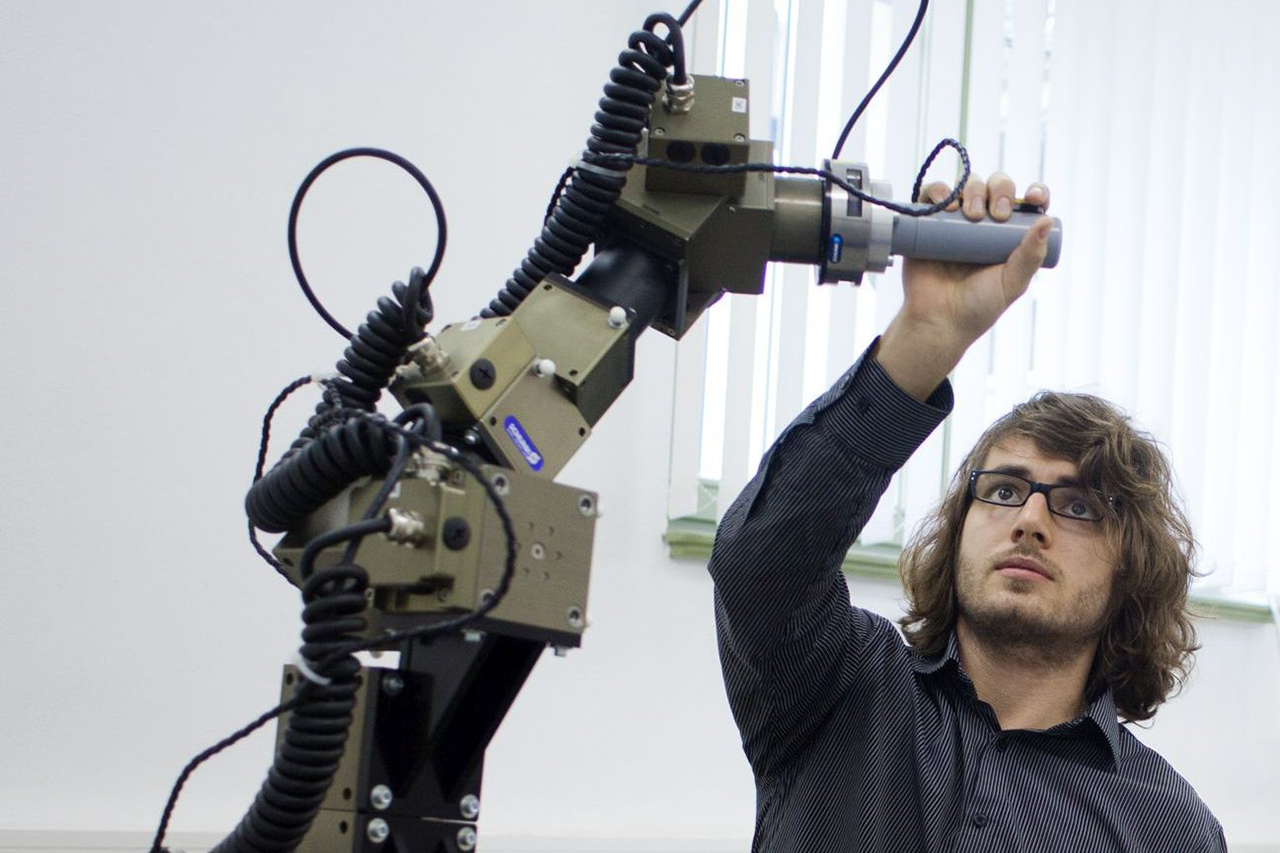
MALEVIK
Control system for the intuitive operation of force-assist robots based on machine-learnt virtual force fields
The MALEVIK project aims to develop a system for user-friendly, robot-based force-assist systems. At the heart of the system is the guidance of the operator through a tunnel-shaped virtual force field to ensure an optimal trajectory. The project aims to develop a hardware and software architecture for the MALEVIK system and to implement this as a prototype.
Funding: ZIM
Project duration: 2015–2017
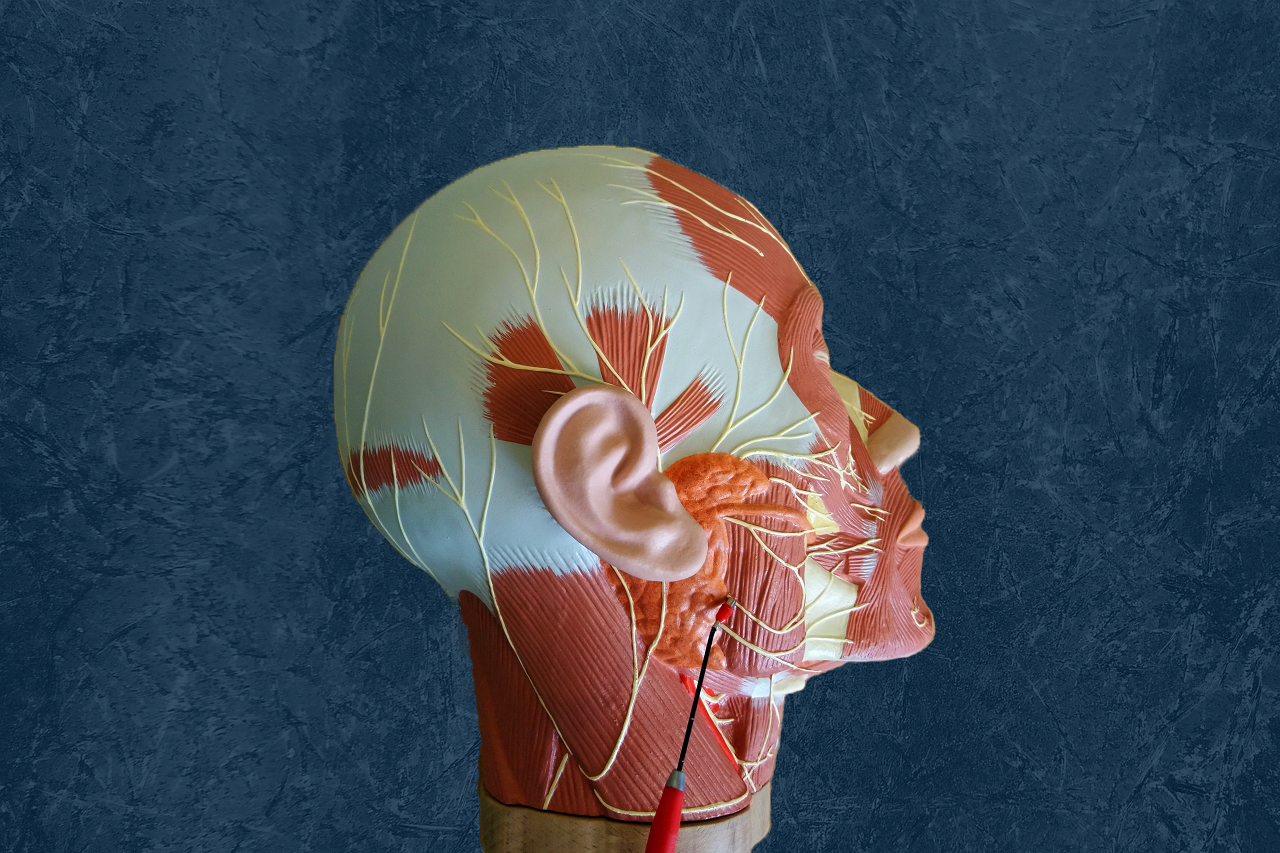
SimION
Development of a simulation system for intraoperative neuromonitoring in ENT surgery
The aim of the project is to develop a prototype simulation system (‘patient model’) for so-called intraoperative neuromonitoring (IONM), based on a sample scenario from ENT surgery. IONM is an electrophysiological technique for monitoring the integrity and location of nerve pathways, which helps surgeons to avoid injury and damage to neural structures at risk (e.g. the facial nerve) during an operation. The simulation system to be developed is intended to enable realistic, cost-effective and reproducible training in the use of IONM.
Funding: BMBF
Project duration: 2015–2019
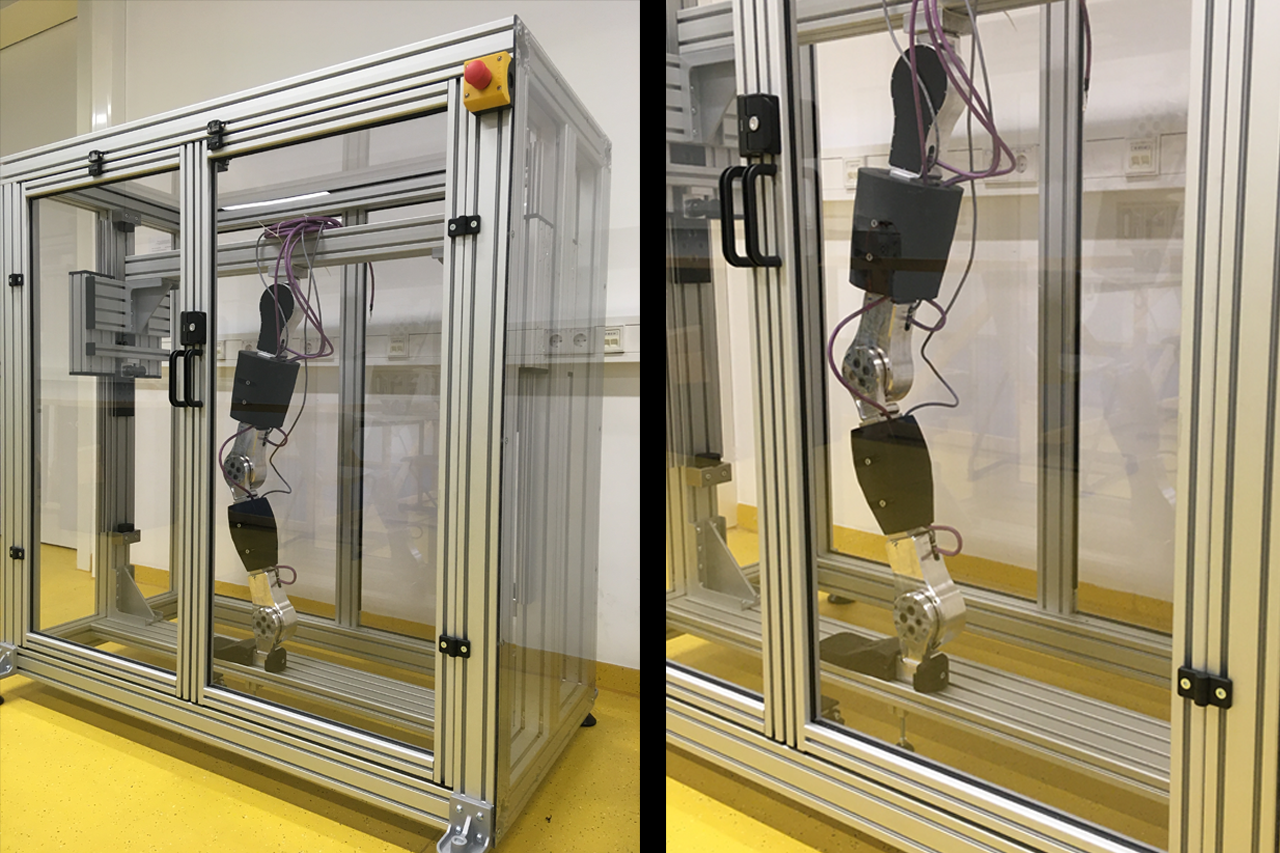
Mobility support systems for use in the rehabilitation and care of older people (BuS)
Objective: To develop an interdisciplinary concept for the functional verification of motion-assistance systems, and to implement and construct the concept.
Results: Design and construction of a ‘mechatronic leg’ as a test rig
Funding: Sächsische Aufbaubank (SAB), Saxon Ministry of Science and the Arts (SMWK)
Project duration: 1 August 2019 – 31 December 2019
Project leaders: Prof. Dr.-Ing. Jens Jäkel, Prof. Dr.-Ing. Johannes Zentner
Project team members: M.Eng. Max Böhme, M.Sc. Felix Weiske
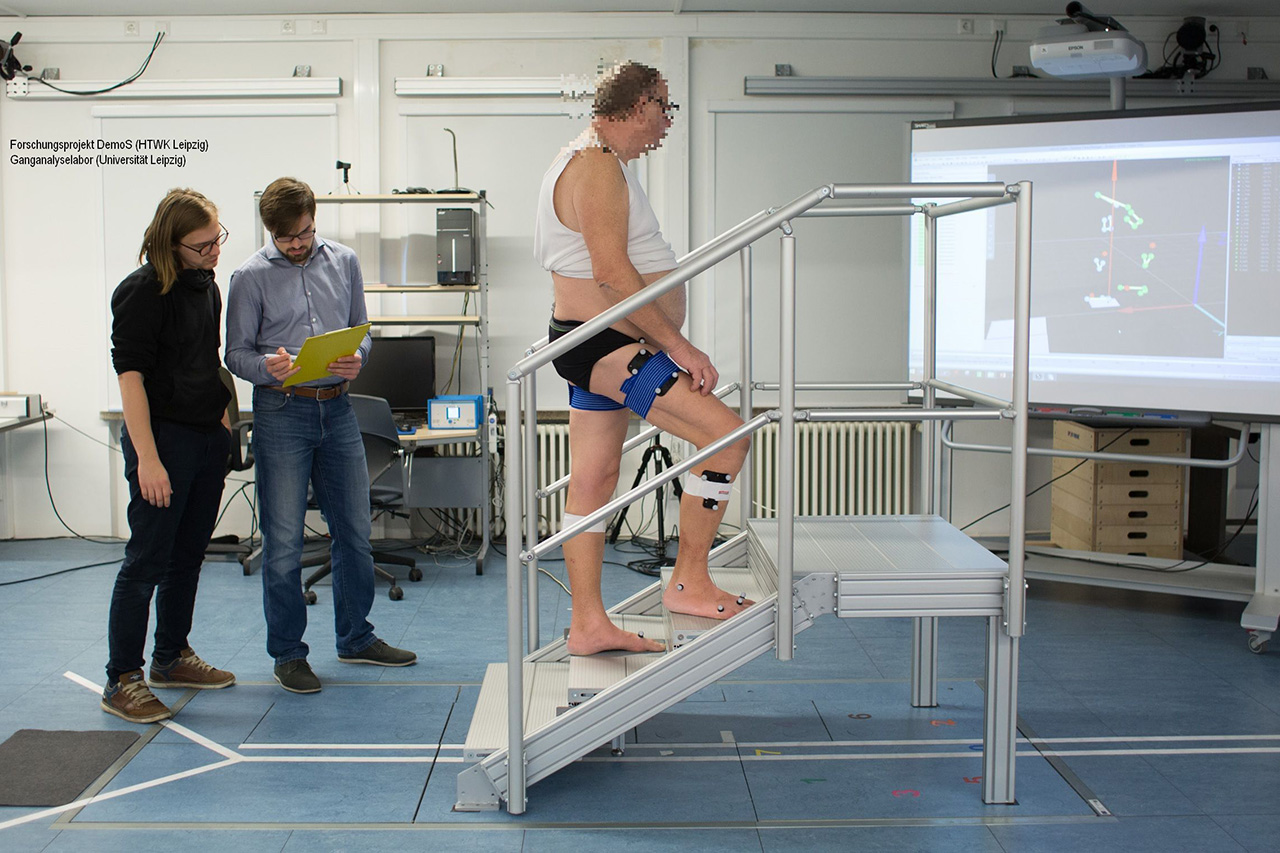
Development of minimally updated, intelligent systems for intuitive motion assistance
Objective: The project aims to develop exoskeletal mobility assistance systems through a participatory process, which will help older people to overcome everyday challenges, such as climbing stairs. By determining the biomechanical support requirements and conducting simulation-based concept studies, initial demonstrators are to be built.
Results: Subjective requirements and preferences regarding such an exoskeletal mobility assistance system (conference paper ‘Practical Needs Analysis’); Determined biomechanical support requirements for older people when negotiating stairs (in cooperation with the University of Leipzig, Department of Biomechanics); design and construction of an initial demonstrator for one leg
Funding: European Social Fund (ESF)
Project duration: 1 October 2016 – 31 July 2019
Project leaders: Prof. Dr.-Ing. Jens Jäkel, Prof. Dr.-Ing. Johannes Zentner
Project team members: M.Eng. Max Böhme, M.Sc. Felix Weiske
Other projects
- DemoS | System solutions for managing demographic change
Prof. Dr.-Ing. Jens Jäkel, 08/2016–07/2019 - CanTurbo | Innovative development process for control software in the field of rotating machinery – exemplary implementation for model-based compressor control systems
Prof. Dr.-Ing. Jens Jäkel, 01/2014–11/2016 - SimVIP | Simulation tool for virtual commissioning in the process industry
Dirk Lippik, Prof. Dr.-Ing. Jens Jäkel, May 2016–December 2016 - HiLAS-VT| Hardware-in-the-loop simulations for the design of automation systems for compressor and turbine plants – methodology, tools and prototype application
Prof. Dr.-Ing. Jens Jäkel, 03/2013–04/2016 - METEORIT | Human–Technology Cooperation in Work Organisation through Intelligent Technologies, sub-topic: Safe Actuation/Force Amplification
Prof. Dr.-Ing Detlef Riemer/ Prof. Dr.-Ing. Jens Jäkel, June 2013–March 2015 - PascAL | Patient simulation models for surgical training and teaching. Second-generation intelligent, sensor-integrated phantom systems, sub-topic: Intraoperative neuromonitoring on simulated nerve tissue
Prof. Dr Werner Korb / Prof. Dr.-Ing Jens Jäkel, 05/2012–10/2014 - Flight Cam System | Development of a helicopter camera system with enhanced flight characteristics based on existing modular solutions for the production of ‘Full HD’ video recordings
Prof. Dr.-Ing. Jens Jäkel, 05/2012–10/2014 - HiLTurbo | HiL simulation system for the design and testing of process engineering automation systems, using compressor and turbine plants
as examples Prof. Dr.-Ing. Jens Jäkel, 11/2011–12/2013 - Model-based control of turbo compressors
Prof. Dr.-Ing. Jens Jäkel, 04/2013–12/2013 - Innovative control of turbo compressors
Prof. Dr.-Ing. Jens Jäkel, May 2012–December 2012 - Lane estimation for multi-unit road vehicles
Prof. Dr.-Ing. Jens Jäkel, 04/2009–10/2012 - EMONS | Development of an optoelectronic, non-invasive, mobile visual aid for the severely visually impaired
Prof. Dr.-Ing. Jens Jäkel, 01/2009–12/2011 - Demosaicking of noisy data from a Bayer image sensor
Prof. Dr.-Ing. Jens Jäkel, 08/2009–10/2011 - PROTurbo | Development of a measuring system for the early detection of aerodynamic instabilities in radial compressor systems
Prof. Dr.-Ing. Jens Jäkel, Prof. Dr.-Ing. Hendrik Richter, 10/2009–09/2011
