
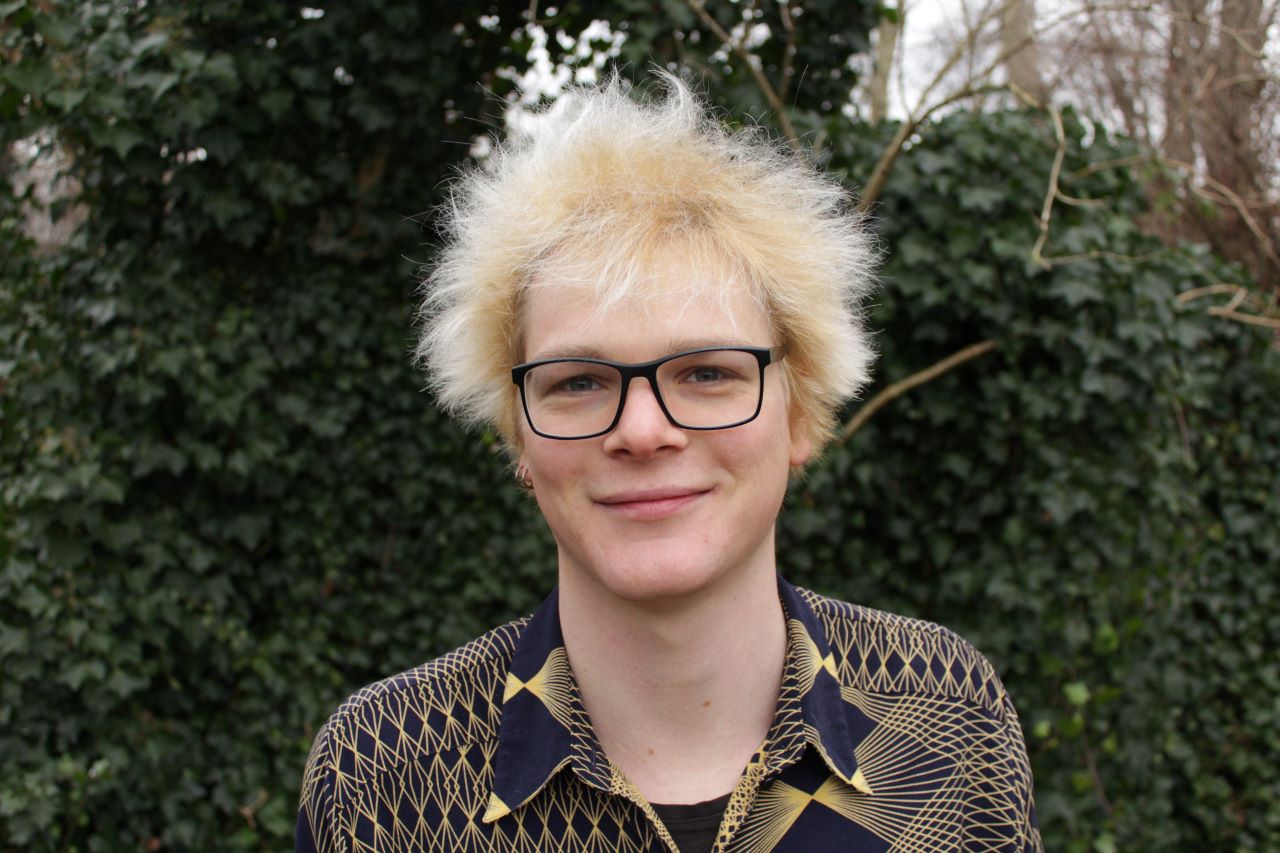
M.Sc. Bela Mara Martes Truschenski
Research Assistant
Institute: EET | Institute of Electrical Power Engineering
Team: Chair of Power Electronics and Electrical Drive Systems | Prof. Dr.-Ing. Thomas Komma
Career:LinkedIn
Telephone +49 (0)341 3076 1103
Send an email | bela(dot)truschenski(at)htwk-leipzig.de
HTWK Leipzig | Faculty of Engineering
Wiener-Bau | Room WI21.2
Wächterstraße 13, 04107 Leipzig
Teaching
- Supervision of project work, Bachelor’s and Master’s theses
Research
- Grid integration of power electronics
- Quasi-resonant AC/DC converters
- Design of mains filters
MAGIE
Magnetics concepts for green, innovative and energy-efficient power supplies
MAGIE aims to develop new magnetics concepts for green, innovative and energy-efficient power supplies. This is because, whilst current developments in the field of SMD-based power semiconductors do indeed enable theoretical current loads on magnetic components (Magnetics) of over 70 Arms at high frequencies ranging from 100 kHz up to the MHz range, the new semiconductors are thus outpacing the current state of the art in Magnetics.
Funding: SMEKUL
Project duration: 10/2024 – 06/2028
ENABLE
ENABLE the Grid: Establishment of a centre of excellence for resonance coupling in electricity supply systems
As the energy transition progresses, green and sustainable electricity supplies are facing considerable pressure to innovate. On the one hand, this stems from demands for greater energy efficiency, the miniaturisation of circuits and a significant reduction in costs. On the other hand, due to the tight supply situation on the global market, strategic aspects relating to the availability of (sub-)technologies are also coming into focus. Overcoming these challenges is crucial to fully exploiting the advantages of resonant coupling technology and making future power supply systems more efficient and sustainable.
Funding: SMWK
Project duration: 08/2024 – 06/2026
noLIMIT
Grid-oriented bidirectional charging with smart modules optimised for industrial manufacturing technology
The increasing electrification of the transport sector is posing new challenges for stable grid operation. For example, according to the Leopoldina National Academy of Sciences, charging behaviour in the low-voltage grid is one of three typical causes of future grid bottlenecks. However, electric vehicles can also be part of the solution: the electric vehicles planned for roll-out by 2030 offer very high storage potential, which can only be harnessed through bidirectional charging. To this end, the FTZ is developing novel power electronics for bidirectional high-power charging points as part of the “noLIMIT” project. As a key element of sector coupling, the charging points are intended to contribute to efficient grid operation and, through innovative concepts, enable highly automated manufacturing in Germany.
Funding: BMWK, BMUV
Cooperation partner: Siemens Aktiengesellschaft
Project duration: 10/2023 – 09/2025
