
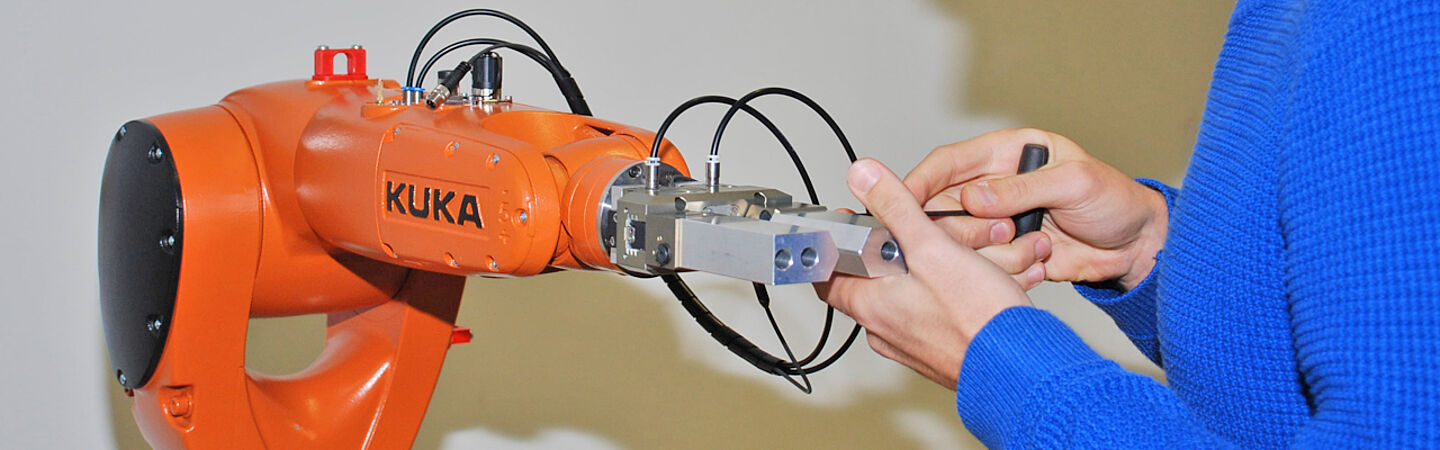
Mechatronics Laboratory
Work placement
This course focuses on familiarising students with novel, unconventional actuator elements and modules, as well as cascaded drive structures. So-called ‘smart materials’ – which are a prerequisite for the realisation of pioneering miniaturised mechatronic applications, some of which are manufactured using microsystems technology – are also covered. The latest research findings in the field of biomechatronics are also presented.
Key learning outcomes
- Specification of drive element characteristics
- Basic structure of a mechatronic microactuator system
- Example of the design and implementation of a mechatronic system in the form of an electrostatic linear or planar actuator with integrated sensors and field-controlled guidance elements
- Modern electromagnetic energy converters (influence on characteristic curves through geometric/electronic modification, mechatronic stepper motor systems)
- Piezoelectric/SMA/electrochemical actuators – novel actuators for mechatronic applications
- Examples of unconventional mechatronic drive solutions
- ‘Smart materials’ and microtechnologies as a prerequisite for the realisation of miniaturised mechatronic applications
- Bio-mechatronics? Introduction and explanation using examples
- An introduction to an industrially used mechatronic linear drive system as an alternative to conventional pneumatic/hydraulic actuators
Contact
Responsible academic staff member

Prof. Dr.-Ing.
Detlef RiemerProfessorship CAD, Automotive Mechatronics, Mechatronics, Microsystems Technology, Modelling/ Simulation, Process Data Processing, Programmable Controllers, Robotics, Simulation of Mechatronic Systems, Control Engineering
- Phone:
- +49 341 3076-4116

