
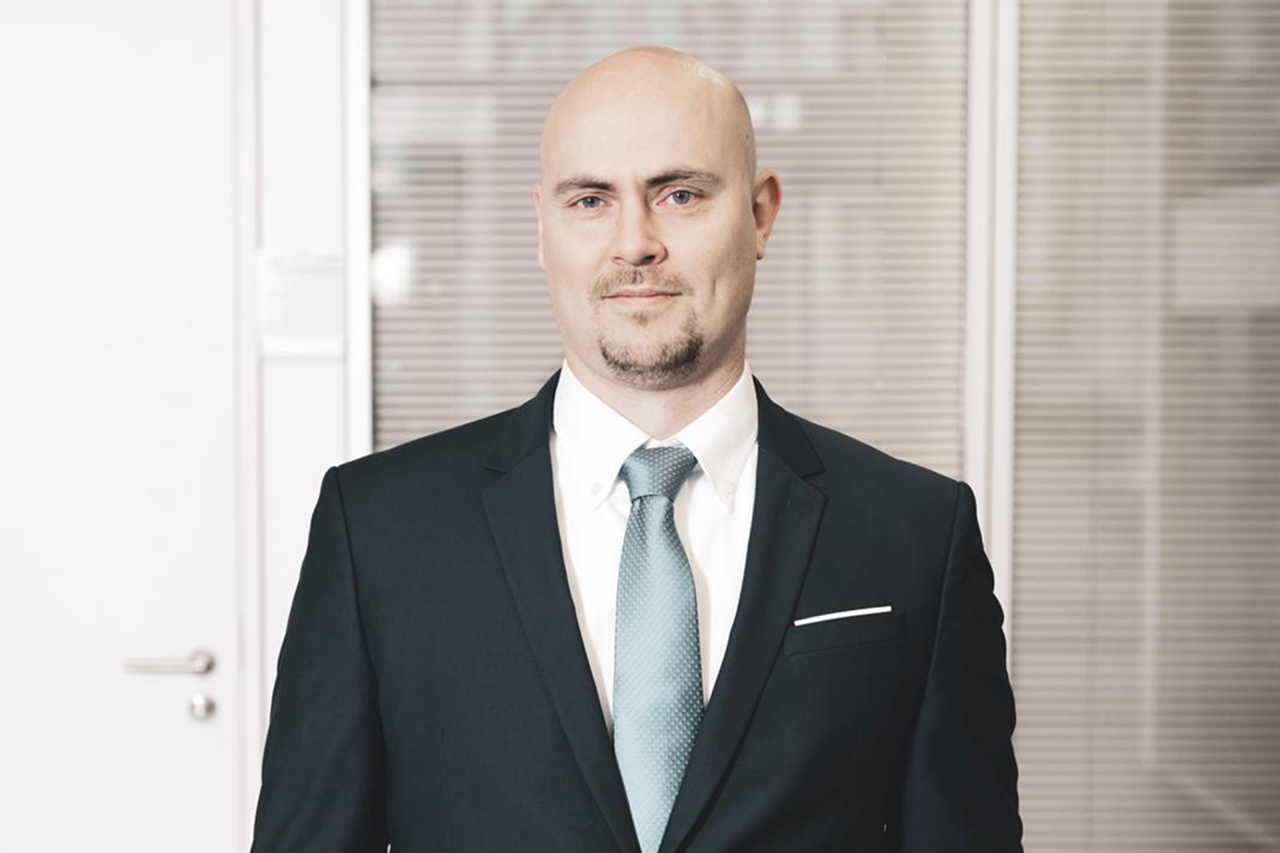
M.Sc. Robert Thiel
Research Assistant
Institute: MSR | Institute of Measurement and Control Engineering
Team: Chair of Systems Theory and Mechatronics | Prof. Dr.-Ing. Jens Jäkel
Institute: EET | Institute for Electrical Power Engineering
Team: Chair of Smart Diagnostics and Online Monitoring | Prof. Dr.-Ing. Faouzi Derbel
Publications: ResearchGate
Telephone +49 (0)341 3076 1164
Send an email | robert(dot)thiel(at)htwk-leipzig.de
HTWK Leipzig | Faculty of Engineering
Wiener-Bau | Room WI309.2
Wächterstraße 13, 04107 Leipzig
Teaching
- Supervision of project work, Bachelor’s and Master’s theses
Research
- Magnetic tracking
- Simulation
- Robotics
SchubZi
Development of an innovative sensor-based monitoring system for dynamic components of sliding-floor centrifuges, designed to enable the early and accurate detection of wear mechanisms
The aim is to develop an innovative and novel sensor-based monitoring system for dynamic components (in particular bearings and shafts) in push-floor centrifuges.
Funding: BMWK/AiF
Cooperation partners: IDS Innomic Schwingungsmesstechnik GmbH; Lanner Anlagenbau GmbH
Project duration: 04/2024 – 03/2026
REFRAME
Resource-efficient and safer bicycles designed to meet increased load requirements, achieved through precise digital models and evaluation based on real-world load measurements
The aim of the REFRAME project is to drive forward the digitalisation of bicycle development using measurement-verified digital models, thereby ensuring its long-term viability.
Funding: Saxon State Ministry for Science, the Arts and Tourism (SMWK)
Project duration: 10/2023 – 12/2024
SmartTurbo
Digital technologies for the model-based monitoring, maintenance and modernisation of compressor and turbine systems
Automation systems for process plants are becoming increasingly complex, must meet ever-higher standards of quality and safety, and are subject to dynamic global competition. To meet these rising demands, the concept of the digital twin – a digital representation of the physical plant – has become established in the context of industrial digitalisation and the increasing interconnectivity of plants. The need for digital transformation is also evident in the field of compressor and turbine systems.
Funding: Central Innovation Programme for SMEs
Project duration: 1/2020 – 2/2022
MIBRAG
Multiple integrated RF-based bearing vibration sensors for automated gearbox diagnostics
Mitteldeutsche Braunkohlengesellschaft mbH (MIBRAG) operates several opencast mines in the south of Leipzig using a variety of bucket-wheel excavators. These steel colossi are powered by high-performance engines, which transmit their power via multi-stage gearboxes. MIBRAG modules are being developed in collaboration with the company for the diagnostics and optimal maintenance of the roller bearings in the planetary stage.
Project partner: MIBRAG
Project duration: since 2016
Saxony5
Co-Creation Labs | Factory of the Future & Artificial Intelligence
Robert Thiel is a member of theCCL Factory of the Future and the CCL Artificial Intelligence groups within the Saxony5 transfer network.
The CCL Factory of the Future focuses on Industry 4.0 topics such as smart factories, smart operations, smart products and data-driven services. Prof. Jäkel and Robert Thiel’s main focus here is on safe human-robot collaboration.
Prof. Jäkel and Robert Thiel’s areas of focus within the CCL Artificial Intelligence cluster include cognitive control with applications for intelligent motion assistance systems; AI for image and video analysis, including applications in safe human-robot collaboration; reinforcement learning with applications in control engineering and robotics.
SimION
Development of a simulation system for intraoperative neuromonitoring in ENT surgery
The aim of the project is to develop a prototype simulation system (‘patient model’) for so-called intraoperative neuromonitoring (IONM) based on a sample scenario from ENT surgery. IONM is an electrophysiological technique for monitoring the integrity and location of nerve pathways, which assists surgeons in avoiding injury and damage to neural structures at risk (e.g. the facial nerve) during surgery. The simulation system to be developed is intended to enable realistic, cost-effective and reproducible training in the use of IONM.
Funding: BMBF
Project duration: 2015–2019
