

Key areas of research and development
- Cooperative development methodology
- Synergistic Design and Construction of Mechatronic Systems
- Exoskeletal Movement Assistance Systems
- Multi-coordinate drives
- Transport systems with multiple degrees of freedom
- Electromechanical and mechatronic system components
- Keyboard musical instruments (accordion, …)
Prof. Dr.-Ing. Johannes Zentner
Chair of Design
Institute
EMB | Institute for Development-Oriented Mechanical Engineering
Telephone: +49 (0)341 3076 4115
Email: johannes(dot)zentner(at)htwk-leipzig.de
AirAkkoLight
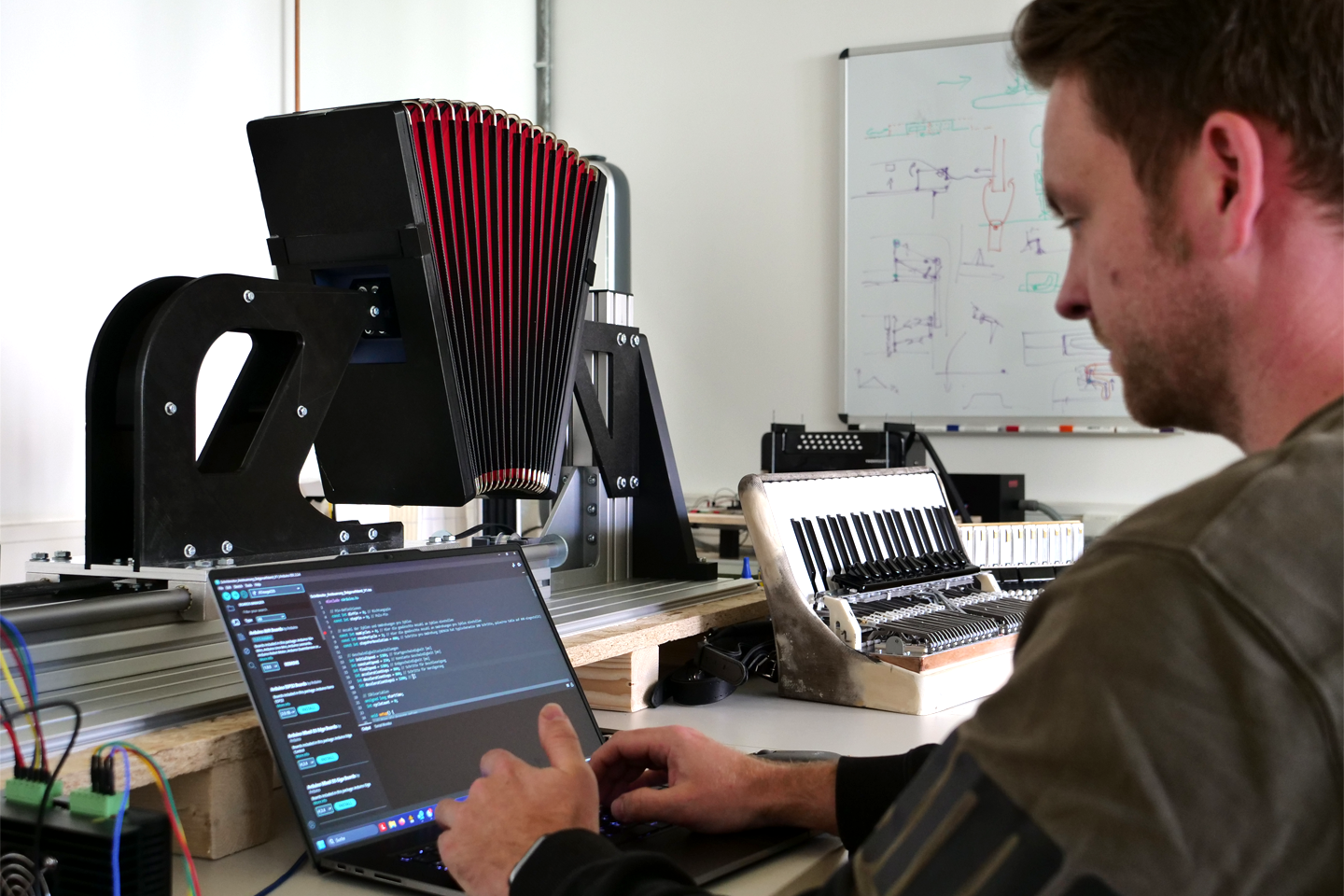
Airflow Lightweight Accordion – Lightweight solutions for the airflow in the accordion’s sound production
Sub-project 1: Research into weight-reduced designs for the sound-producing assemblies in the accordion
. The aim of this follow-up project to AkkoLight is to optimise the bellows and reed blocks. The target parameters are to achieve a weight reduction of at least 15% in the bellows and reed blocks, whilst ensuring that the function, playability and sound, as well as the appearance and feel of the instruments, remain as similar as possible to current instruments or are improved.
Funding: BMFTR
Project duration: 01/2024 – 12/2025
AkkoLight
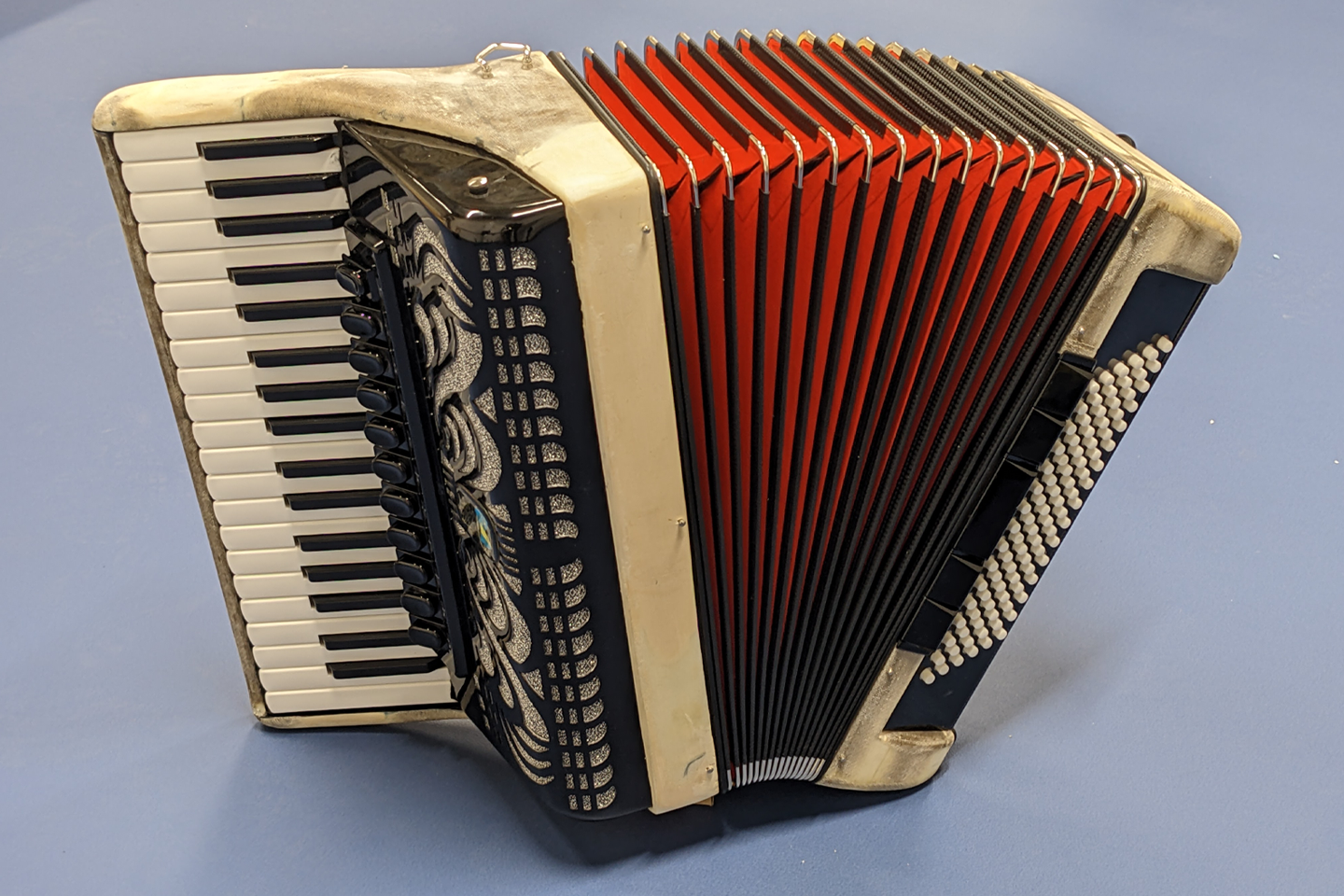
Lightweight Accordion – Development of lightweight solutions in accordion manufacturing
Sub-project 1: Investigations into the structural design of lightweight accordion assemblies
. The aim of the project is to investigate the potential for weight reduction in individual accordion assemblies, and to develop and evaluate prototype solutions based on alternative materials and designs derived from them.
Funding: BMFTR
Project duration: 10/2022 – 11/2024
AkkoRe
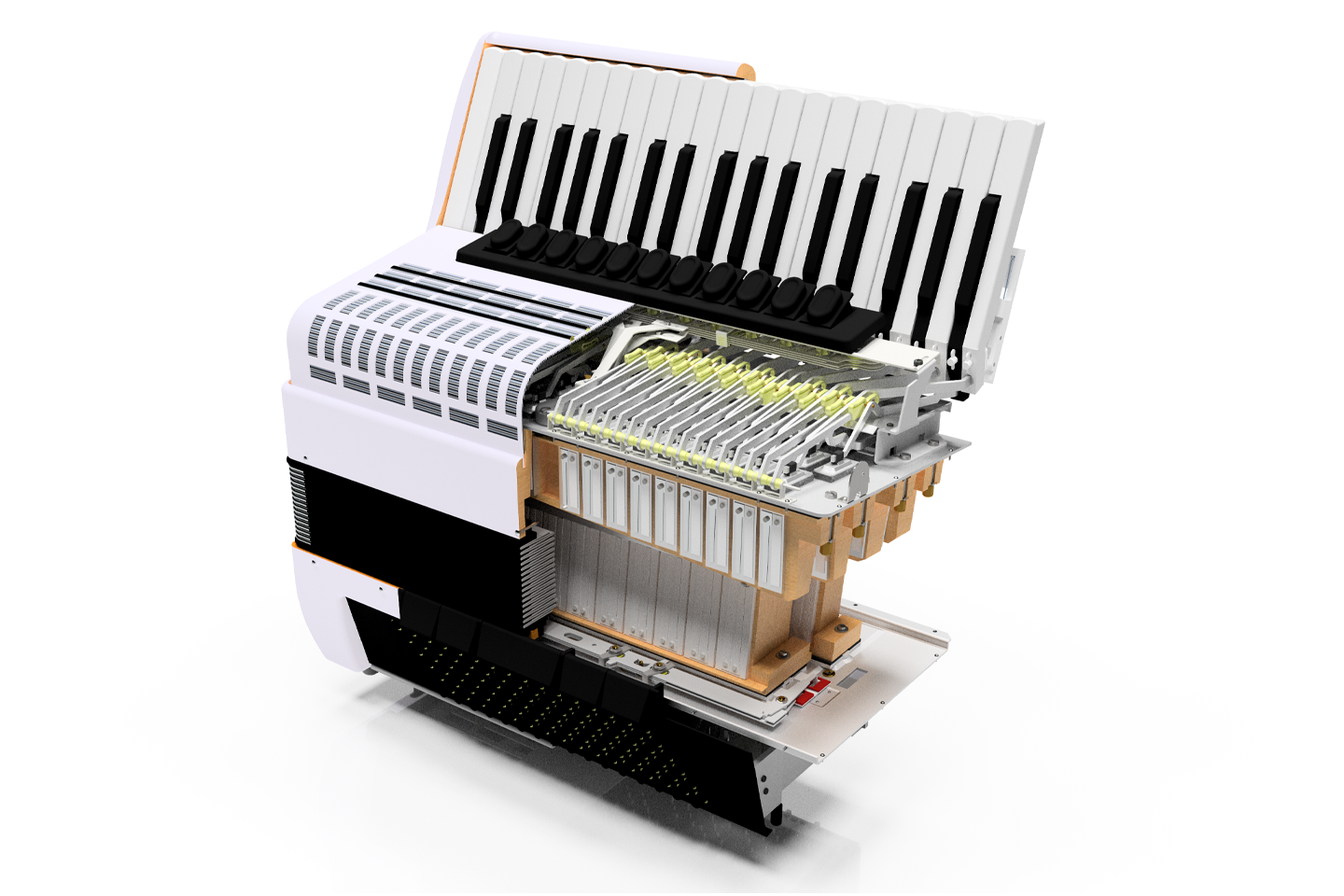
Digital reconstruction of accordions
Faced with the challenge of digitally reconstructing existing, fully functional instruments and producing the relevant technical documentation, the company approached the HTWK. Specifically, the instruments in question are the Weltmeister Cassotto 374 piano accordion and the Weltmeister Romance 874 button accordion.
Funding/Client: FTZ project on behalf of Weltmeister Akkordeon Manufaktur GmbH
Project duration: 05/2021 – 09/2023
siBUS
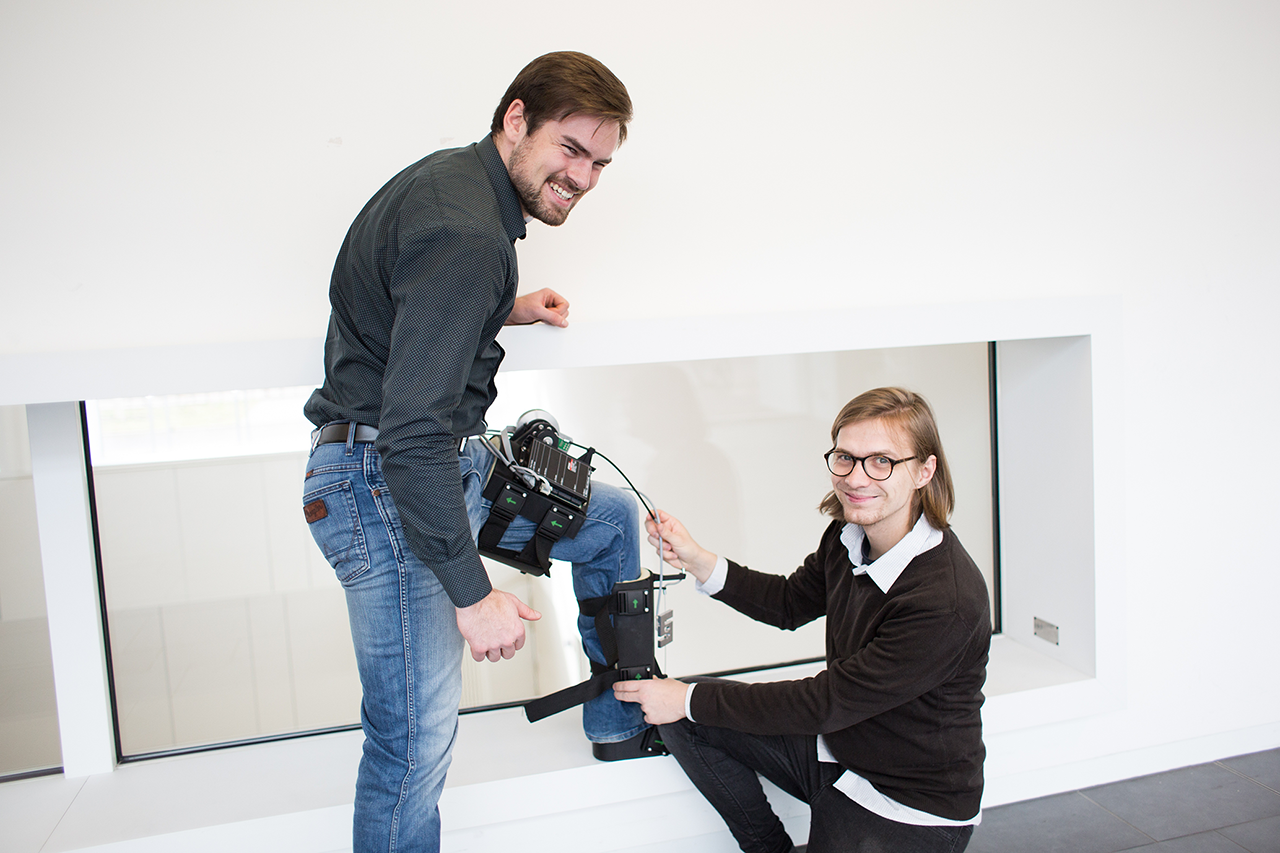
A safe, intelligent mobility assistance system for negotiating stairs – validation of the technical and economic potential and preparation for implementation
Germany’s demographic trends are creating a particular need for age-appropriate design of the living environment through technical solutions. The safe, intelligent mobility support system (siBUS) has been developed for this purpose as part of current and previous R&D projects. It helps older people to navigate stairs in their own homes. As part of the SAB validation grant, it is now to be validated and prepared for market transfer.
Project duration: 04/2021 – 09/2022
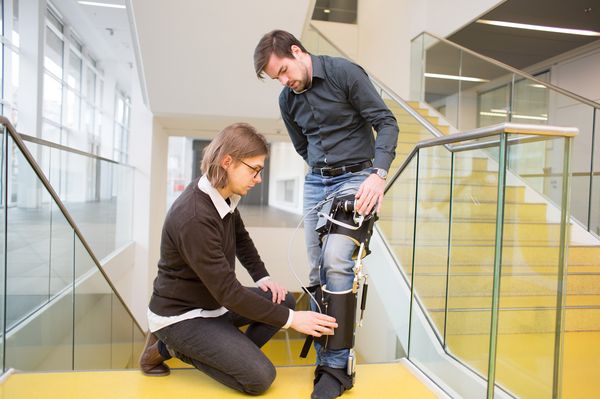
Research into the design of motion-assistance systems for stair-climbing tasks
ESF PhD Scholarship
The aim of this PhD project is to investigate the design of mobility assistance systems that are particularly suitable for negotiating stairs. The project aims to develop a system designed primarily for older people. Compared to a mobility assistance system, lifts or stairlifts replace the residual mobility of older people with limited mobility, causing their state of health to deteriorate further due to a lack of exercise.
Funding: European Social Fund (ESF)
Project duration: since January 2020
Project lead: M. Eng. Max Böhme
Supervisors: Prof. Dr.-Ing. Johannes Zentner (HTWK Leipzig), Prof. Dr.-Ing. Marc Kraft (Technical University of Berlin)
AI.EXOSKELETON
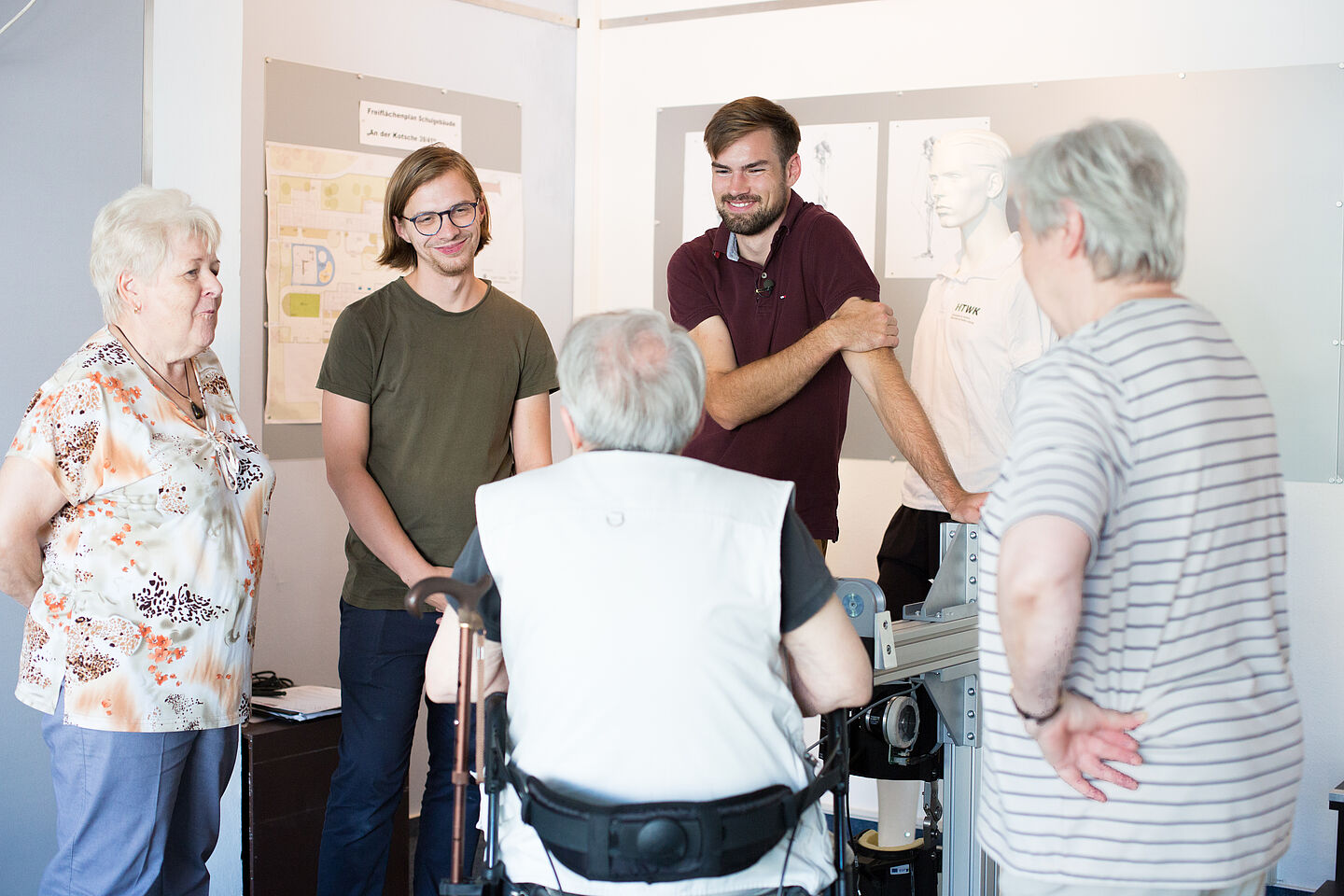
Objective: The concept for the further development of the mobility support system is to be shaped through dialogue with the public, thereby ensuring a participatory development process. Exhibitions are intended to serve as a space for people to familiarise themselves with the system, try it out, discuss it and form opinions in an unbiased manner, whilst also fostering an understanding of AI.
Results: Exhibitions showcasing the first prototype of the movement support system in Cologne, Leipzig, Berlin and Essen; valuable feedback from older people to inform the further development of the movement support system
Funding: Wissenschaft im Dialog gGmbH
Project duration: 03/2019 – 12/2020
Project leader: M. Eng. Max Böhme
Project team: M. Eng. Max Böhme, M. Sc. Felix Weiske
Further information on the 2019 University Competition
Establishment of interdisciplinary test and demonstration laboratories
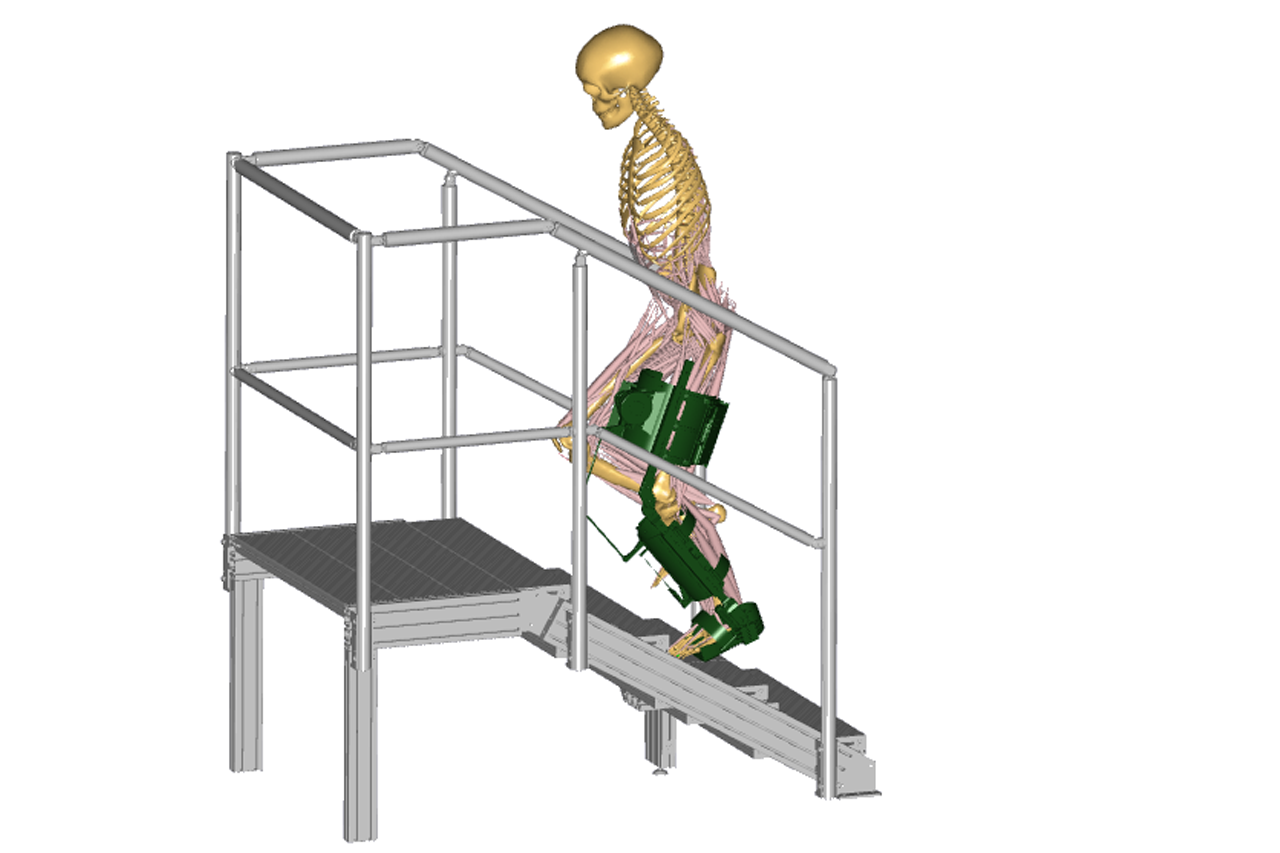
Objective: To develop an interdisciplinary concept for the functional implementation of movement-assistance systems. This involves the engineering implementation of a second demonstrator concept, as well as its construction and concepts for functional validation.
Results: a second prototype for both legs to assist with climbing stairs; biomechanical verification of the first demonstrator (in collaboration with the University of Leipzig, Department of Biomechanics); creation of simulation models for functional validation (in collaboration with the Politecnico di Torino (Turin, Italy))
Funding: Sächsische Aufbaubank (SAB), Saxon Ministry of Science and the Arts (SMWK)
Project duration: 01/2020 – 12/2020
Project leader: Prof. Dr.-Ing. Johannes Zentner
Project team member: M.Eng. Max Böhme
Movement support systems for use in the rehabilitation and care of older people (BuS)
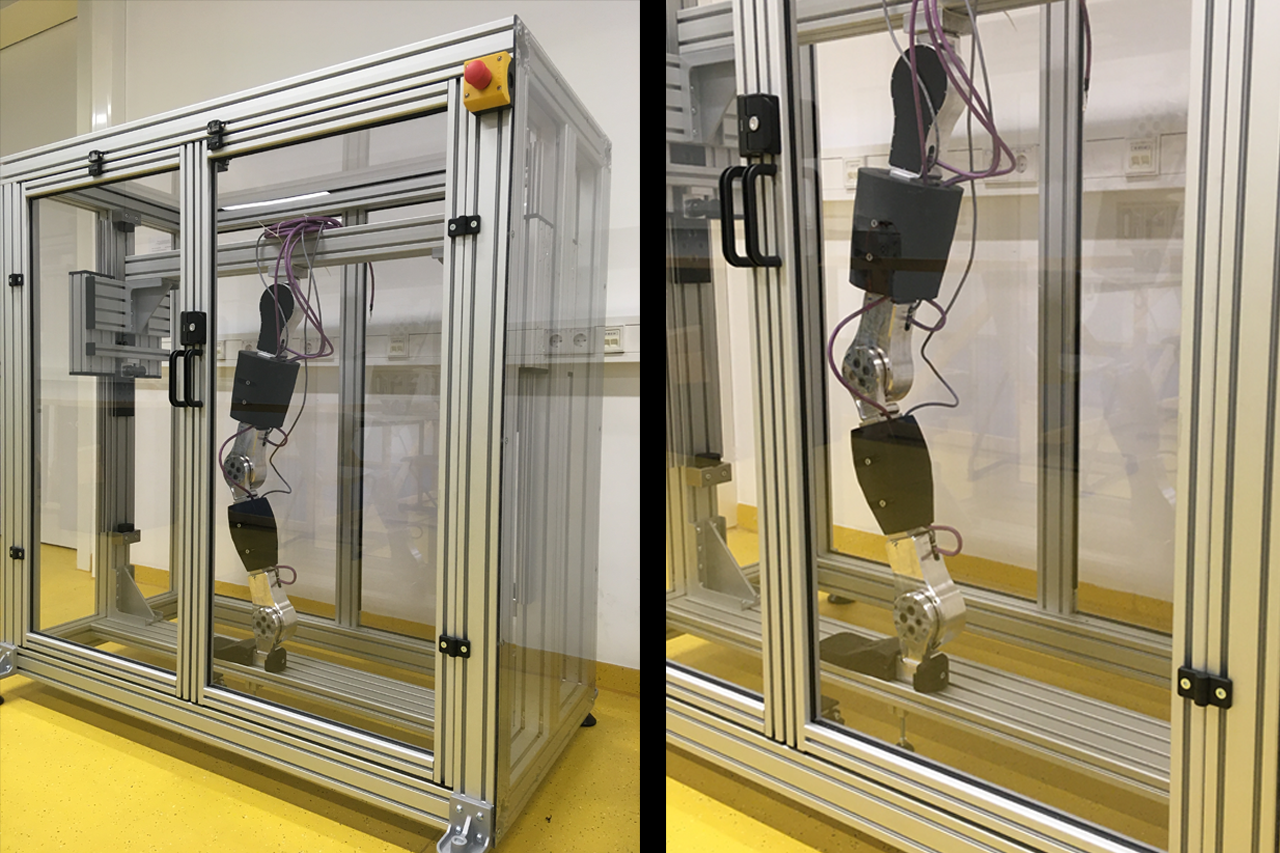
Objective: To develop an interdisciplinary concept for the functional verification of motion-assistance systems, and to implement and construct the concept.
Results: Design and construction of a ‘mechatronic leg’ as a test rig
Funding: Sächsische Aufbaubank (SAB), Saxon Ministry of Science and the Arts (SMWK)
Project duration: 08/2019 – 12/2019
Project leaders: Prof. Dr.-Ing. Jens Jäkel, Prof. Dr.-Ing. Johannes Zentner
Project team members: M.Eng. Max Böhme, M.Sc. Felix Weiske
Development of minimally updated, intelligent systems for intuitive motion assistance
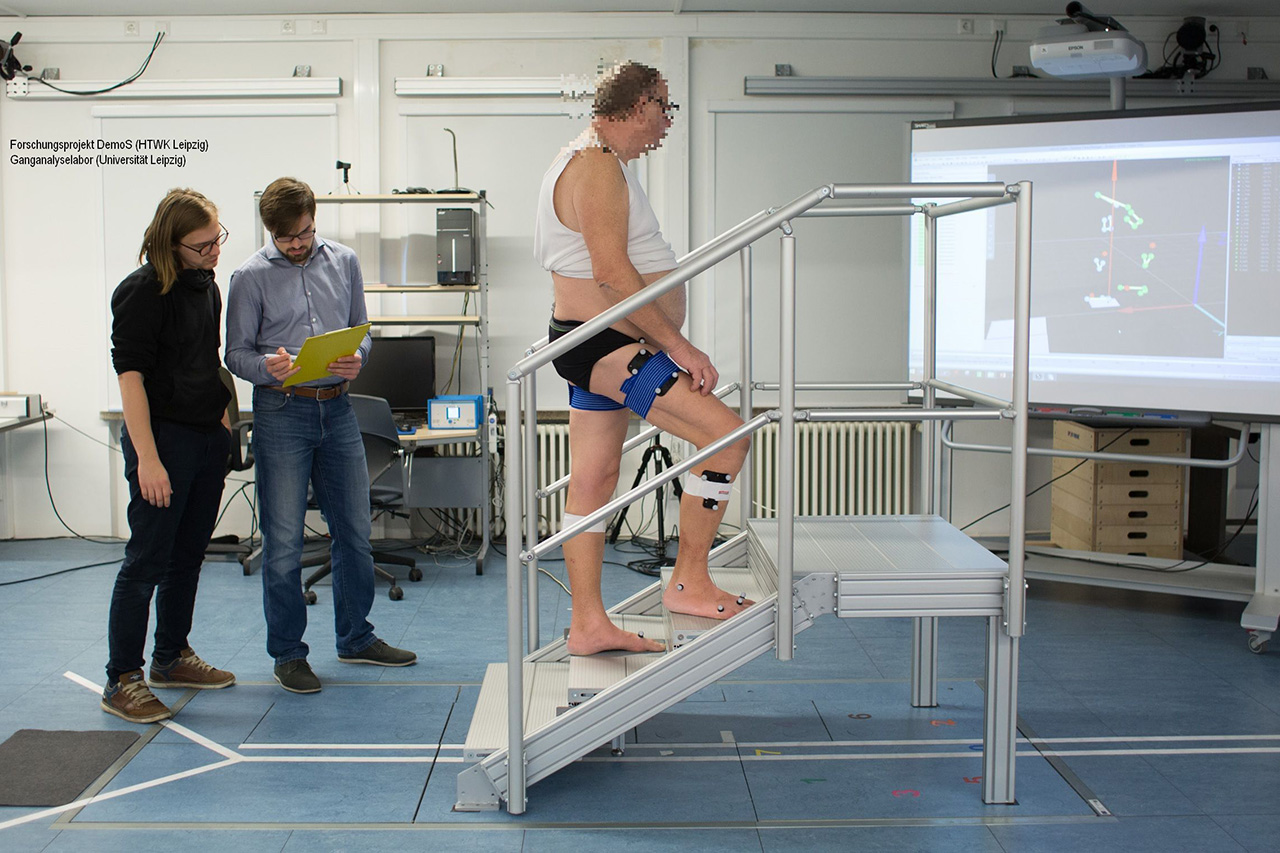
Objective: The project aims to develop exoskeletal mobility assistance systems through a participatory process, which will help older people to overcome everyday challenges, such as climbing stairs. By determining the biomechanical support requirements and conducting simulation-based concept studies, initial demonstrators are to be built.
Results: Subjective requirements and preferences regarding such an exoskeletal mobility assistance system (conference paper ‘Practical Needs Analysis’); Determined biomechanical support requirements for older people when negotiating stairs (in cooperation with the University of Leipzig, Department of Biomechanics); design and construction of an initial demonstrator for one leg
Funding: European Social Fund (ESF)
Project duration: 10/2016 – 07/2019
Project leaders: Prof. Dr.-Ing. Jens Jäkel, Prof. Dr.-Ing. Johannes Zentner
Project team members: M.Eng. Max Böhme, M.Sc. Felix Weiske
