
The Saxon Ministry of Science is also opening its doors in Dresden – HTWK researchers are taking part with exhibits
Next Sunday, 6 September 2026, a wide range of exhibits and hands-on stations will invite visitors to try things out and find out more at the Government Quarter Open Day around Carolaplatz in Dresden. At the Ministry of Science’s information stands, researchers from the Leipzig University of Applied Sciences (HTWK Leipzig) will be showcasing two successful collaborative projects in the research area of ‘Medicine of the Future’. Both developments are designed to assist doctors during operations.
Live demonstration of a ‘functional map’ of the brain

Together with project partners from the Max Planck Institute for Cognitive and Neural Sciences in Leipzig, Leipzig University Hospital and the medical technology company Localite from Bonn, Konstantin Weise, Professor of Measurement and Sensor Technology at HTWK Leipzig, provides an insight into the TMS-LOK research project, which is funded by the Federal Ministry of Research, Technology and Aviation. In thisproject, the team comprising researchers, medical technology companies and clinical partners is developing a comprehensive system for the precise mapping of brain functions in real-world conditions. “Such technologies for the medicine of the future could, for example, be helpful in planning brain tumour operations: if key functional areas of the brain can be localised more precisely before an operation, they can be spared more effectively during the procedure,” says Weise.
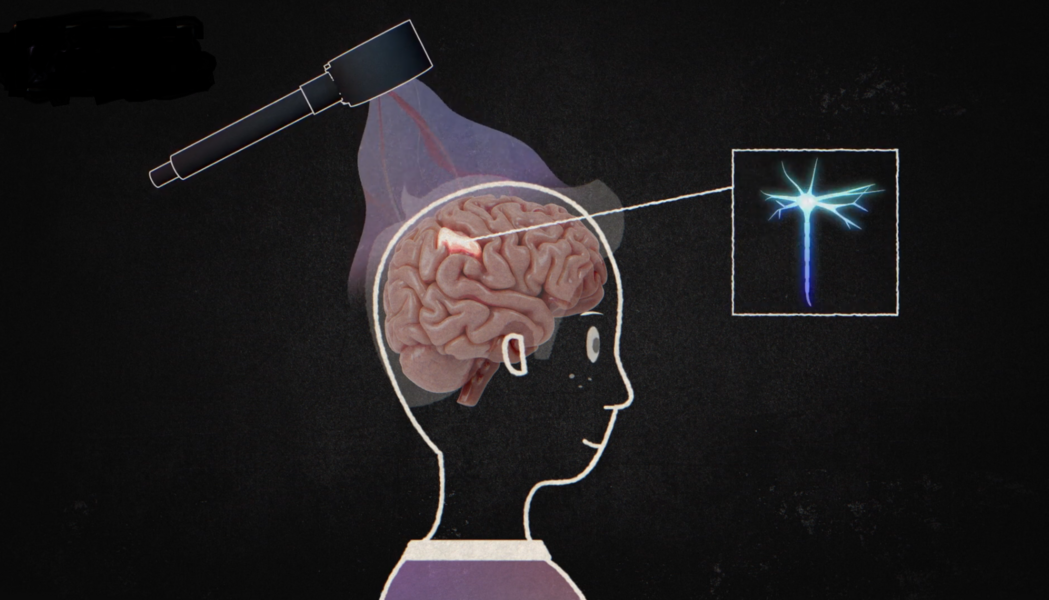
During the Government Quarter Open Day, Prof. Weise and Dr Florian Wilhelmy (MD) from Leipzig University Hospital, together with the project partners, will illustrate how the system works with a live demonstration. Those interested can observe how transcranial magnetic stimulation (TMS) is used to specifically stimulate areas of the motor cortex and how the resulting muscle response in the hand is measured. At the same time, a neuronavigation system records the position and orientation of the TMS coil and calculates the electric field generated in the brain in real time. “Our innovative mapping method combines this information in real time and uses it to determine where in the brain the areas responsible for a specific movement are located. Visitors can thus experience first-hand how magnetic stimulation, computer simulation and biosignal processing combine to create an individual ‘functional map’ of the brain,” says Weise. At the same time, this helps to explain how such complex technology works and how engineering, neuroscience and medicine successfully interact.
Computer-assisted surgery provides relief for surgical staff
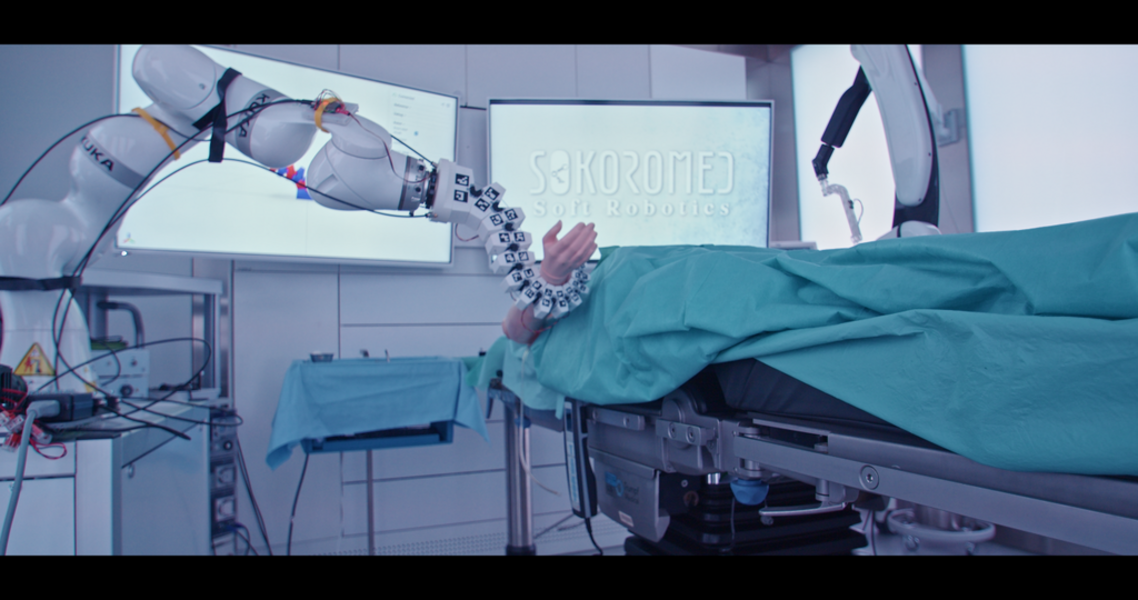
The ‘SpiRoKu’ system may also prove useful in the operating theatre. It is being developed by scientists from the ICCAS Institute at the Faculty of Medicine, University of Leipzig, in collaboration with HTWK Leipzig as part of the SoKoRoMed research project, which is funded by the Saxon Development Bank (SAB) and co-funded by the European Union. This system can alleviate the workload on surgical staff by using robots – in the form of a so-called ‘octopus’ system – to carry out holding tasks particularly gently and carefully. “Without additional assistance, the physical strain in the operating theatre quickly becomes a gruelling task. Holding and precisely positioning heavy body parts, in particular, places great demands on the surgical team,” explains Prof. Dr Thomas Neumuth, Director of the ICCAS Institute. Prof. Dr.-Ing. Stephan Schönfelder, who heads the overall SoKoRoMed project at HTWK Leipzig, emphasises just how essential the engineering perspective is in this context: “Successes in modern medical technology arise primarily at the interfaces between disciplines. The combination of computer-aided simulation and methodical systems development forms the foundation for designing such mechatronic assistance systems precisely and safely for everyday clinical use.”
To illustrate the system in practice, Dr Florian Wallburg from Schönfelder’s research group and Albrecht Bloße from ICCAS will demonstrate a surgical assistance scenario during the Government Quarter Open Day and show how the system works. As a cable-based positioning concept, SpiRoKu takes over the physically demanding task of supporting affected limbs and enables a wide variety of positioning to be fixed continuously, stably and precisely, even during surgery. This not only provides significant relief for the surgical team but also ensures that they can concentrate on what matters most: surgical precision.
Background to the Government Quarter Open Day on 6 September 2026 in Dresden
Riding a Bobbahn in the city centre, sitting in a police boat or sampling delicacies from the prison bakery – there will once again be plenty to discover around Carolaplatz in Dresden during the 2026 Government Quarter Open Day. To mark the occasion, the Saxon State Ministry will open its ministry buildings from 10 am to 5 pm. As well as taking a look behind the scenes, visitors can find out about the issues and responsibilities of Saxon state politics and get to know the individual departments of the various ministries. There will also be hands-on stations inviting visitors to have a go and get involved. At the Saxon State Ministry for Science, Culture and Tourism, scientists – including those from Leipzig, Dresden, Chemnitz, Freiberg and Zittau/Görlitz, will showcase the breadth of Saxon research into the medicine of the future: from a suit for simulating ageing, to VR headsets for treating anxiety and weight-loss injections, right through to a walk-in eye model.
