Review: The 13th symposium focused, amongst other things, on the challenges posed by artificial intelligence in energy and building technology
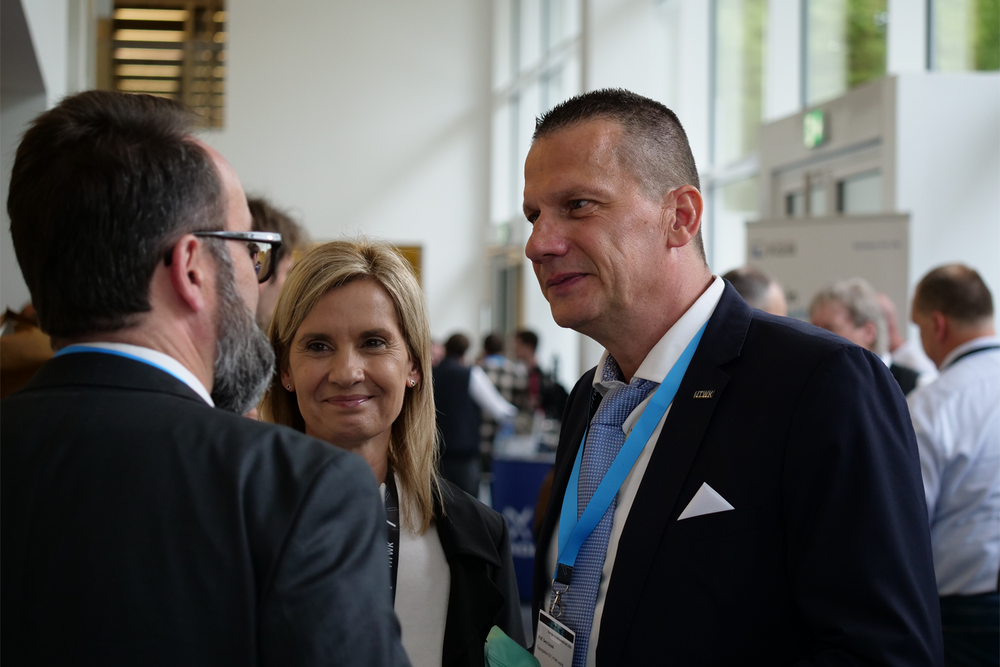
On 4 June 2026, representatives from the worlds of politics, business, research and academia, as well as other interested professionals, gathered at HTWK Leipzig for the 13th Energy and Building Services Engineering Symposium to discuss energy-related and societal issues, market trends and projects in the field of energy and building services engineering. In addition, conference chair Prof. Gero Guzek also welcomed the Heating Technology Working Group of Germany’s HAW professors this year, to which he was elected chair last year.
Symposium on Energy and Building Services Engineering
Artificial Intelligence – A Curse or a Blessing?
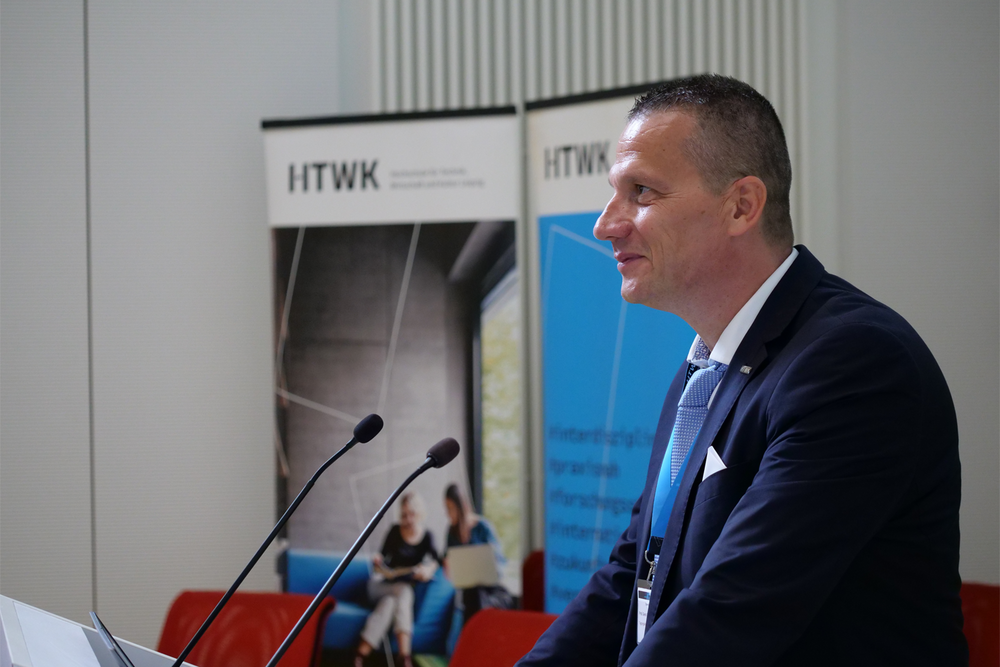
Together with HTWK Rector Prof. Jean-Alexander Müller and Dean of Studies for Energy, Building and Environmental Technology Prof. Jens Schneider, conference chair Prof. Guzek opened the 13th Symposium on Energy and Building Technology at the Faculty of Engineering at HTWK Leipzig.
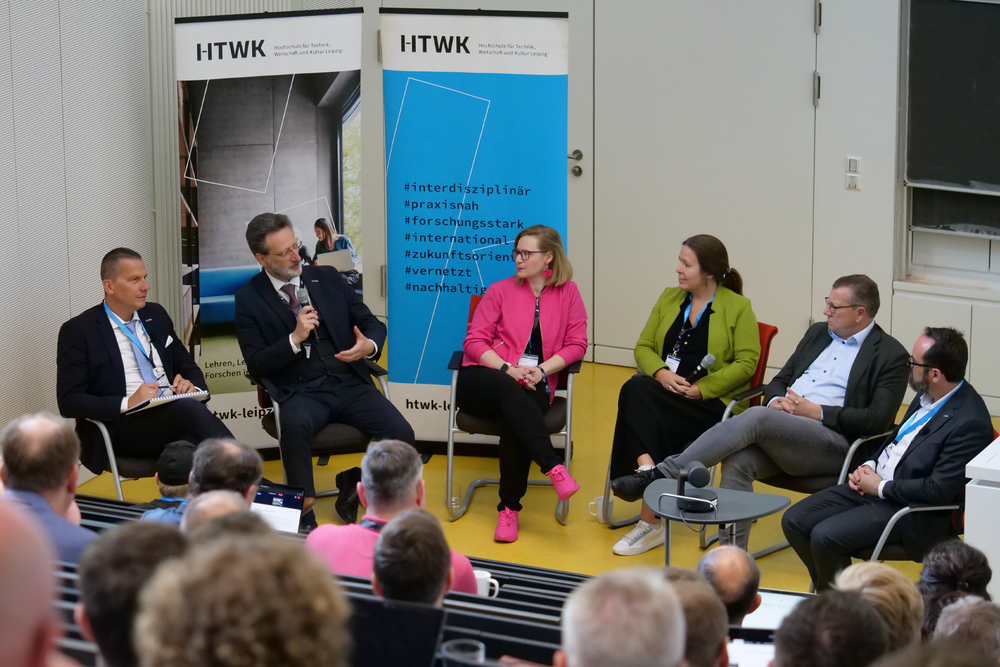
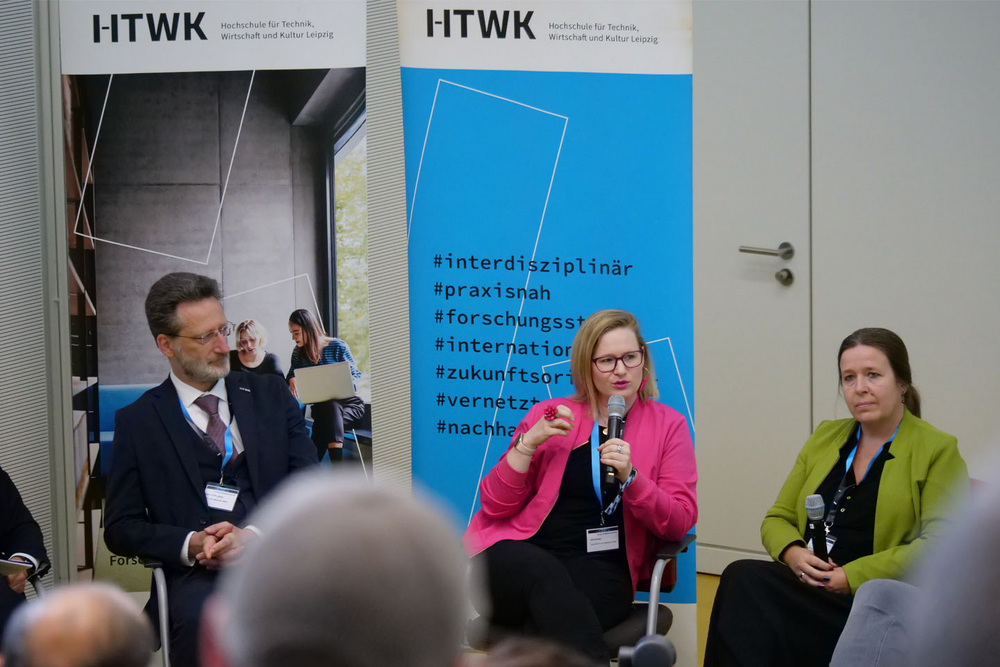
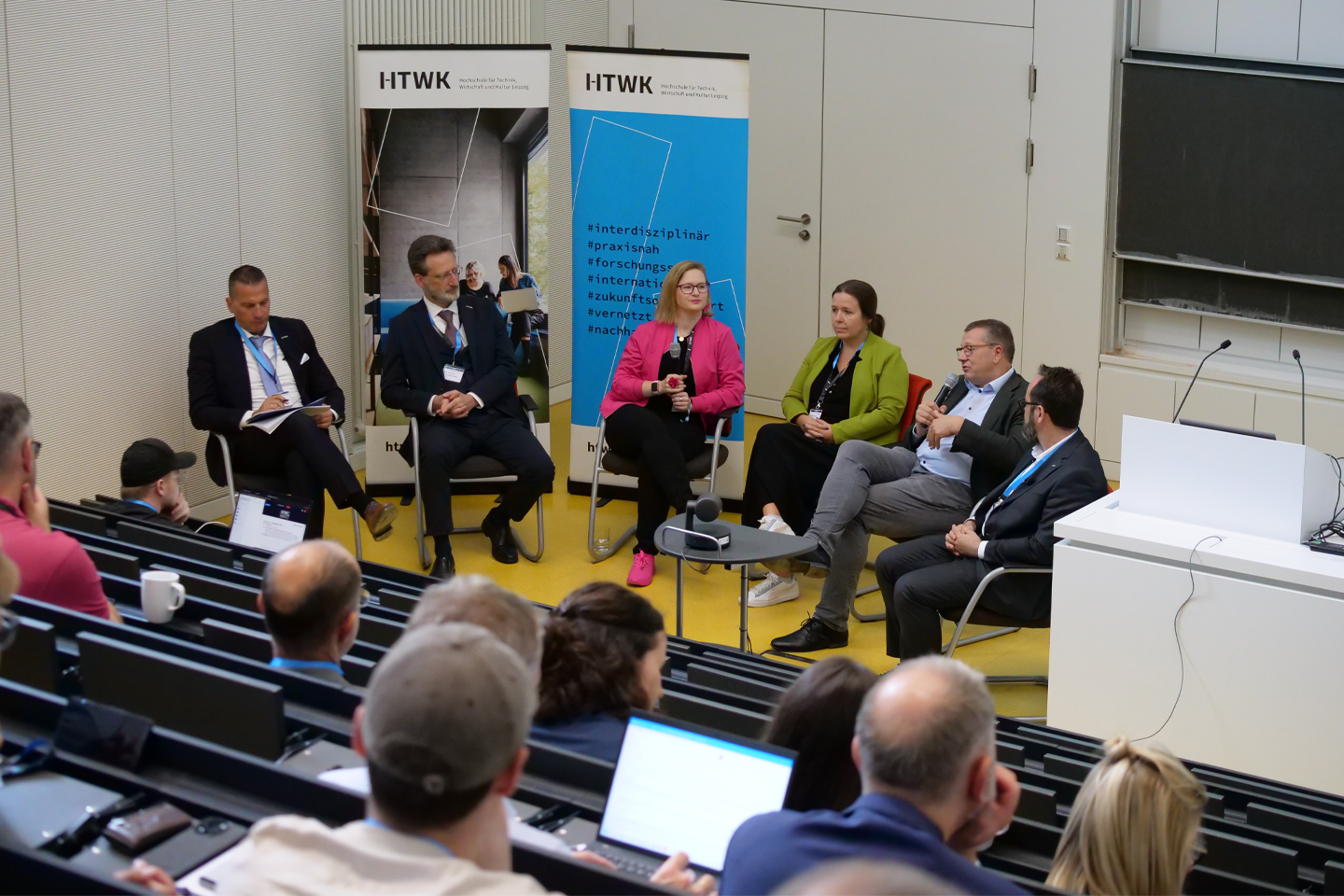
The panel discussion on the topic of ‘AI in Business, Science and Research’, featuring conference chair Prof. Guzek, Kristian Kirpal, President of the Leipzig Chamber of Industry and Commerce, HTWK Rector Prof. Jean-Alexander Müller, Managing Director Skadi Berger of Wiewald GmbH, Dr Sandra Schumann, Coordinator at KMI Leipzig, and Dean of Studies Prof. Jens Schneider, highlighted the tensions faced by students, businesspeople and companies with regard to AI applications. The discussion covered not only the day-to-day challenges and risks, but also the opportunities and potential.
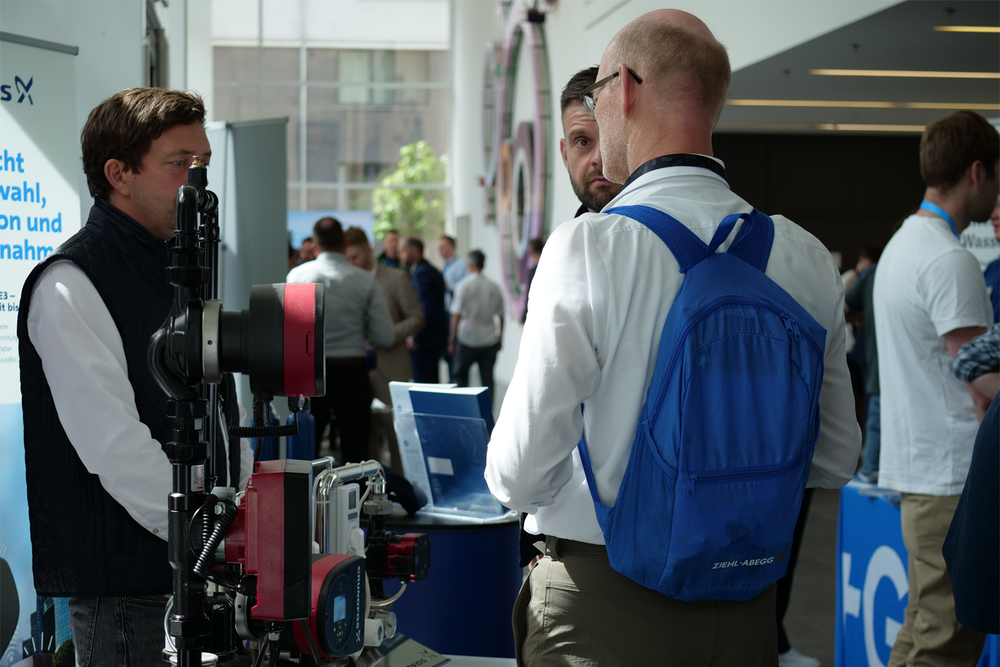
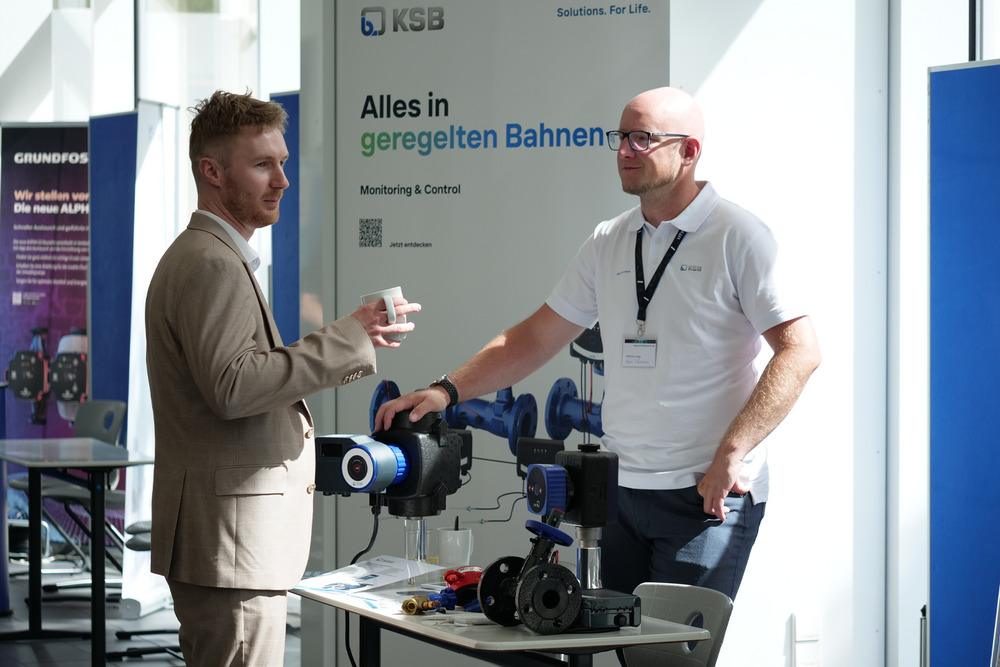
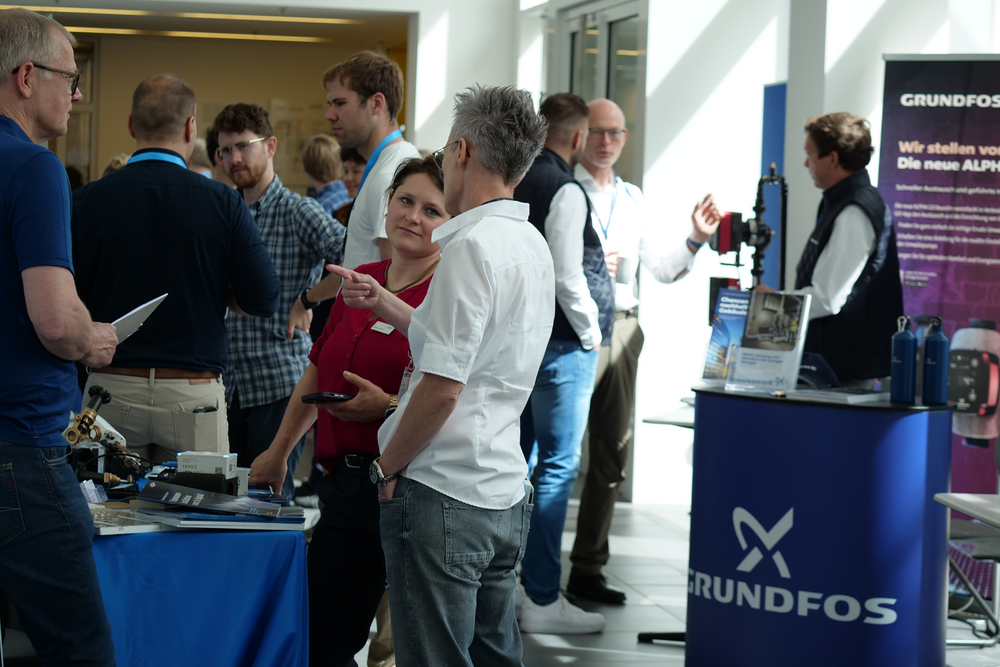
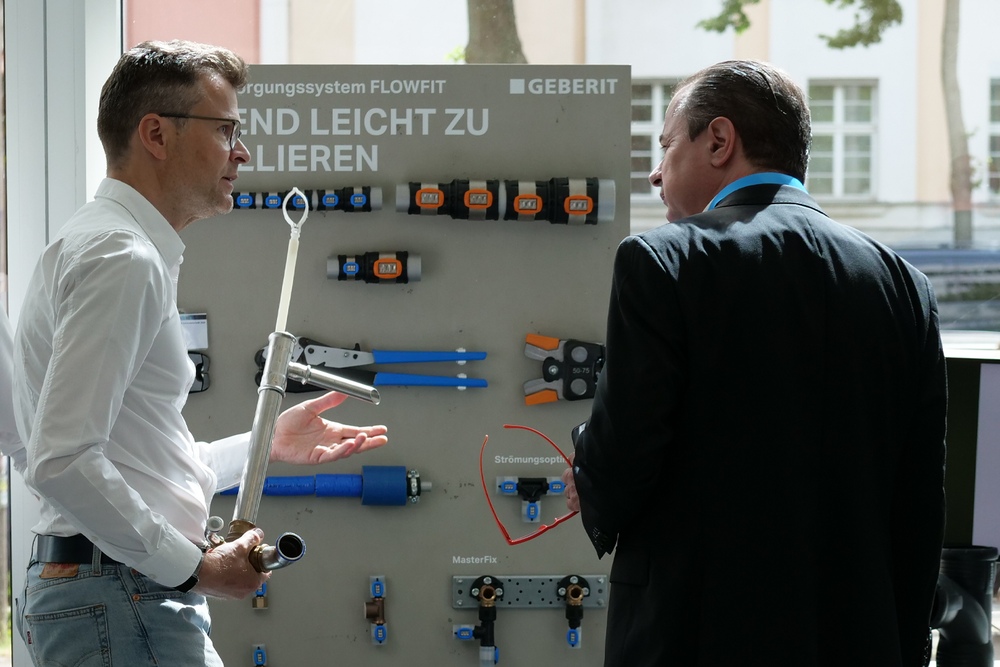
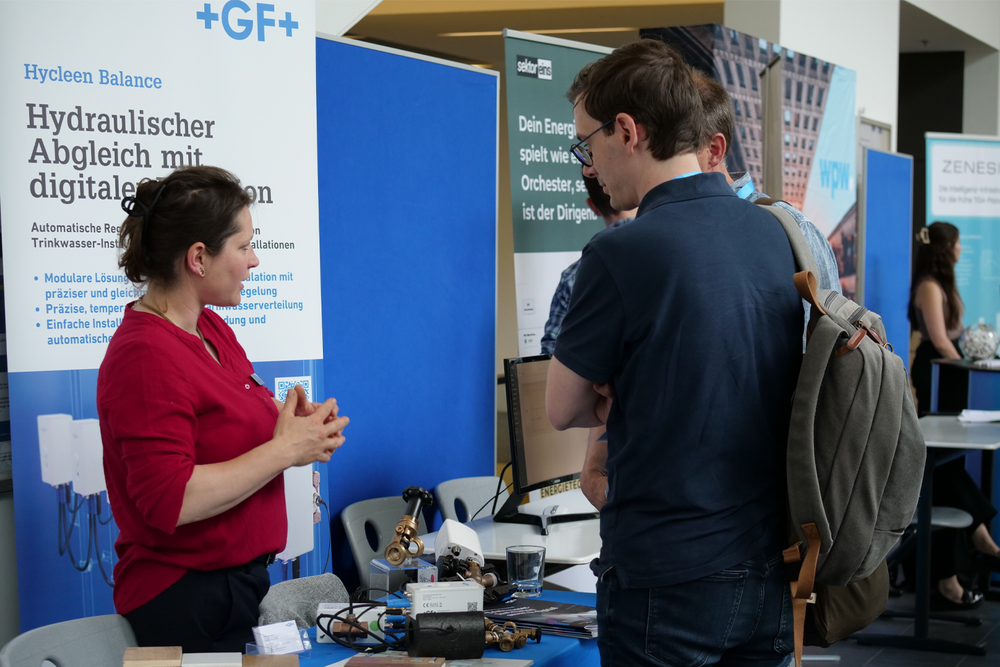
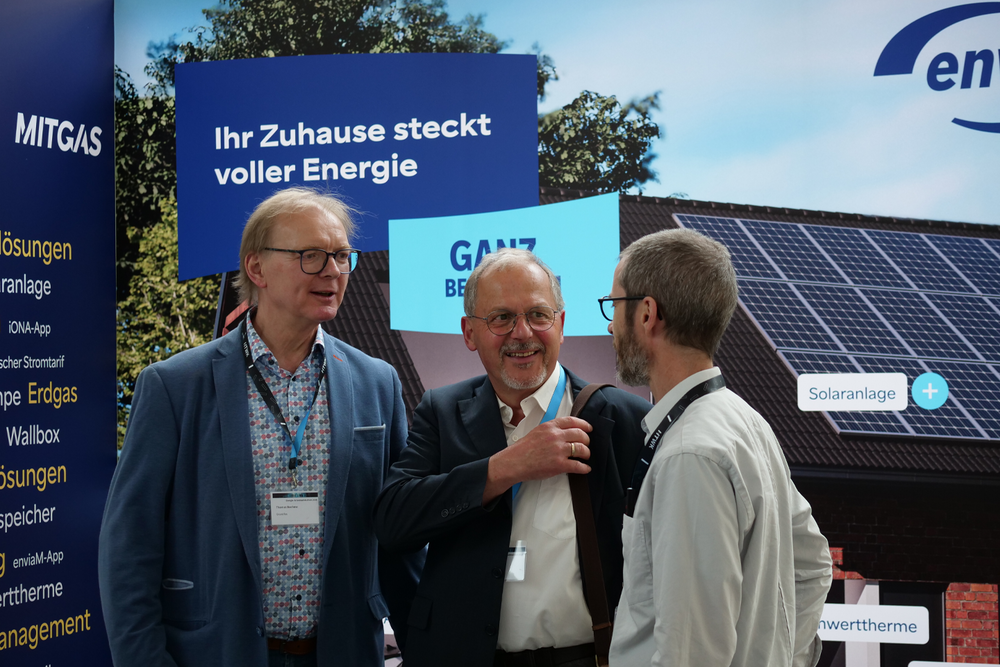
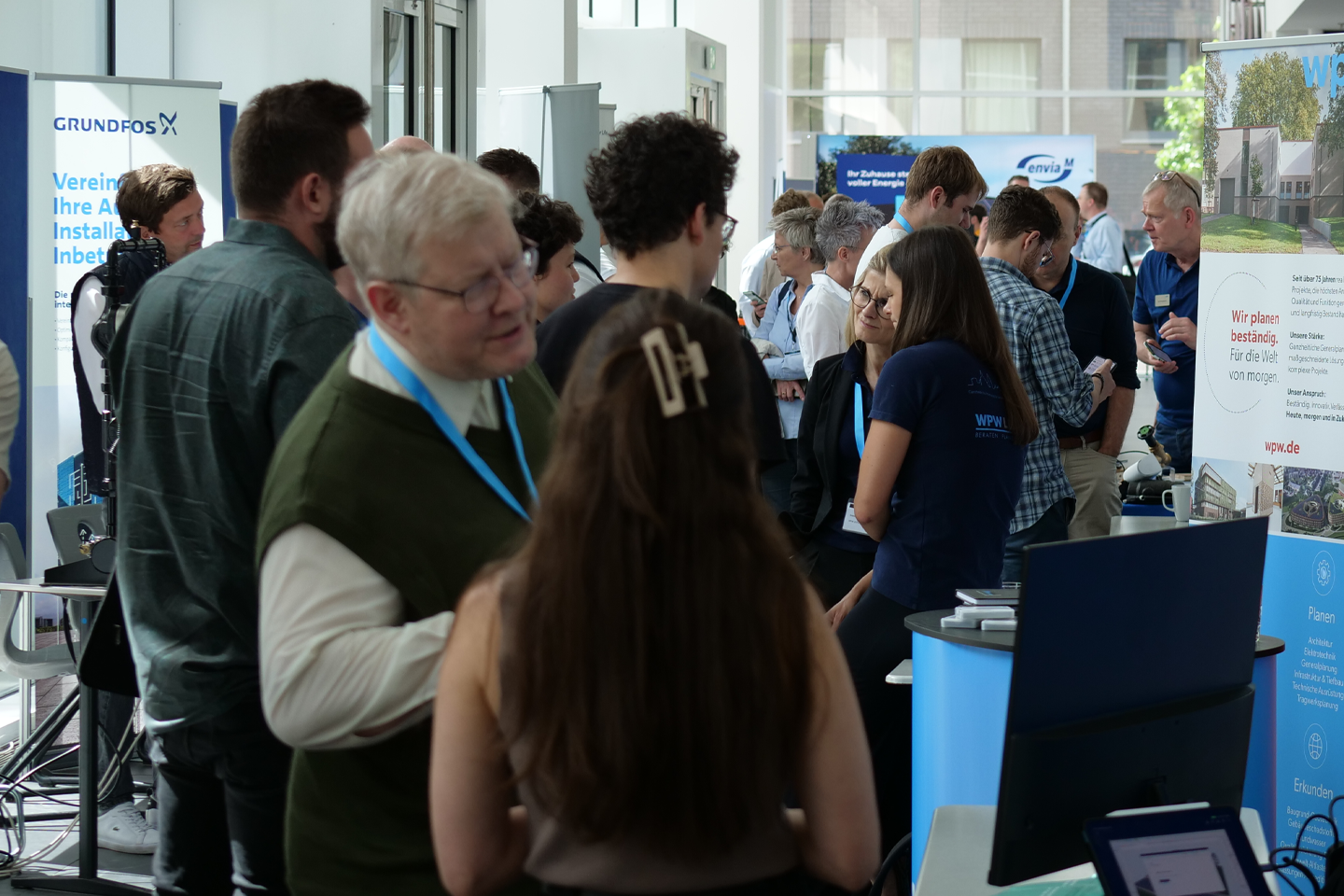
The programme for the 13th Energy and Building Services Engineering Conference 2026 also featured an exhibition on current market trends in the foyer, as well as solution-oriented and engaging presentations in parallel specialist sessions. The four specialist sections focused on AI in building energy technology, AI and optimised construction, AI in simulations and other applications, and AI in networked systems. In their specialist presentations, the speakers were certainly able to demonstrate the potential of AI applications.
Key messages from EGT2026
- AI is currently bringing about fundamental changes to both building services engineering and the construction industry – from the planning and construction stages right through to the subsequent operation of buildings.
- Key areas of application already include planning, design, smart buildings and building operations, site management, energy and sustainability, and digital twins
- In the construction sector, AI technologies are used for:
- Machine learning
- Deep learning
- Computer vision
- Generative AI
- IoT sensors
- Robotics and language models for documentation and tenders
- The benefits are already evident:
- Lower operating costs
- Greater energy efficiency
- Fewer planning errors
- Improved safety
- Faster construction processes
- Sustainable building operation
- Challenges to be addressed:
- High investment
- Data protection for building data
- Standards are still inadequate
- Liability issues relating to AI decisions
- Future trends:
- Autonomous construction sites
- AI-powered robotics
- Fully connected smart buildings
- Generative design
- Climate-neutral buildings
- AI-assisted refurbishment of existing buildings.
“Over 170 registrations have shown that people are concerned about AI. Well over 60 per cent of respondents in Germany see AI as a threat to their jobs. This makes it all the more important to explore the benefits of AI and minimise the risks. Increasingly, it will be legal issues that we will have to resolve in the short term. It will be people who continue to develop and control AI. The symposium has shown that there are already some very good approaches to using AI in creating and maintaining value in property, particularly in the fields of energy and building services engineering,” emphasises conference chair Prof. Gero Guzek.
Highlights from EGT 2026