
The VDE ETG 2026 study sets out how decentralised energy generators can be intelligently integrated into the existing energy system without pushing the existing electricity grid to its limits.
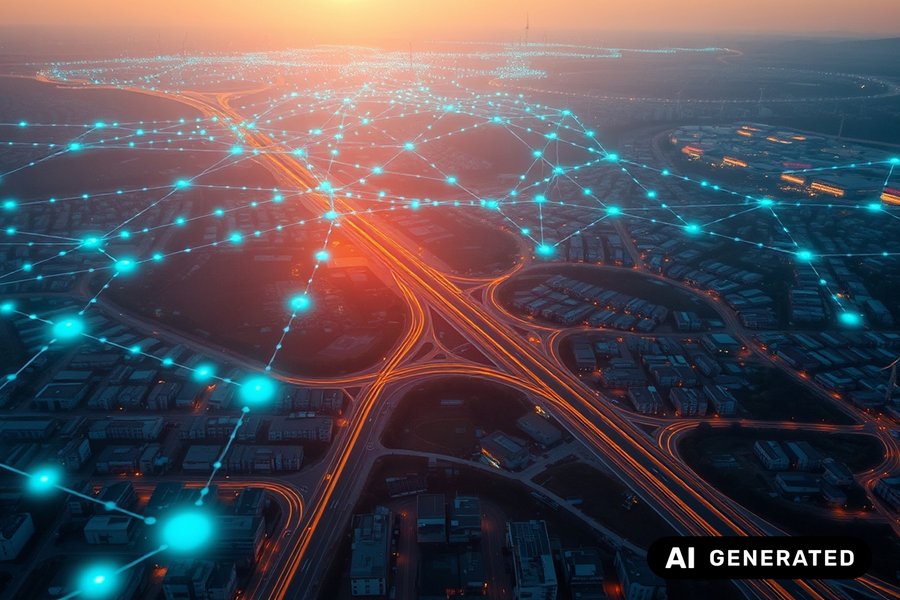
The VDE ETG Study 2026
The Cellular Distribution Network
The recently published VDE ETG study ‘The Cellular Distribution Network’ provides a promising answer to the question of whether the energy transition can succeed without pushing the existing electricity grid to its limits. All the experts involved in the study agree that the distribution network can evolve from a passive medium for energy transmission into the intelligent, automated backbone of a climate-neutral energy supply. Decentralised energy generators using solar and wind power, energy storage systems, heat pumps, charging facilities and other flexible consumers are not regarded as isolated systems, but are intelligently interconnected within a cellular energy system and coordinated to benefit the grid.
The potential of cellular energy systems
Prof. Jens Schneider from the Faculty of Engineering at HTWK Leipzig, who contributed to the VDE ETG study as a co-author, emphasises “that this study lays the groundwork for tackling the challenges of the decentralised energy transition proactively and positively, and for creating a new, secure, economical and environmentally friendly energy system.”
In the study, Schneider and other experts demonstrate that ‘cellular energy systems’ will not – and are not intended to – replace conventional systems entirely, but rather can transform today’s predominantly static grid operations into a fully dynamic, largely automated mode of operation. Based on real-time measurements, digital grid twins and intelligent control algorithms, generation, consumption and storage can be balanced as locally as possible within energy cells and energy clusters; existing grid capacities can be utilised much more efficiently; grid bottlenecks can be detected at an early stage; and flexibility measures can be activated automatically.
Thus, by enabling local energy cells and energy clusters to take independent responsibility for balancing generation and consumption whilst being integrated into – and remaining part of – the overarching interconnected grid, the cellular energy system strengthens the cohesion of the overall system. Only surplus, remaining energy balances are passed on to higher grid levels, thereby reducing the load on upstream grids whilst simultaneously increasing the stability and efficiency of the overall system.
A prerequisite for this is grid-status-dependent operational management, which continuously adapts to the actual load on the grid, rather than the conventional static, threshold-based operational management. Grid-state-dependent operational management thus enables existing distribution grids to accommodate greater capacity, reduces the need for grid expansion and, furthermore, accelerates the integration of renewable energy.
The decentralised, self-organising architecture of cellular energy systems also enhances security of supply and is becoming significantly more important against a backdrop of increasing extreme weather events, growing system complexity and geopolitical uncertainties. As decisions are made at the decentralised network nodes of the distribution networks, they can take effect immediately, and local disruptions are contained within individual cells or clusters without spreading to the entire network.
The cellular energy system enables the gradual development of a smart, largely automated distribution network that utilises the existing infrastructure more efficiently, facilitates the integration of decentralised energy resources and makes the energy transition more resilient, sustainable and cost-effective.
It relies on the further development and optimisation of existing systems by retaining the existing grid infrastructure, established market roles and tried-and-tested protection and operational mechanisms, whilst specifically supplementing them with digital metering, communication and automation functions.
“Now that renewable energies have achieved the lowest electricity supply costs, the cellular energy system provides the systemic framework to raise costs, security of supply and social participation through an ecological energy transition to a level that is superior to the old, fossil-fuel-based system in all key respects.” Prof. Jens Schneider, Chair of Networked Energy Systems, Faculty of Engineering, HTWK Leipzig
Further information on the VDE ETG study “The Cellular Distribution Network”
Publication: July 2026
Publisher: VDE Association for Electrical, Electronic and Information Technologies, Energy Technology Society
Authors:
- Josef Bayer, EnSolVision GmbH
- Jan Roschek, Polarium Energy Solutions AB
- Stefan Aigenbauer, BEST – Bioenergy and Sustainable Technologies GmbH
- Lutz Josef Schmid, Schmid Datensicherheit GmbH
- Prof. Dr.-Ing. Jens Schneider, Faculty of Engineering, Leipzig University of Applied Sciences
- Prof. Dr.-Ing. Markus Zink, Würzburg-Schweinfurt University of Applied Sciences
- Gerhard Jost, Klein Engineering
- Patrick Scholz, EnSolVision GmbH
- Marcel Linnemann, ENERVIE Vernetzt GmbH
Download link for the study: VDE ETG Study (2026) ‘The Cellular Distribution Network’ (PDF)
