
"I think the most important thing is curiosity, in other words the desire to really understand how technical systems work."
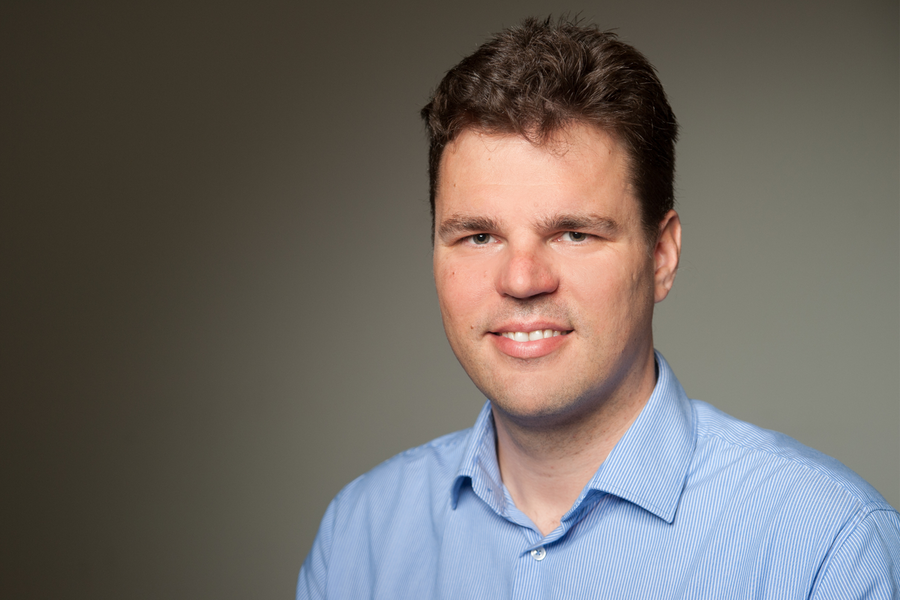
Editorial team: Congratulations on your appointment as Professor of Computer Engineering and Real-Time Systems at the Faculty of Engineering at HTWK Leipzig. Can you briefly explain the areas of responsibility associated with your professorship?
Prof Hoffmann: Thank you very much, I am very pleased to be able to teach and research at the HTWK.
The Chair of Computer Engineering and Real-Time Systems combines teaching, research and practical technology transfer.
In research, I work in particular on secure embedded systems. A central component is the further development of the SEC-V processor, a secure processor architecture, as well as the development of our HEX platform (HTWK Embedded Experimentation Platform). This platform makes it possible to develop and understand systems holistically: from the application level to the operating system to the hardware and even down to transistor level.
It is precisely this end-to-end approach that is crucial for IT security today, as attacks can take place at all levels and protection mechanisms must be considered holistically accordingly.
I implement this approach directly in my teaching. I teach the basics of computer science and programming techniques in the Bachelor's programme and am currently building up modules such as "Embedded Systems" and "Secure Systems" in the Master's programme.
My courses are aimed at engineering students, particularly those studying electrical engineering, automation and information technology. Computer science students with a focus on security and hardware are also very welcome in my modules.
The aim is to teach them not only programming, but also a deep understanding of systems across all levels of abstraction.
Editorial team: How did you decide to specialise in this area of research and teaching? Did you already know what path you wanted to take before you started your studies?
Prof Hoffmann: My interest actually started very early on. I was already programming on the C64 when I was about 12 years old and later switched to the PC, where I worked intensively with assembler and C. I also started programming on the PC when I was about 15.
When I was about 15, I also started analysing games and systems and "hacking" them - initially to manipulate game states, but mainly to understand how the systems work on the inside.
This combination of software, hardware and an interest in security clearly led me to study computer science - with the aim of not only using computers, but also building and securing them.
During my studies, I specialised in computer engineering, worked intensively with circuits, chips and circuit board development and did internships in the field of IT security.
I wrote my diploma thesis in Dresden in the field of the highly secure L4 microkernel, for which I familiarised myself very deeply with the subject matter.
I continued in this direction in my doctorate at the University of Leipzig, where I worked on secure microcontrollers with MOSAIC.
My motivation remains unchanged to this day: To understand systems holistically: from the application to the hardware. My aim today is to develop them in such a way that they are secure and trustworthy.
Editorial team: What skills and interests do you think students who decide to study electrical and information technology should have?
Prof Hoffmann: I think the most important thing is curiosity, i.e. the desire to really understand how technical systems work.
Students should be interested not only in using things, but also in scrutinising them: How does a microcontroller work? How do systems communicate? What actually happens "under the surface"?
It is also helpful if you enjoy practical work - experimenting, trying things out and troubleshooting. In electrical engineering and information technology in particular, you learn a lot by building and testing things yourself and ... where a lot goes wrong.
At the same time, analytical thinking and perseverance play a major role because many problems are highly complex and do not provide an immediate solution.
And last but not least, an interest in topics such as networking, artificial intelligence and security is also important today, as these areas are increasingly shaping our everyday lives and our industry.
Editorial team: What new projects would you like to realise in the future?
Prof Hoffmann: A central goal is the further development of our research and teaching platform HEX (HTWK Embedded Experimentation Platform). We would like to use this to create an integrated environment in which students and researchers can work together on real systems, from programming to the operating system to the hardware.
Another focus is the further development of the SEC V processor into a secure, modular platform for embedded systems and edge applications. In particular, this involves topics such as secure communication, cryptography, AI acceleration and trustworthy hardware.
In addition, I would like to further expand cooperation with industrial partners, especially in the area of safety-critical infrastructures. The aim is to develop specific applications and integrate them directly into teaching.
My long-term goal is to work with students, research partners and industry to build a European, sovereign technology platform for secure IoT and edge systems and to develop this into a dedicated chip.
