Conclusion after three years of research: GreenInnoSax junior research group develops solutions for energy transition, resource conservation and pollutant reduction
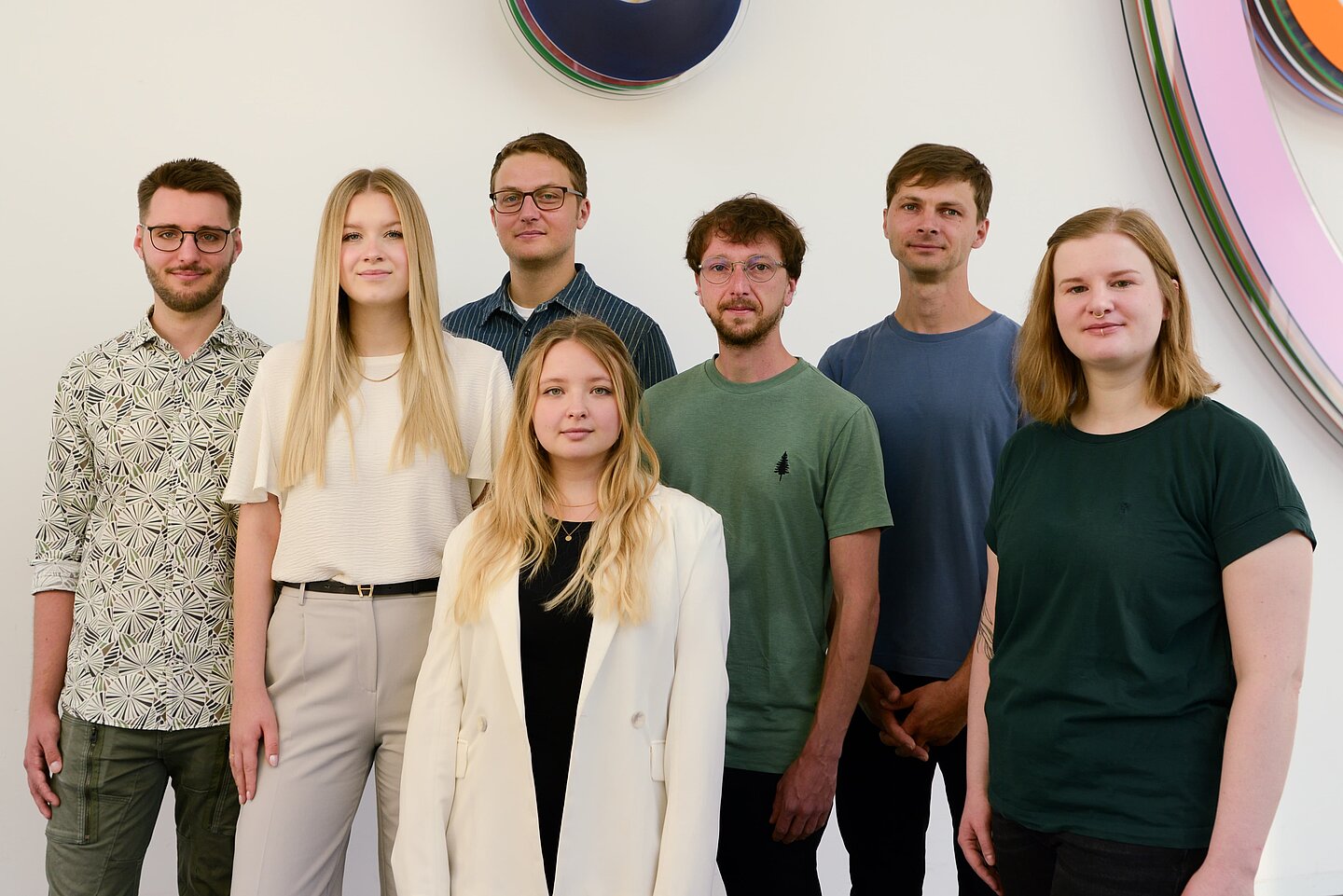
With the end of the funding period, the GreenInnoSax junior research group at Leipzig University of Applied Sciences (HTWK Leipzig) is taking stock at the end of 2025. Funded by the European Social Fund and the Free State of Saxony, a team of seven young scientists conducted research into issues relating to the energy transition, the substitution and elimination of pollutants, for example from art and buildings, and the sustainable use of resources. The transformation of the energy system, sustainable products and processes and the reduction of environmental pollutants play a key role on the path to a sustainable future.
"With GreenInnoSax, we have succeeded in pooling interdisciplinary expertise from several faculties at HTWK Leipzig and local partners such as the Helmholtz Centre for Environmental Research Leipzig (UFZ) and jointly developing practical solutions and technologies. The project has proven to be a crystallisation point for future research and transfer projects at HTWK Leipzig and was also an important instrument for the individual qualification of the junior researchers," explains Björn Höhlig, Professor of Sustainable Building and Construction in Existing Contexts and head of the junior research group.
Interdisciplinary research for a sustainable future - overview of topics
Pollutants: A key research topic was the degradation of organochlorine pesticides, which still pose a risk in historical wooden objects and works of art today, as they were a component of wood preservatives. The team developed a two-stage process that first extracts the pollutants from the material and then converts them into significantly less toxic compounds through catalytic processes using reactive hydrogen. Initial investigations by Viktoriia Karabtsova revealed degradation rates of over 90 per cent. The environmental chemist also gained a deeper insight into the mobility behaviour of the pollutants - an essential building block for future restoration and remediation strategies.
Biocides from façade paints and plasters enter the water cycle through precipitation and can accumulate there. In order to better understand this process, Maria Balda and Robin Berg further developed a sprinkler system that enables realistic tests. The analysis provides detailed data on leaching processes. Adsorption tests with activated and biochar developed at HTWK Leipzig also showed that such materials can play an important role in managing pollutants and protecting the environment. These findings are important for the development of suitable filter systems.
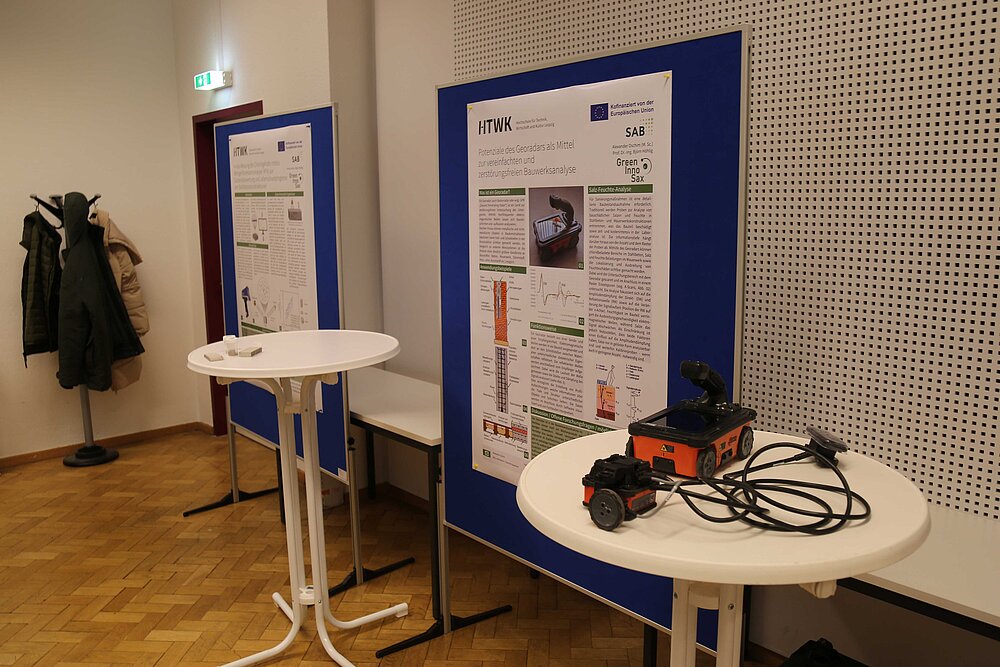
In order to monitor the durability of buildings, it is necessary to recognise salts that are harmful to buildings and different water contents in mineral building materials in a non-destructive manner. Alexander Oschim has developed a method for this using georadar. Initial studies have shown that areas contaminated with salts can be reliably identified.
Elena Lorenz investigated the method of X-ray fluorescence analysis for use on reinforced concrete structures: it enables rapid on-site measurements of chloride content. With just a few reference measurements, the results provide a solid basis for efficient in-situ condition assessment.
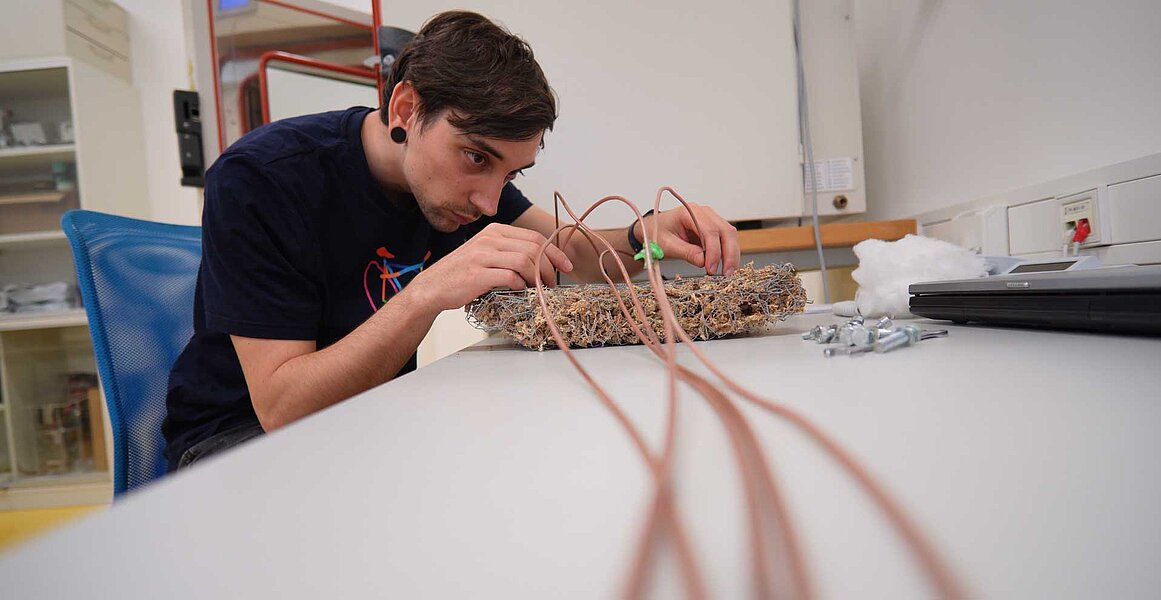
Building materials/climate adaptation: An important step towards the use of innovative, sustainable building materials are the load tests on large-format, hybrid wood-straw elements by Timon Macht. He was able to demonstrate the high load-bearing capacity of straw as a building material and presented recommendations for future designs.
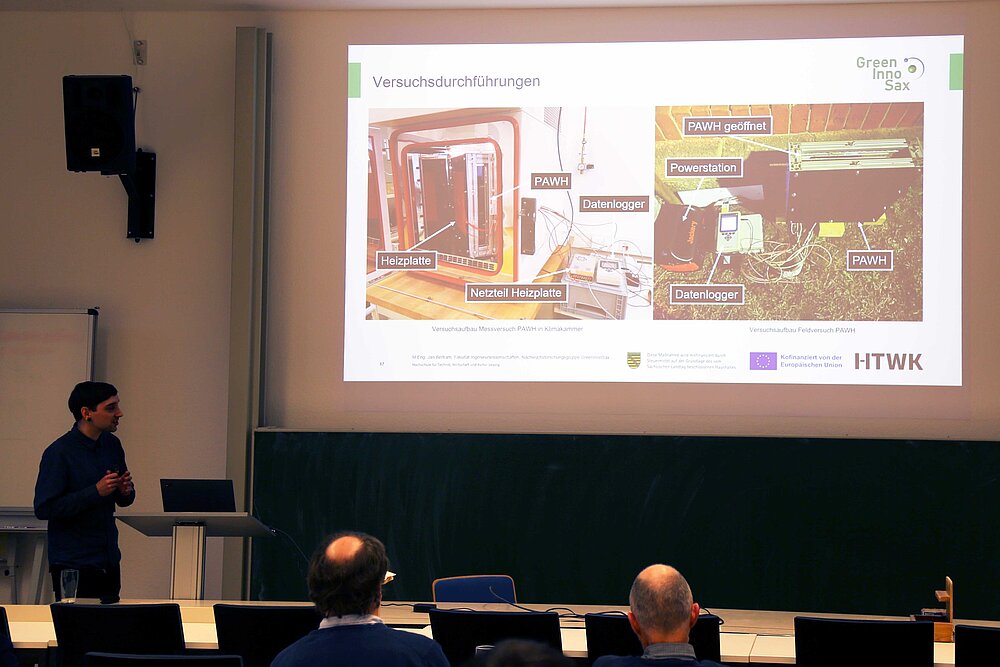
Jan Bertram shed light on the topic of atmospheric water extraction. He developed a prototype façade element for passive water harvesting, thus providing new impetus for climate-adapted building envelopes. This could become considerably more important for the development of sustainable blue-green infrastructures in the future.
Hydrogen technology: In order to gradually replace fossil fuels, hydrogen is increasingly being fed into the natural gas grid. This requires inexpensive sensors that monitor the hydrogen content in an oxygen-free environment. In another focus of the project, Alexander Kühne and Oliver Bartzok developed a semiconductor-based sensor that reliably detects hydrogen concentrations of up to around 20 per cent in natural gas. In addition, Andreas Blum developed a cost-effective, explosion-proof electronics platform that enables sensor operation in industrial environments.
Final presentation and balance sheet
The junior research group is closely integrated into regional and national networks such as RWTec, Saxony5 and Hypos and cooperates closely with the Helmholtz Centre for Environmental Research (UFZ). The combination of environmental technology, materials research and hydrogen innovations has resulted in practical solutions with high transfer potential.
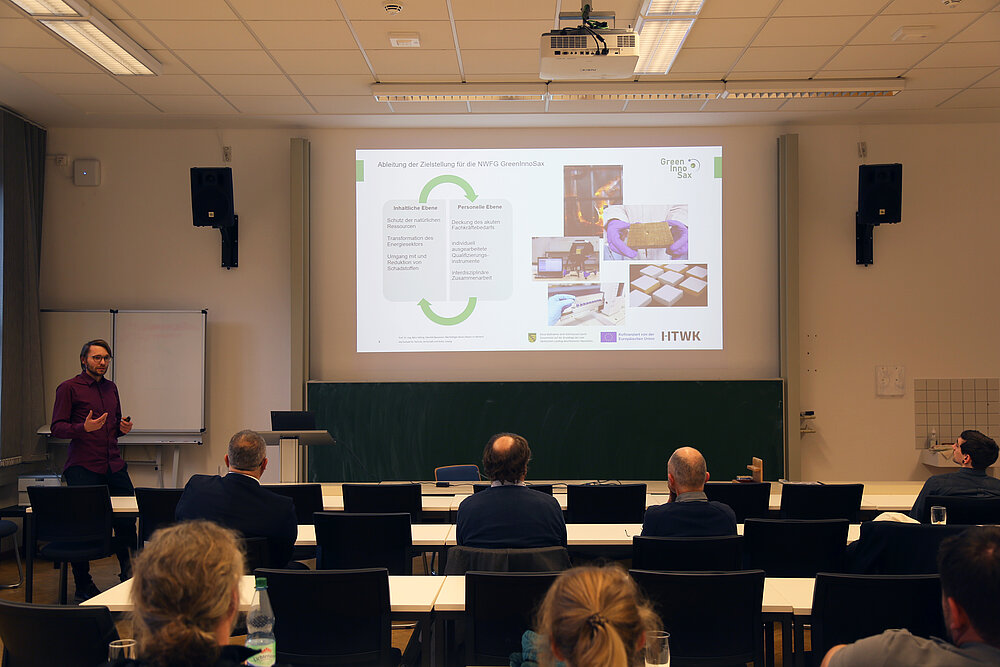
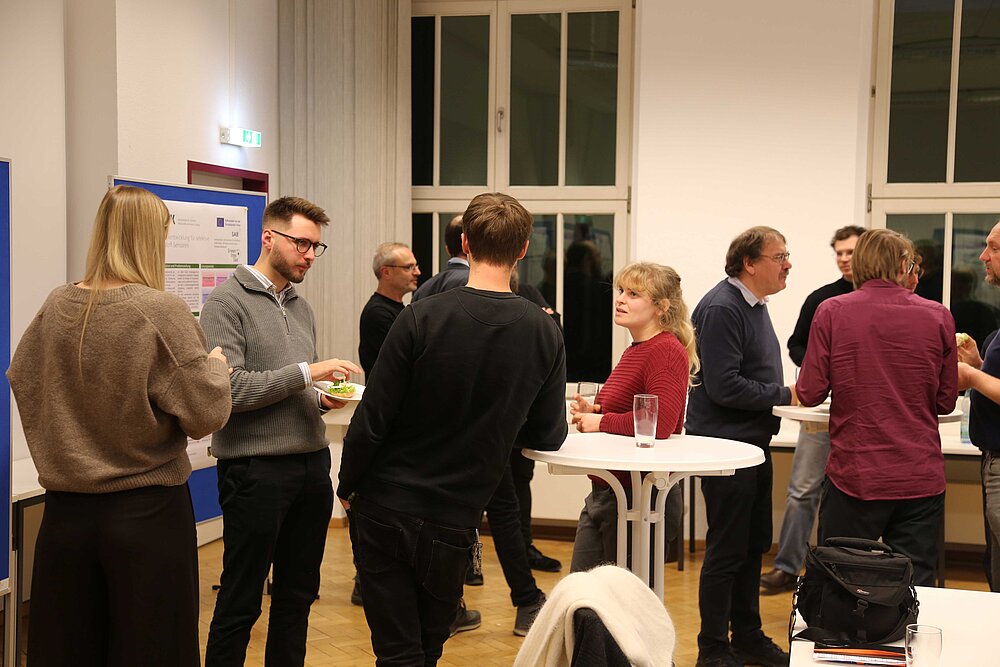
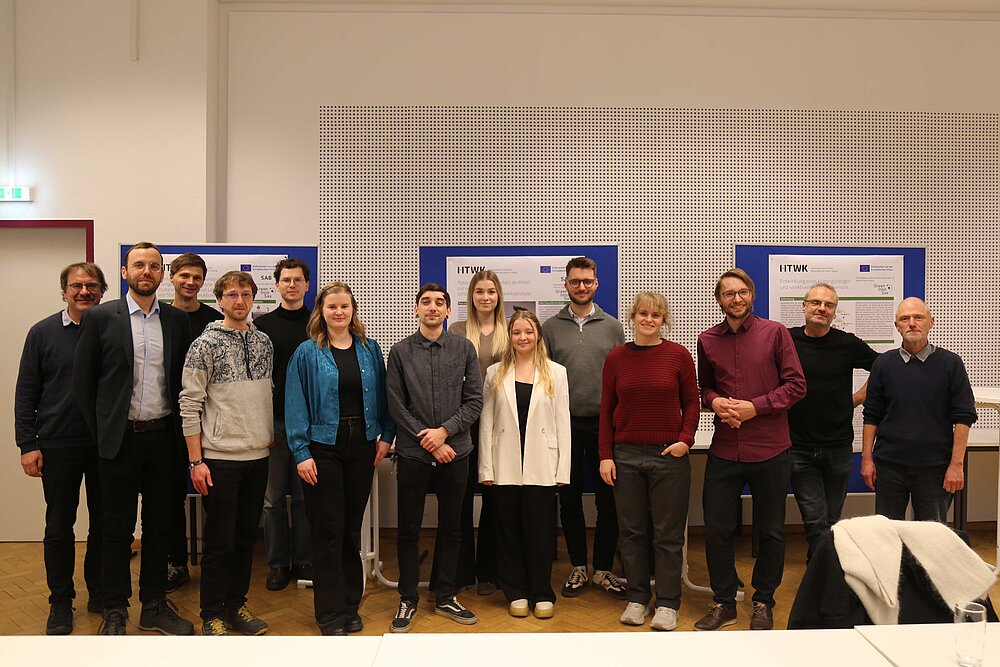
Following the final presentation of GreenInnoSax on 4 December 2025, HTWK Leipzig can look back on three years of intensive applied environmental and technology research. The results show how multidisciplinary approaches can help to reduce pollutants, conserve resources and provide concrete support for the transformation towards a sustainable, climate-neutral future.
Review of the closing event