

Teaching
Bachelor's programme EIB
- Fundamentals of Electrical Engineering I (1030)
- Fundamentals of Electrical Engineering II (2030)
- Regenerative Energies (4801)
Master's programme EIM
- Renewable Energy (7801)
- Photovoltaics (8804)
Research programme
- Renewable energies
- Electromobility
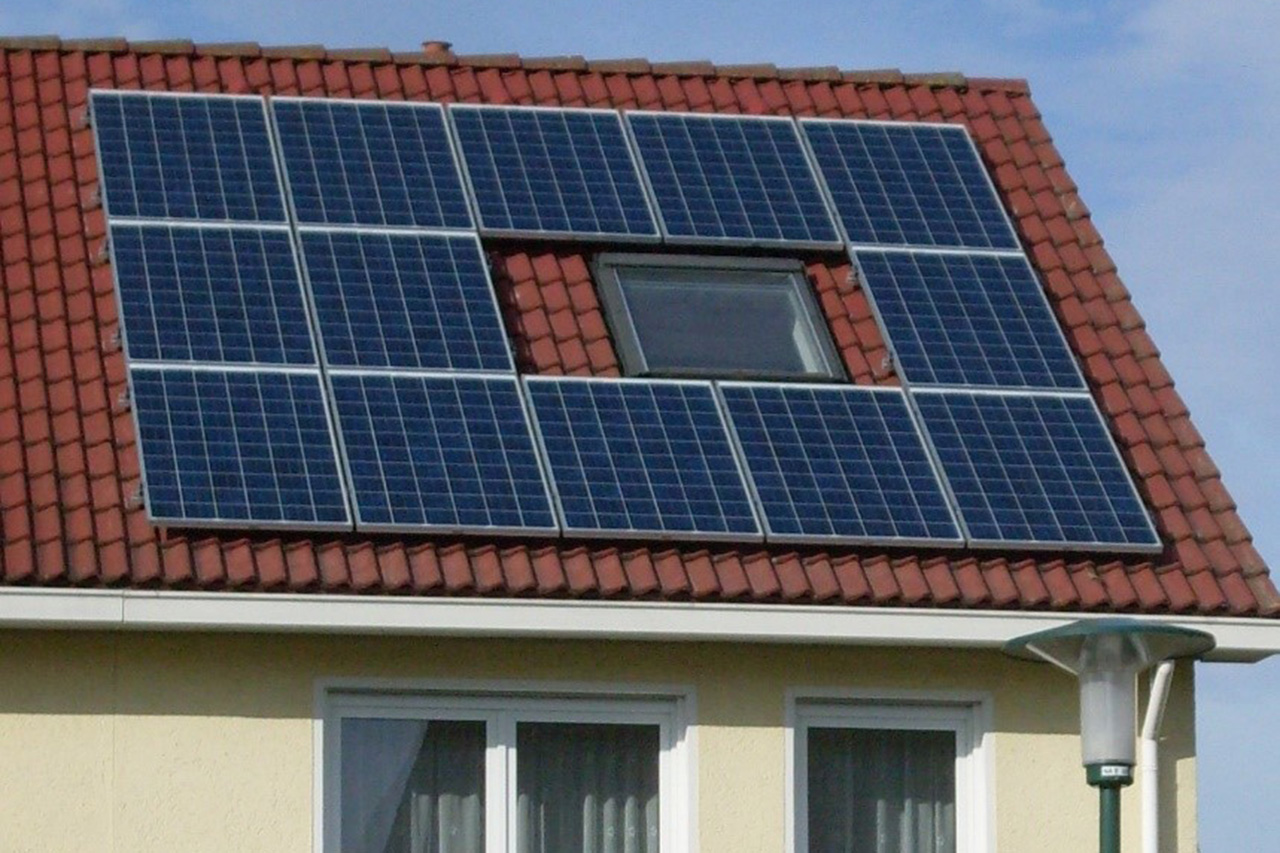
Long-term measurement of a grid-connected photovoltaic system
The grid-connected photovoltaic system (see photo), which was commissioned in 2012, consists of 13 REC 250PE multicrystalline PV modules with a total output of 3.25 kWp. The PV generator is divided into two parallel strings (6 and 7 modules respectively). The single-phase SMA Sunny Boy 3000TL-21 inverter with two maximum power point trackers converts the DC energy of the two electrically different strings into AC energy.
In addition to the electrical data from the inverter monitoring, further sensors are used to measure and analyse the irradiation power horizontally (0°) and at an angle (38° roof pitch) as well as the ambient temperature and PV module temperature.
With an average global radiation energy of 1300kWh/m² a at solar generator level, the system generated approx. 3600kWh/a or 1100kWh/kWp a of electrical energy. With a performance ratio of approx. 88% (operating quality) and an average overall efficiency of 13%, the degradation of the PV modules and ageing of other components can be classified as low.
After nine trouble-free years of operation, it can be estimated that the PV system has exceeded all predicted parameters, such as annual global radiation energy, energy yield, economic efficiency and reliability.
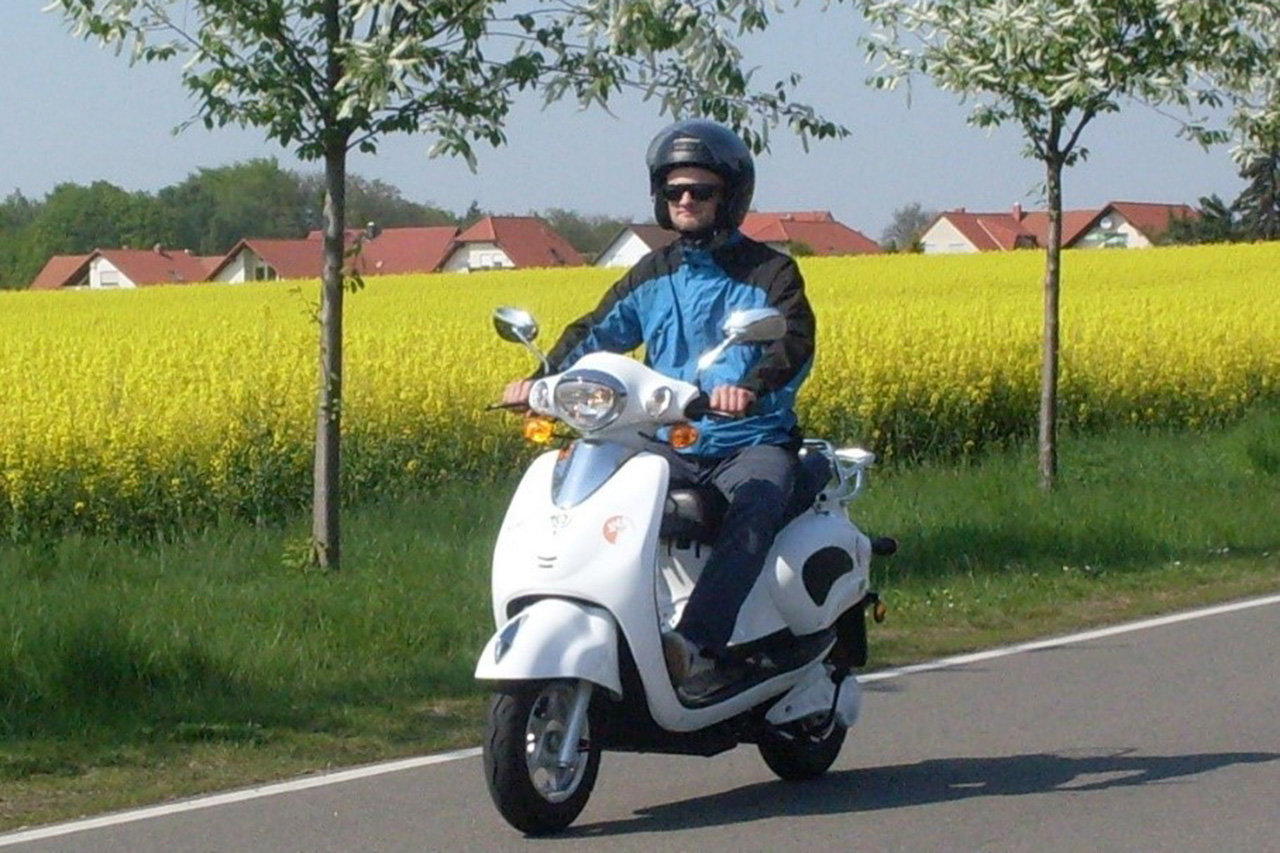
Long-term measurement of an electric scooter
The battery is the centrepiece of electric vehicles. In a long-term project, typical e-vehicles are being analysed and battery characteristics measured.
Since 2012, electrical and mechanical data from an e-sprit Silenzio 45 electric scooter (see photo) has been recorded and analysed using measurement technology. Based on the raw data of the e-scooter, specific operating parameters are determined using various software tools and analyses of the battery and motor controller are carried out. At the beginning of the utilisation phase, some technical defects of the electric scooter were identified, but these could only be partially rectified.
After a total distance travelled of 9500km (no winter operation), the average energy requirement was 1.7kWh/100km. This corresponds to a petrol consumption of 0.15l/100km. The capacity of the 48V/40Ah lithium iron phosphate battery decreased by approx. 30% during the nine years of operation.
The operating results and experience show that an electric scooter is superior to a two-wheeler with a combustion engine for energy, environmental and economic reasons.
