
Lots of short tests, study groups and a trade fair full of surprises: Florian Kropf reports from Taipei after just under two months there. The next application round for the programme opens on 15 November 2026.
From the lecture theatre to SEMICON
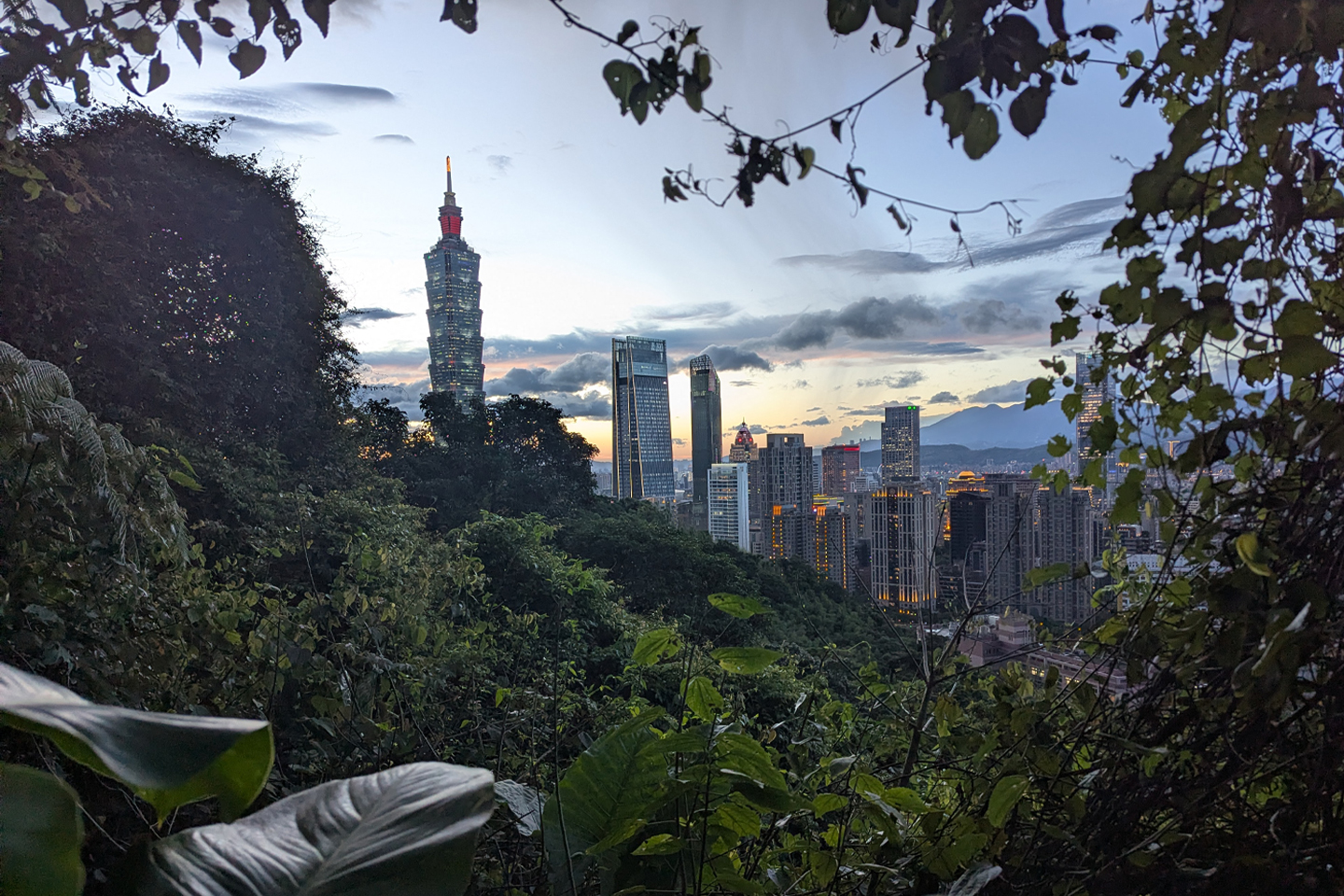
‘Greetings from Taiwan’ was the subject line of an email I received in early September 2026. Sender: Florian Kropf, a student of Electrical Engineering and Information Technology at the Faculty of Engineering at HTWK Leipzig. He had been selected for the ‘Semiconductor Talent Incubation Programme Taiwan’, or STIPT for short, and had been in Taipei for a week at the time. Florian Kropf has since sent me his detailed report, from which I am pleased to quote here.
STIPT is a support programme that combines a course of study at a partner university in Taiwan with practical training in the semiconductor industry. It is a joint initiative of BMFTR, SMWK, TU Dresden and TSMC. HTWK student Kropf is studying at Taipei Tech (National Taipei University of Technology). This is followed by several weeks of practical training at TSMC’s Newcomer Training Centre & Fab in Taichung, one of the world’s leading semiconductor companies.
Studying in Taipei: Lots of small exams, study groups and typhoon days
“Naturally, I spend most of my time on campus. Nevertheless, there’s still plenty of time for excursions and getting to know the culture in Taiwan,” explains Florian Kropf in his report. The course differs significantly from everyday life at HTWK: “Instead of a few major exams at the end of the semester, there are lots of small tests and regular homework assignments.” What he has learnt is tested more frequently, but each test covers less material. For him, this is one of the biggest differences compared to studying in Germany. At the time of writing, the mid-term exams were just around the corner.
He also finds it interesting that sports activities can be taken as regular modules and integrated directly into the timetable.
There’s just one thing from Leipzig he misses: “I do miss the pasta dish from the Leipzig canteen, though.”
The local community is also helpful. “As there are other STIPT students enrolled at Taipei Tech, it’s easy to get together in study groups, for example,” writes Florian Kropf. This makes studying for tests and mid-terms easier.
And: “Even on typhoon days, when it’s best not to leave the house, it never gets boring thanks to the others.”
Special opportunities: SEMICON Taiwan
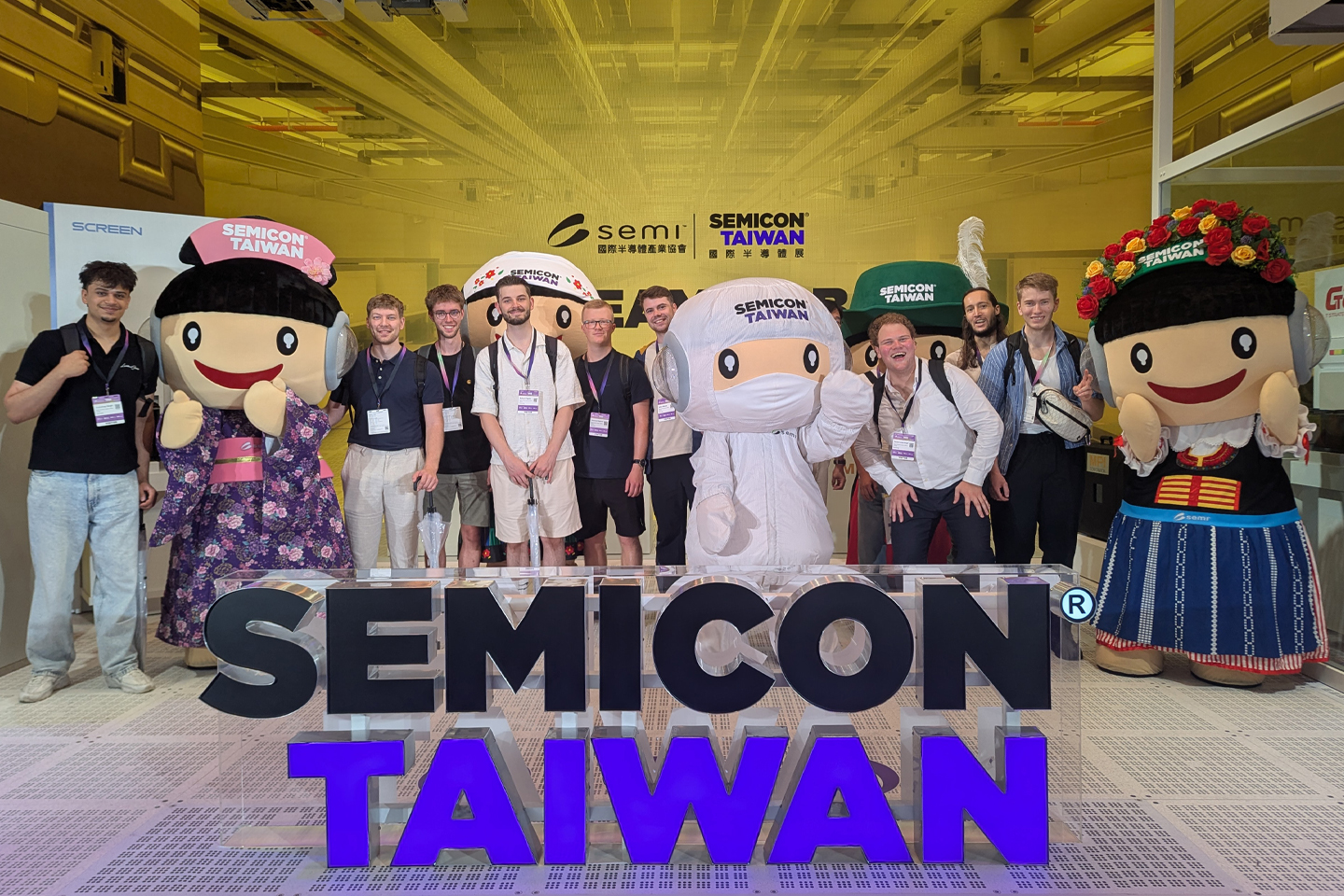
As an STIPT participant, Florian Kropf had a special opportunity as early as the first week: a visit to SEMICON Taiwan, the country’s largest semiconductor trade fair. A huge number of companies from the semiconductor manufacturing sector were represented there, many of which he hadn’t heard of before.
“I was also surprised by exhibitors I wouldn’t have associated with the industry.” Canon, for example, showcased its nanoimprint lithography systems at a large stand, writes Kropf.
“Overall, I feel very much at home at Taipei Tech and in Taiwan, and I’m grateful to have been given this opportunity,” emphasises Florian Kropf.
He is now particularly looking forward to the practical placement at TSMC.
Why it’s worth applying
For students of Electrical and Information Technology at the Faculty of Engineering, the semiconductor industry is at the heart of their subject: practically every device, system and application you encounter during your studies uses semiconductor chips. Anyone who experiences how these are developed and manufactured in Taiwan will also gain a better understanding of the interrelationships that remain purely theoretical in lectures. The sector is also a key industry for Saxony and Europe. Added to this are the experiences that any extended stay abroad brings: independence, intercultural competence and an international network.
The right time
In my view, the programme is best undertaken towards the end of your degree. At Bachelor’s level, the best time is after the specialist modules and before the practical project and the Bachelor’s thesis; at Master’s level, it is before the practical research project and the Master’s thesis. If you then go to Taiwan, you will have the necessary specialist knowledge to really benefit from the courses and the training at TSMC. The experience and contacts gained can also be directly incorporated into your final dissertation or career choices. As applications are submitted around nine months before the start of the placement, it is worth planning ahead and discussing your study plans in good time.
Funding
Selected participants receive a grant of 700 euros per month towards living costs and a lump-sum travel allowance of 1,500 euros. Ninety per cent of the funding is paid out before the placement and 10 per cent upon return. Accommodation is provided by the host institution but must be paid for by the participant. Certain costs, such as the service fee charged by the Taiwanese university, rent, visa fees and insurance, may be incurred before the first payment is made. It is not possible to receive funding from other public sources, such as PROMOS, at the same time.
Who can apply
The programme is open to students from all universities accredited in Germany who are enrolled on a full-time degree programme. Bachelor’s and Diplom students may apply from the second semester onwards; Master’s students from the first semester onwards. A grade point average of at least 2.3 on the current Transcript of Records is required. The degree programme must be related to semiconductor technology. Subjects include, amongst others, electrical engineering, micro- and nanoelectronics, mechatronics, mechanical engineering, automation technology, robotics, sensor technology, materials science, physics and chemistry; however, this list is not exhaustive. Selection is carried out by an independent international committee in consultation with TSMC.
Depending on the call for applications, the course modules will take place at one of five partner universities: National Taiwan University, National Taiwan University of Science and Technology, National Yang Ming Chiao Tung University, National Cheng Kung University or National Taipei University of Technology. The universities participating in the 2027/28 winter semester will be announced in the call for applications.
Application and deadlines
The call for applications for the 2027/28 winter semester opens on 15 November 2026 and closes at 12 noon on 15 December 2026. Applications must be submitted entirely in English via the Mobility Online portal. The following application documents must be submitted: Certificate of enrolment, transcript of records highlighting semiconductor-related courses, CV in English, proof of English language proficiency (minimum B2) and, if available, your Bachelor’s degree certificate. Proof of semiconductor-related work placements and Mandarin language skills are optional.
In addition, you will need an electronic reference from a professor or other academic staff member in your field, whom you will name on the application form. Please contact this person well in advance and inform them about the programme and your plans.
To help you prepare, Leonardo-Sachsen is offering support: an online information session on 27 November 2026 at 9.00 am with representatives from NTUST and TSMC (registration is requested), as well as online consultations on the application process on 2, 9, 16 and 23 November 2026, from 1 pm to 2 pm on each occasion (Zoom link for the online consultations).
All the latest information can be found on the STIPT page of Leonardo-Sachsen and on the page for the current call for applications. If you have any questions about the programme, please contact Juan Manuel Barragan, STIPT project manager at Leonardo-Sachsen, at international.leosachsen@tu-dresden.de or +49 351 463 37688.
Contact persons at HTWK
I am delighted to have been able to support Florian Kropf with his application and wish him a wonderful time in Taiwan. If you’d like to go to Taiwan yourself or undertake another period of study abroad, please feel free to contact me as the Coordinator for International Relations at the Faculty of Engineering, or Kristin Törpel at the Outgoing Student Advisory Service in the Student Affairs Department.
Link
You can find an overview of opportunities to study abroad on the page: Outgoing – Opportunities to Study Abroad
